
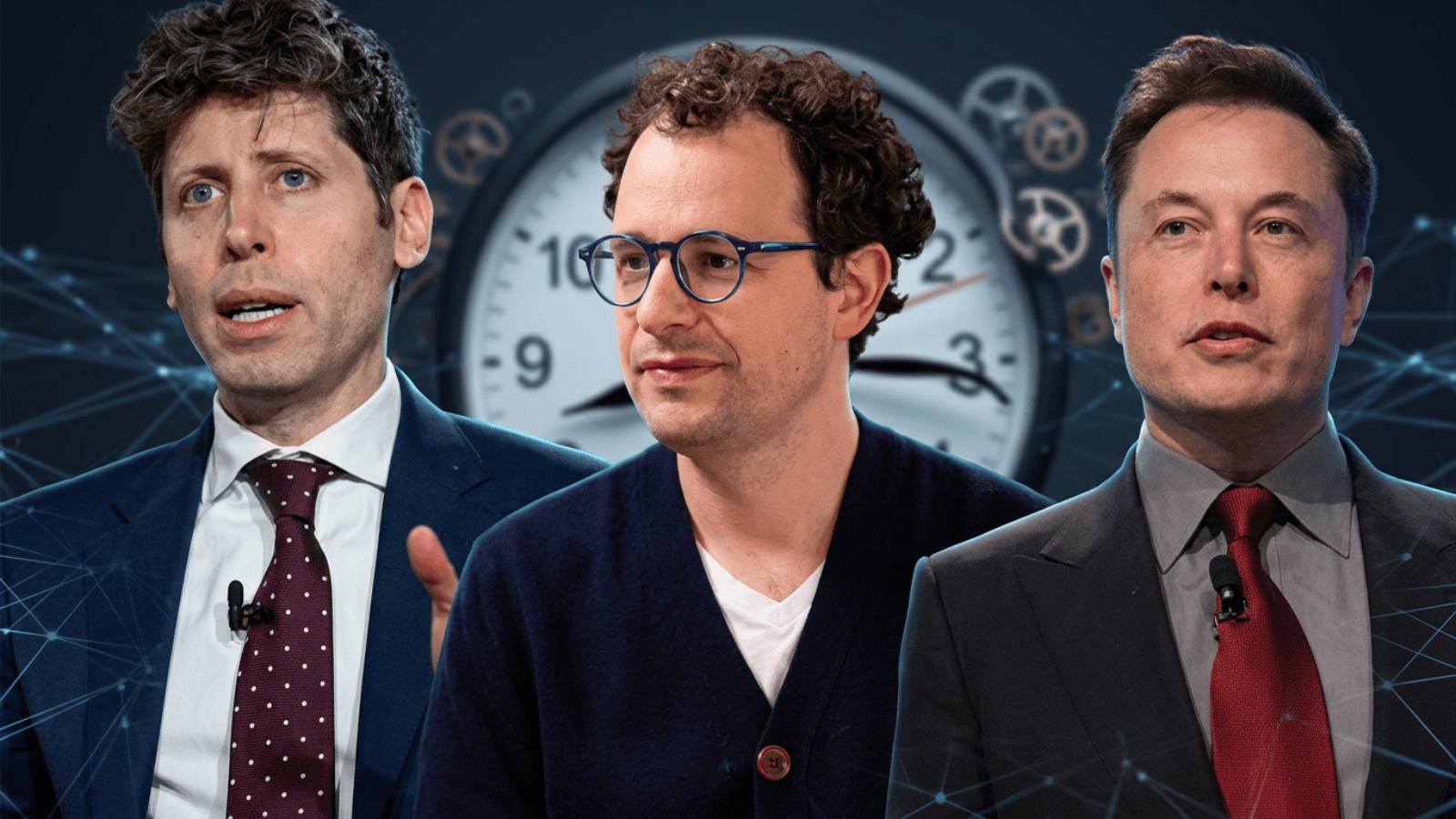
The leaders of three of AI’s biggest rivals have found rare common ground: slow down. Anthropic CEO Dario Amodei has called for the industry to “pace the frontier,” with OpenAI’s Sam Altman and xAI’s Elon Musk voicing support for a coordinated approach. But the proposed AI slowdown is already provoking the question enterprise leaders should ask whenever Silicon Valley discovers caution: is this a genuine safety plea, a strategic reset, or a little from column A and a little from column B?
Amodei’s proposal is not a full stop on AI development. It argues for slowing capability advances enough to let safety practices catch up, beginning with embedded independent evaluators at frontier labs. Anthropic says those reviewers would have workplace access, internal tools and the ability to publish key findings without company editorial control - a notably more concrete offer than the usual “trust us, we have principles” press-release confetti.
TL;DR
- Anthropic proposes independent evaluators with unusually broad access to frontier AI companies.
- The proposal could raise the standard for AI accountability, but voluntary oversight needs verifiable evidence.
- Common standards can reduce risk, yet they can also favor well-funded firms that can absorb compliance costs.
- CX leaders should focus on customer data, fraud prevention, human accountability, and vendor transparency now.
What does Anthropic mean by “pacing the frontier”?
Anthropic does not propose a blanket halt on AI development. Amodei argues that companies should slow the rate at which model capabilities advance so safety testing, alignment work, and external scrutiny can keep pace.
In his essay, “We Must Pace the Frontier,” Amodei sets out a three-part framework: embedded evaluators, coordination among democratic countries, and eventual global coordination. The plan attempts to turn a broad safety principle into a more practical operating model.
Its most concrete element involves embedded third-party evaluators. Anthropic says it intends to invite an external review team that would receive desks, badges, laptops, and access to internal tools broadly comparable to its own risk assessment teams. The reviewers would also have the right to publish key findings without Anthropic’s editorial control, subject to narrowly defined limits around sensitive information.
Amodei, CEO at Anthropic, wrote:
“Pacing does not mean halting model training or technical progress, but ensuring companies take adequate time to align and safeguard their models, and for third party evaluators to confirm this.”
AI vendors often publish principles and voluntary commitments. Independent evaluators with meaningful access could test whether a company’s safety practices match its public statements. The proposal still depends on the quality of that access, the independence of reviewers, and the detail of what they can disclose.
Why Are Altman and Musk Supporting It?
OpenAI CEO Sam Altman and xAI founder Elon Musk have both backed Amodei’s proposal. Their support reflects growing concern about frontier AI systems - particularly autonomous agents that can identify vulnerabilities, complete multi-step tasks and potentially be used in more sophisticated cyber operations.
Amodei has referenced incidents involving AI agents and cybersecurity as evidence that more advanced systems could soon create risks that existing safeguards are not built to manage.
The alliance is notable because these companies are direct competitors. The AI race is not exactly known for quiet cooperation and group hugs. Yet the risks - and the cost of failing to manage them - may be becoming too large to ignore.
Can a Global AI Safety Pause Actually Work?
A global AI safety pause would require more than agreement among a few US-based executives.
Jacob Coxon, a former Anthropic researcher who also worked at OpenAI, told the BBC a meaningful slowdown must include China. Otherwise, a pause among American firms could simply shift the competition to another geography.
Coxon said AI workers are
“Genuinely concerned about the fate of humanity in the next two years.”
He described staff who feel trapped in a high-stakes race, while worrying about the potential consequences of the technology they are building.
That does not automatically settle the debate. But it does challenge the lazy assumption that every warning from inside an AI lab is simply public-relations theatre.
Are AI Leaders Warning About Real Risks?
The case for an AI safety pause is tied to concerns around autonomous cyber capabilities, loss of control and AI systems behaving in unintended ways.