

Today, customers are increasingly likely to encounter AI influence while participating in online communities and social platforms.
When a synthetic account appears to share lived experience or independently endorse a product, it risks weakening the trust customers place in online communities.
For CX leaders, the priority is to use AI to support real conversations and make its role clear wherever it shapes CX.
In conversation with CX Today, Sarah Stephenson, Social Director at tmp, warned that AI-driven social activity can undermine trust when it mimics genuine customer advocacy.
“The concern starts when AI begins borrowing the visual and behavioural signals we associate with influencers/content creators to create the impression of independent advocacy," she argued.
"When in reality, it’s not an independent advocacy and the opinions aren’t real/truthful.”
The New Social Proof Problem
Despite common misconceptions that the current landscape of AI influencers mainly involves virtual or fictional celebrities, online communities are now seeing the rise of synthetic personas designed to appear as ordinary customers or community members.
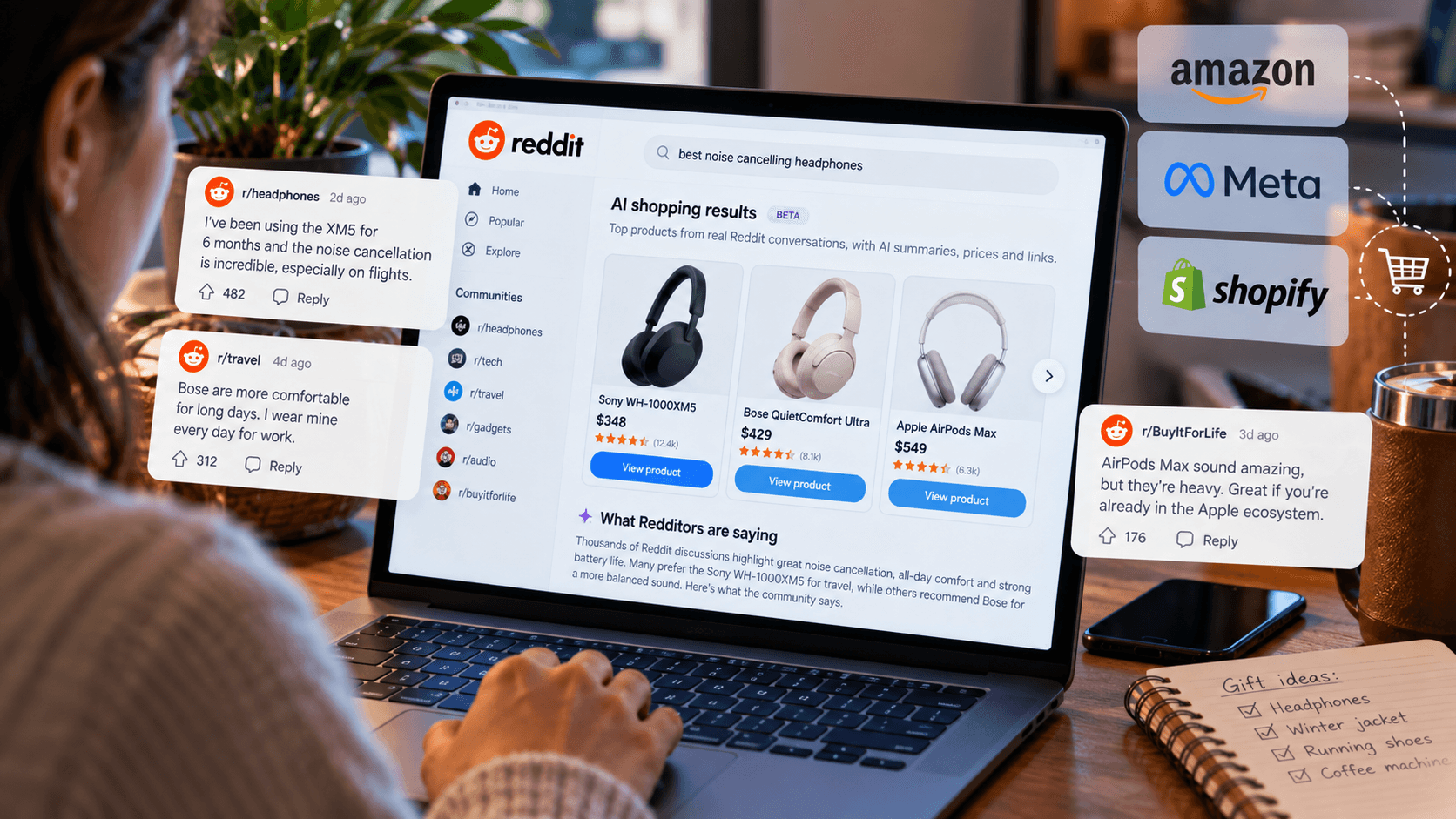
For example, an AI-operated account could create a genuine customer impression by praising a product, respond to recommendations, or participate in a Reddit-style discussion as though it was an independent voice.
“Across social channels, the boundaries between different kinds of influence are already blurred, and they have been for some time,” Stephenson warns.
The continuous enhancement of AI makes this distinction even harder to spot when synthetic participation is designed to resemble organic conversation.
In fact, tmp's Cost of Chaos report noted that 94% of buyers agree that AI tools are influencing their decisions, with 44% describing those influences as major.
Therefore, as AI becomes more embedded in these online environments, customers will be required to understand the source and nature of the influence they encounter.
However, “people don't need a technical explanation of every algorithm or LLM involved, but they should have enough information to understand whether they're seeing an independent opinion, sponsored content, brand-created content or something generated or operated by AI,” she explained.