

For years, the narrative in customer experience has been that digital will displace voice.
Messaging apps, web chat, and AI-powered bots were expected to handle the bulk of customer interactions, leaving the phone call as a relic of the past.
Think what Netflix did to Blockbuster, Spotify did to CDs, and WhatsApp did to the SMS inbox.
But the reality is quite different.
Research from AVOXI and Metrigy shows that not only is voice holding steady, but it also remains the most widely used channel in the contact center. What’s changed is the nature of those conversations.
Routine questions are increasingly deflected to self-service or digital channels. That leaves the phone to carry higher-value, higher-stakes interactions: urgent issues, complex requests, and sensitive conversations where trust is on the line.
For example, a major global hospitality brand has seen its inbound call average rise from two minutes to over six minutes in the past few years.
Why? Because customers book simple reservations online but still pick up the phone when the situation is nuanced, whether that be changing a multi-leg booking, requesting specific accessibility features, or handling a sensitive personal requirement.
In short: the phone isn’t just still ringing; it’s ringing for the moments that matter most.
The Legacy Hangover
Despite the continued popularity of telephony in the modern contact center, many organizations are still running voice infrastructure like it’s the 1990s.
Historically, expanding into a new region meant leasing offices, signing local carrier contracts, installing PBXs, and stitching together gateways.
Decades later, some enterprises are still juggling this patchwork of systems, contracts, and invoices.
Meanwhile, the rest of the stack - from servers to applications to contact center platforms - has shifted to the cloud.
Unfortunately, voice often remains the outlier, leaving CX leaders with limited visibility, inconsistent quality, and mounting operational costs.
A Cloud-Native Future for Voice
However, while some organizations might be stuck in the past, the industry as a whole is seeing a decisive push to bring voice into the same cloud-native, software-defined model that transformed the rest of enterprise communications.
This shift enables businesses to:
- Centralize and simplify global voice management.
- Gain visibility and control over call routing and quality.
- Integrate natively with CX platforms and AI systems.
- Adapt dynamically to changes in customer demand or business priorities.
Companies like AVOXI have emerged as part of this movement, building voice infrastructure into their software from the ground up. Rather than bolting APIs onto legacy telco networks, their approach treats voice as software orchestrated, agile service layer.
Two of AVOXI’s major enterprise customers - Flutterwave and ENGIE - recently transitioned to cloud voice and are taking this software-led approach to managing the voice channel.
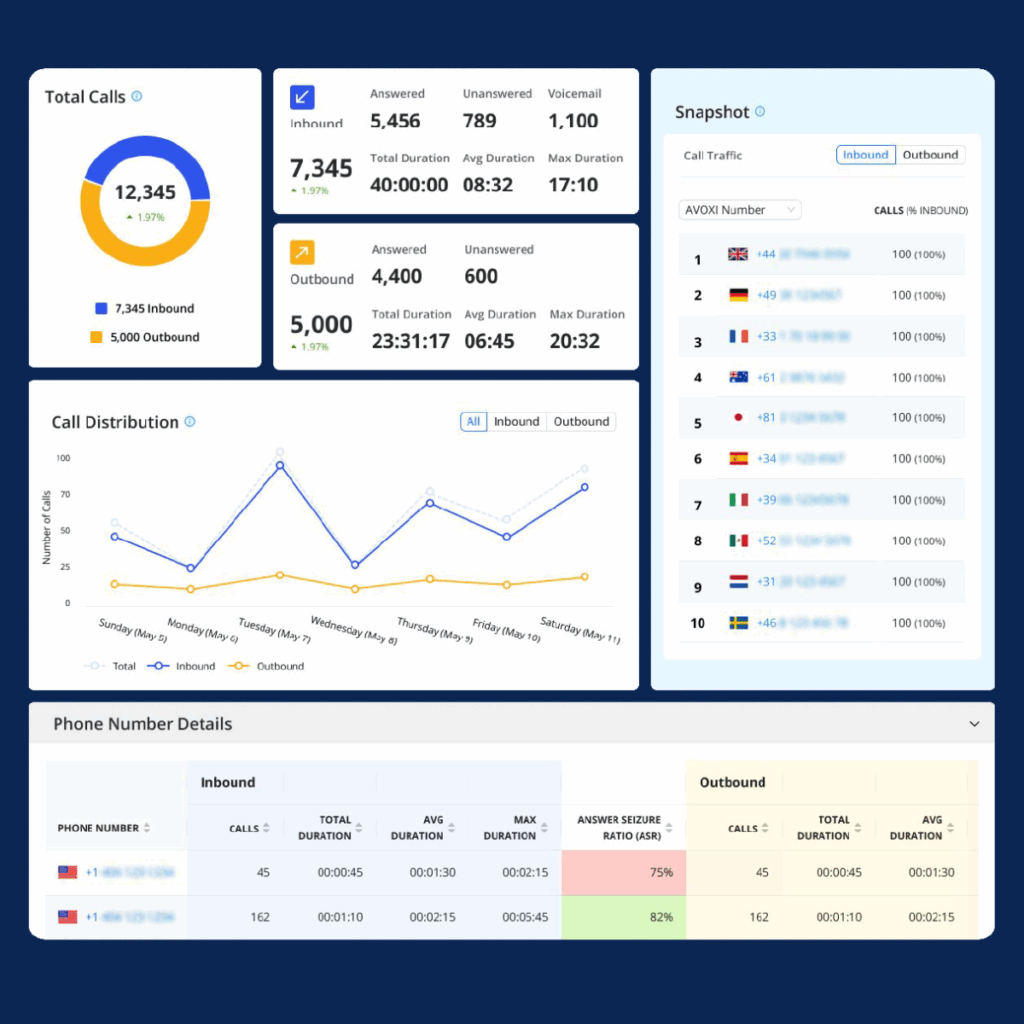 Visibility into inbound/outbound call performance per number, empowering teams to track volume, duration, and connectivity for smarter, data-backed decisions.[/caption]
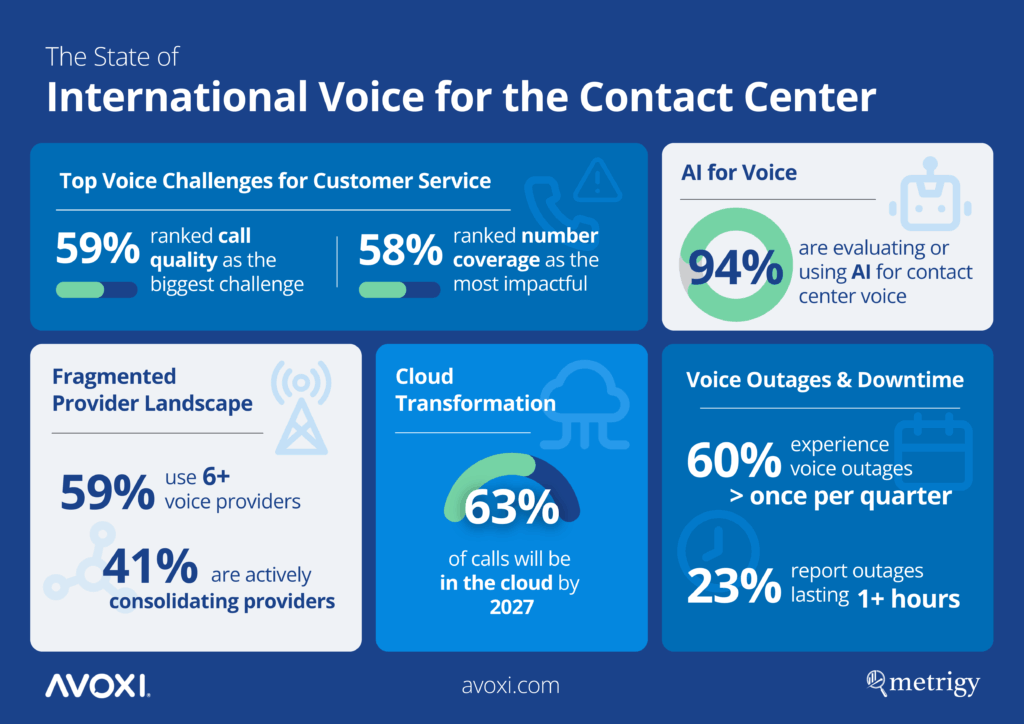 Current trends around international voice for contact centers with insights into AI impact, provider landscape, cloud transformation, and service reliability.[/caption]