
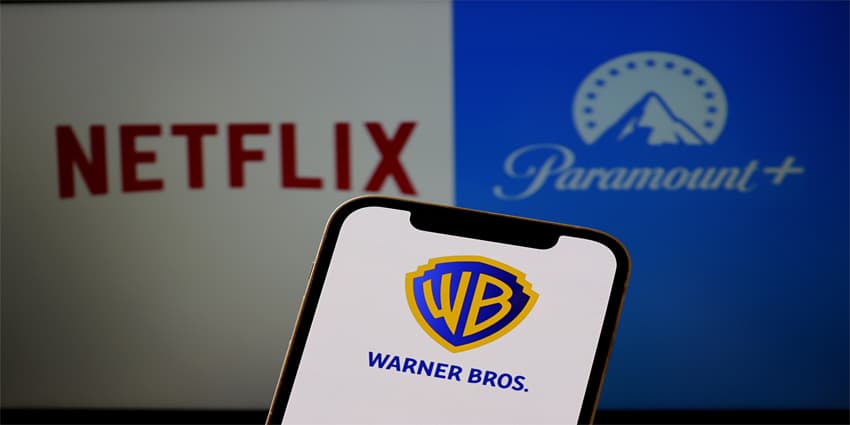
Netflix's proposed $82.7 billion acquisition of Warner Bros. Discovery has sparked the usual debates about media consolidation and regulatory hurdles.
But what does this actually mean for people who just want to watch their shows without juggling five different apps and subscriptions?
The deal now faces a competing hostile bid from Paramount Skydance, which has offered $30-31 per share in all cash for WBD. Netflix has granted WBD a seven-day waiver to explore Paramount's “best and final” offer, with a shareholder vote scheduled for March 20.
Regardless of which suitor prevails, streaming subscribers find themselves in a paradox. Consolidation promises real improvements – bundled pricing, unified platforms, easier access to content – but it also raises concerns about market control, long-term pricing power, and whether consumers will actually have meaningful choices once the dust settles.
Recent Forrester research shows consumers are split.
Among Netflix and HBO Max subscribers, 45% support the Netflix acquisition while 16% oppose it outright.
After years of explosive growth and new entrants flooding the market, consolidation is here. Whether that's good or bad for consumers depends on who you ask.
Fragmentation Has Become a Real Problem
Households now juggle an average of 13 different entertainment sources, according to Hub Entertainment Research. That includes streaming services, gaming platforms, social media, and traditional TV.
The core frustration with this current model is managing multiple subscriptions, remembering which content lives where, and navigating different interfaces has become exhausting.
Jason Platt Zolov, Senior Consultant at Hub Entertainment Research, points to bundling and aggregation as the solution:
“Whether it be bundles of diverse content being promoted within a platform (e.g. Disney+ and their integration of family content alongside Hulu adult-focused content) or competitor bundles (e.g. being able to purchase Disney + HBO Max together for a reduced price), the industry is leaning into these value-add bundles that provide a broad range of content that meets the needs of different viewers in a household.”
Consumers who bundle services through aggregators like Amazon Prime Video and The Roku Channel subscribe to nearly three more services on average than people who pay directly.
Their motivation centers on simplicity and ease of access. If a Netflix-Warner Bros. deal delivers on consolidated content libraries, the user experience could improve.
The same would be true if Paramount's bid succeeds and leads to further consolidation across the industry.
Mike Proulx, VP and Research Director at Forrester, argues that contrary to the prevailing narrative, streaming consolidation would actually benefit consumers.
His analysis points to three key wins:
- Combined cost savings through bundling
- Easier content access via a unified interface
- Shorter theatrical windows that align with viewer preferences
The numbers support this view. According to Forrester's research, 73% of subscribers agree that adding Warner Bros. film and TV libraries along with HBO and HBO Max programming would give Netflix users more high-quality titles to choose from.
Meanwhile, 39% believe consolidation will benefit consumers overall, compared to just 23% who disagree.
Four Subscriber Segments, Four Different Reactions
Forrester conducted a pulse check poll in its ConsumerVoices Market Research Online Community, surveying about 500 people across the US, UK, and Canada. The responses reveal how different subscriber groups view potential consolidation.
Dual subscribers – those paying for both Netflix and HBO Max – are split down the middle. 18% of respondents are optimistic about cost savings and convenience, while others worry about price hikes and monopolistic consolidation.
Excitement about a combined app gets tempered by anxiety over long-term costs and diminished competition.
HBO Max-only subscribers (just 4% of respondents) are mostly apprehensive. This group worries consolidation will reduce competition, raise prices, and potentially degrade HBO Max's quality.
While a few hope for more content, most are uneasy about what happens to their preferred service.
Netflix-only subscribers represent the largest segment at 39% and lean cautiously optimistic. Some welcome more content and convenience, but many fear price increases and reduced choice.
Non-subscribers (38% of respondents) are primarily indifferent. Their concerns center on monopolistic power, reduced competition, and higher prices.
Some fear negative impacts on theaters and film quality, though a few see potential for more content or lower costs.
Market Concentration Raises Questions
Adrian Swinscoe, CX consultant, estimates that a combined Netflix and HBO would control around 36% of the US streaming market.
That level of concentration raises legitimate questions about pricing, content diversity, and consumer choice – concerns that apply regardless of whether Netflix or Paramount ultimately acquires WBD's assets.
The pricing question is particularly unclear. While reduced competition often leads to price increases, Swinscoe notes that merger efficiencies could stabilize or even decrease prices.
Research on past acquisitions shows mixed outcomes, so subscriber caution makes sense.
Zolov suggests Netflix will manage this through tiered pricing.
“Netflix has plenty of experience with subscribers who churn based on price increases, and they've done a good job of moving those more price-sensitive subscribers to the cheaper, ad-supported tier,” he says.
“I would imagine they will continue to manage that forward if the merger with WBD goes through, targeting the heaviest viewers with higher-priced versions that offer premium, 'super-size' viewing experiences (and potentially exclusive content) while they will continue to offer cheaper ad-supported tiers to keep people in the fold.”
That approach addresses price sensitivity but doesn't eliminate concerns about long-term pricing power once competition diminishes.
The dual subscriber segment's split reaction captures this tension.