B2B customer experience is changing. Traditional CX – support tickets, onboarding sequences, and account management – still matters. But modern buyers expect something more social, more trusted, and more self-directed. That’s where B2B community engagement comes in.
What Is Community Engagement? (And Why It’s Becoming the Future of Customer Experience)
Community engagement is the ongoing interaction between customers, prospects, partners, and experts in a shared space where people exchange knowledge, solve problems, and learn from one another. It’s a customer experience model built on conversation, collaboration, and peer-led support – not just one-way communication from a brand.
In simple terms: it’s customer experience delivered through community, not just customer service.
A customer experience community can live on platforms like Salesforce Experience Cloud, Khoros, Linkedin, Higher Logic, Gainsight, or integrated environments like Slack and Microsoft Teams – but the platform isn’t the strategy. What matters is participation, trust, and the value customers gain through each other.
Suggested Articles
Top B2B Community & Social Engagement Events to Watch in 2026
The Best B2B Community Platforms In 2026
Customer Community & Social Engagement Trends to Watch in 2026
What Is Community-Led CX?
Community-led CX (community-led customer experience) is a strategy where customer experience is improved through peer-to-peer interaction, shared learning, and customer advocacy within an owned or supported community. It scales CX by making customers and experts part of the experience delivery layer.
What Community Engagement Is Not
To define the category clearly, community engagement isn’t a static forum, a brand-run FAQ, or simply posting on social media. It’s not “nice to have.” It’s a shift in how experience is created – from brand-led to network-led.
Why Community Is The Future Of Customer Experience
If you’re asking, “Why is community the future of customer experience?”, the answer comes down to three industry shifts:
1) AI Is Scaling Responses – But Not Confidence
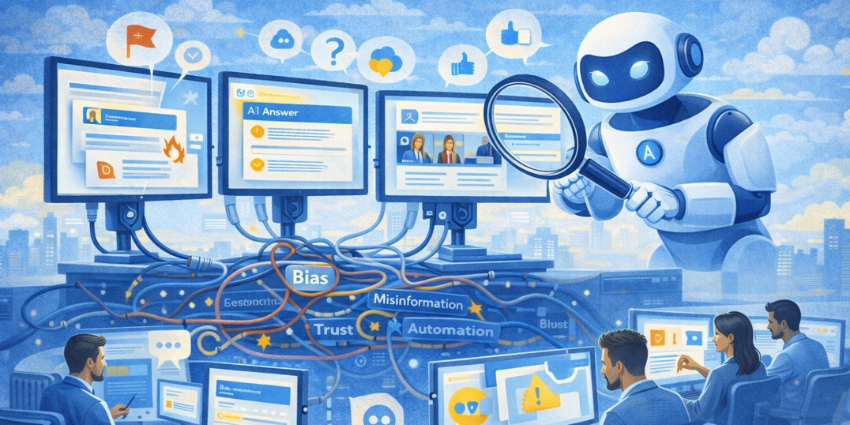
AI copilots and automation can help customers get answers quickly. But trust still comes from lived experience. Communities provide real-world validation – the “proof” layer that AI can’t replicate on its own. Read more on using AI to scale communities for your customers.
2) Dark Social Is Where Buying Decisions Now Happen
More B2B influence happens in private spaces: Slack groups, DMs, WhatsApp threads, and closed networks. This “dark social” shift means buyers are learning and deciding outside measurable channels – and community becomes the bridge between hidden conversations and brand experience. Research from RadiumOne suggests that up to 84% of content sharing now happens through private channels rather than public feeds.
3) Trust Is Becoming Decentralised
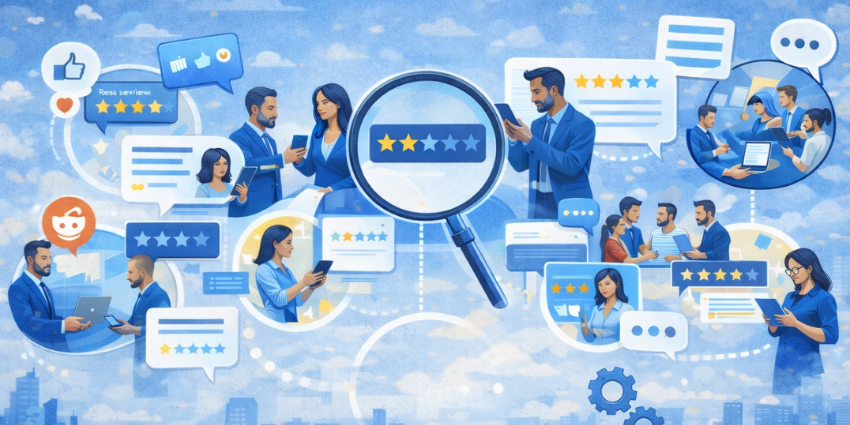
In modern B2B, trust isn’t built through brand claims – it’s built through networks. Buyers trust peers, practitioners, and proven community voices. Community engagement supports that decentralised trust model by giving customers a place to share what works.
How Community Engagement Improves Customer Experience
A strong customer community strategy improves CX by enabling:
- Faster answers through peer-to-peer support
- Higher product adoption through shared learning
- Better retention through belonging and advocacy
- More scalable experience without increasing headcount
This is why community-led customer experience strategy is becoming a priority: it makes customer experience more social, more trusted, and more sustainable, in return providing solid ROI. Read more on how community drives growth and retention here.
The Process Behind Community Engagement
Community engagement doesn’t require enterprise-scale transformation to be effective. At its core, it’s a simple operating rhythm: clear governance (who owns it and why), light-touch moderation (to keep quality high), intentional programming (events, Q&As, expert sessions), and feedback loops (turning community insight into better product and CX decisions). The goal isn’t complexity – it’s consistency.
Two Brands Making Community-Led CX Real
Community-led CX isn’t just a B2B trend. Some of the best examples come from brands that treat community as a core experience layer-where customers learn from peers, build confidence, and get answers without waiting for a ticket response.
Salesforce: B2B Community as The Scalable Learning + Support Layer
Salesforce’s Trailblazer Community, which supports its enterprise CRM and CX platforms, shows how B2B communities can function as a scalable learning and support layer. Users join groups, ask questions, and learn from peers and specialists through Trailhead-adjacent community spaces. It’s a strong example of community functioning as a scalable layer of enablement-not a side channel.
Airbnb: Community As a Trust and Experience Layer
Airbnb’s Host Community shows how community-led engagement can improve customer experience at scale. Hosts use the community to share operational advice, resolve issues, and learn how to deliver better guest experiences from peers who have faced similar challenges. Rather than relying solely on centralised support, Airbnb uses community to reinforce standards, trust, and service quality across a decentralised network.
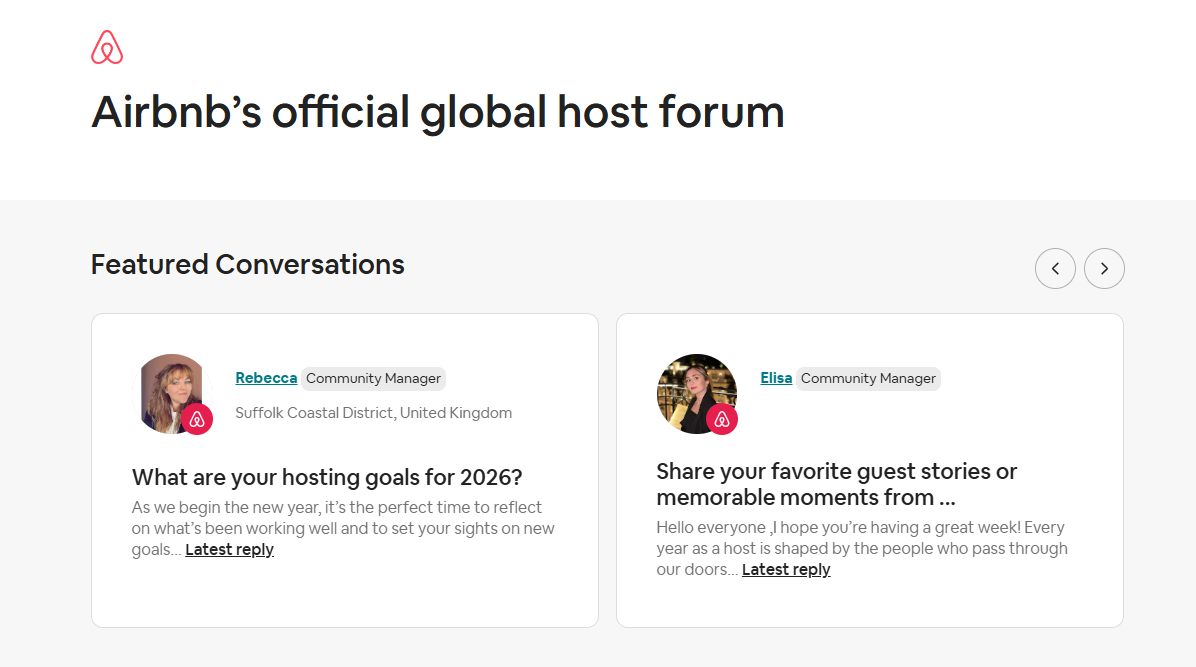
(Image: Airbnb community center)
When Do You Need Community Engagement?
You likely need a customer community strategy if you recognise any of these signals:
-
Your customers ask the same questions repeatedly
If support and CS teams see recurring themes, community-led CX can create peer-led answers and searchable knowledge that scales. -
Product adoption depends on education and best practices
If customers succeed by learning “how others do it,” community engagement becomes a powerful adoption accelerator. -
You’re struggling to differentiate on CX alone
When competitors offer similar features, experience becomes the battleground – and community adds a moat through belonging and shared expertise. -
Your brand is being discussed in private channels you can’t see
If influence is happening in dark social spaces, building a trusted customer experience community gives you a presence where decisions are shaped.
The Next Evolution of CX
The future of CX isn’t just automation or personalisation – it’s connection.
And in a world shaped by AI, dark social, and decentralised trust, community engagement is quickly becoming the operating system behind modern customer experience.
If traditional CX is about service, community-led CX is about ecosystem —-and that ecosystem is where the next generation of B2B customer loyalty will be won
FAQs
What Is Community-Led CX?
Community-led CX is a customer experience strategy that integrates peer communities and social engagement into the core CX infrastructure. It combines AI-driven self-service with human validation, trust-building, and shared expertise to improve outcomes across onboarding, support, retention, and advocacy.
Why Is Community-Led CX Important In 2026?
Community-led CX is important in 2026 because buying is increasingly self-guided, AI requires human proof, and influence happens in private peer-led spaces. Communities provide the trust layer that supports automation while strengthening customer confidence and long-term loyalty.
How Does Community-Led CX Improve Retention?
Community-led CX improves retention by reducing friction, accelerating time-to-value, and surfacing renewal risk signals earlier. Engaged community members typically adopt products faster, resolve issues through peer support, and develop stronger brand advocacy, all of which contribute to higher renewal rates.
How Do You Measure Community-Led CX Success?
Community-led CX success is measured through retention-linked outcomes such as time-to-value, support deflection, renewal rates, advocacy participation, and community-driven registrations. Leading organisations track both engagement signals and downstream business impact rather than surface-level metrics like likes or comments.
How Does Community Support AI-Driven Customer Experience?
Community supports AI-driven CX by adding credibility and real-world context. While AI delivers speed and automation, community provides validation, edge-case experience, and human reassurance – creating a balanced system of efficiency and trust.
What Is The Difference Between Community-Led CX And Traditional CX?
Traditional CX often focuses on service efficiency and satisfaction scores. Community-led CX expands this by embedding peer validation, social proof, and shared knowledge into the customer journey, transforming community from a marketing channel into retention and trust infrastructure.
For a full breakdown of how to build a community-led CX approach, read our Ultimate Guide to B2B Community Engagement