
It’s been wild watching how quickly AI in marketing has taken over. One minute, it was “let’s test a copy generator,” and the next, entire ad budgets, content pipelines, and customer segments were being shaped by “intelligent” systems.
Trouble is, a lot of businesses are more concerned about using AI to hit KPIs than they are about understanding how these tools actually work. That’s how they gradually start losing customer trust, and opening the door to compliance issues and scandals that drain their future budget.
Zendesk even found that while 65% of leaders see AI as essential, 75% believe a lack of transparency will increase churn. The “what we don’t know can’t hurt us” approach to using AI marketing tools needs to disappear. Instead, businesses should be choosing tech with a focus on explainability, transparency, and safety.
Further reading:
- AI Transparency and Trust Engineering in CX
- The AI Transparency Crisis Regulators Can’t Ignore
- 5 Things to Do Before Buying Marketing Tech
What is AI Transparency in Marketing Technology?
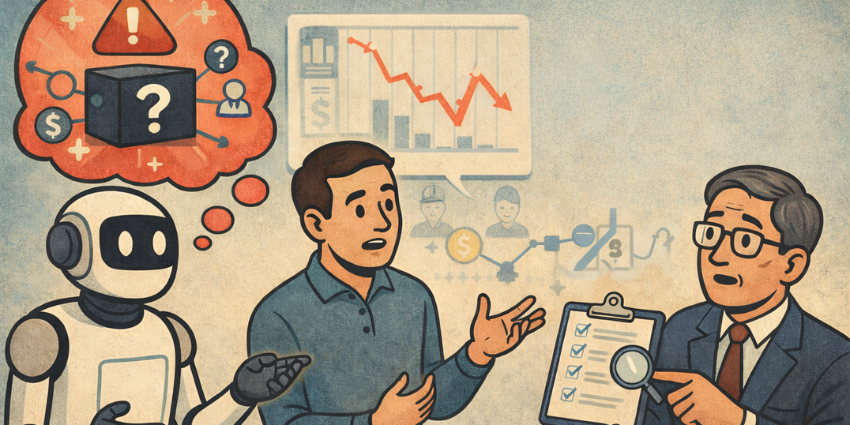
The deeper teams go into their AI marketing tools, the more they realize how much of the decision-making has been happening “under the rug”. Dashboards generate confident scores, segments appear out of nowhere, and content gets rewritten with no real sense of what’s happening under the hood.
It feels convenient, but it’s actually dangerous, particularly now that 71% of customers want companies to be transparent about how they’re using AI. Regulators are cracking down on “black box” strategies. Safe AI marketing strategies need to focus on:
AI Transparency in Marketing
A transparent system should make it easy to understand:
- What data feeds into the model and how fresh it is
- How that data was selected, cleaned, or combined
- The basic structure of the model and the assumptions baked into it
- Any known limitations or risk factors (bias, coverage gaps, hallucination tendencies)
- How every decision or output is logged so someone can retrace what happened
AI Explainability
AI explainability answers a simple question: why did the model do that? Good explainability feels something like this:
- “This customer landed in the churn-risk segment because engagement dropped and support sentiment dipped.”
- “The model chose this message variant because past buyers with similar behavior responded strongly to it.”
- Short reason codes or feature-importance summaries that help a marketer make a judgment call, not guess.
Some teams use tools like SHAP or LIME for deeper dives, but most of the time the real value is clarity that’s immediately usable.
Responsible AI Usage
Responsible AI in marketing is the layer that keeps everything grounded:
- Fairness in who gets targeted or excluded
- Respect for consent and data boundaries
- Human oversight whenever an automated decision has meaningful consequences
- A way to roll back mistakes before they turn into public headaches
The people who’ve managed big ops and customer experience systems have learned this the hard way: if you let automation run wild without any real boundaries, it eventually makes a mess of its own. Marketing’s starting to bump into that same lesson now, and it’s not subtle.
Why Should Companies Evaluate Transparency in AI Marketing Tools?
It’s easy to say that if AI “works” everything’s fine. If your reach, and sales numbers are going up, and team efforts are going down, it feels like you’re on the right track. But ignoring things like explainability, safety, and AI transparency in marketing creates problems fast.
You end up facing:
- Regulatory trouble: Rules around automated profiling, consent, and AI-generated content are tightening fast. If a model can’t explain how it reached a decision, or you can’t prove where the data came from, compliance is almost impossible. Some countries have started proposing fines in the tens of millions for failing to label AI-generated content. That alone should make anyone pause before approving a fully automated campaign.
- Reputational blowback: A couple of recent misfires showed how ugly it gets when a brand’s creative process leans too heavily on AI without any oversight. Remember the Willy Wonka Experience? Customers can tell pretty quickly if you’re relying on AI too much, and if you’re using what it generates to mislead them.
- ROI losses: Hidden logic makes optimization almost impossible. If you can’t see why a model is drifting, or why a segment suddenly balloons, you end up freezing budgets or rolling back experiments. Many organizations admit they haven’t captured the financial upside they expected from AI, mostly because they can’t diagnose issues quickly enough.
The Upside of Transparency Marketing
When teams invest in explainable, transparent, and responsible AI:
- Reviews run smoother because the model’s reasoning is visible, not mystical.
- Segments get sharper because marketers understand which signals actually matter.
- Copy and creative improve because the system can show why it chose one approach over another.
- The compliance team stops hovering like an emergency response unit on standby.
The pattern is obvious once you notice it: opaque tools create more work later; transparent ones create more value now. If marketers can’t explain what their AI is doing, they’re basically rolling the dice with customer trust. But once they can talk about how the system thinks, trust starts to build on both sides of the house.
How Can Organizations Audit AI-Driven Marketing Tools?
It’s surprising how often teams evaluate AI marketing tools based on surface features. A clean UI, or a few promising dashboards, and maybe a shiny “smart suggestions” label.
Meanwhile, the real questions that determine whether your customers are going to trust what you say at all stay untouched. So, here’s how to find out if your AI tech will be transparent, or not.
Look for:
Clear, Plain-Language Documentation
Just straightforward answers to:
- What data powers the model (behavioural logs, CRM fields, third-party attributes, synthetic data, etc)
- How often that data is refreshed
- What assumptions the model makes, and where it tends to struggle
- Version history: when a model changed, and why
If a model starts behaving strangely, you shouldn’t need an archaeologist to figure out what happened.
Training Data Transparency
How does the AI learn? Examine:
- Categories of data used
- Whether any high-risk or sensitive fields appear anywhere in the pipeline
- How bias was tested (and re-tested)
- Whether synthetic data was mixed in, and for what purpose
Without this level of AI transparency, teams end up in that uncomfortable place where they’re defending decisions they can’t understand.
Content Provenance for Anything AI-Touched
Generative tools now shape ads, emails, landing pages, product copy, and way more than many teams realize. So provenance matters:
- Tags or watermarks showing whether an asset was AI-generated
- Clear logs of who edited what, and when
- Rules governing where AI-generated images, text, or video can appear
It’s easy to imagine the awkward press questions when a customer uncovers an AI-generated message in a sensitive moment. Better to avoid that altogether.
Real Logging and Audit Trails
This is the heartbeat of responsible AI in marketing:
- Time-stamped logs of inputs and outputs
- The model version used at the time
- The data fields the model leaned on most
- Links back to any creative or targeting rules involved
Good logs are the thing that keeps a brand from stumbling into a full-blown investigation when something goes sideways. They’re also how you catch model drift early, before it eats through the budget.
Human Oversight, Designed In
Oversight is what keeps everything aligned with your brand’s tone, risk appetite, and basic sense of judgment. Tools should make it simple to:
- Require human approval for high-impact decisions
- Set review flags on sensitive content
- Override automated actions without breaking the system
- Track who reviewed what, so accountability isn’t fuzzy
Some of the savvier teams are even building internal red lines, like no AI-generated faces, no synthetic quotes, or no automated escalations without review.
Explainability: Where Model Decisions Come From
Explainability and AI transparency in marketing really depend on each other. You can’t claim to be open about how you use AI if you can’t spell out why it behaves the way it does. Make sure you can actually dig into how your tools are making choices around things like:
- Audience targeting & predictive personas: Good tools don’t just hand you a segment, they show why each person landed there. Maybe it’s a result of changes in engagement, browsing behavior, or purchasing gaps. You need to know.
- Personalization and recommendations: A recommendation engine should feel like a colleague sharing discoveries. Look for models that explain their actions: “This content was selected because past users with similar behaviour responded to X.”
- Attribution and mix modelling: Explainable AI models provide insights into contribution breakdowns (“Search drove 41% of assisted revenue for this cohort”), and signals that influenced the outcome.
Remember, explanations should be easy to understand and delivered in actual human language. A wall of stats or figures will just confuse marketing teams even more.
If you’re still confused, our guide to Martech tools is a good place to get your bearings.
Quick Evaluation Framework for AI Transparency in Marketing Tools
When teams start evaluating AI marketing tools with a focus on transparency, explainability, and safety, the whole conversation shifts from “this feature is cool” to “wait… what is this thing actually doing when we’re not looking?” If you’re feeling overwhelmed, start here.
Sort Your Use Cases by “How Much Trouble Could This Create?”
Most teams lump everything into the same risk bucket when it comes to AI, but some projects are more dangerous than others. Experiments like using AI to draft subject lines for an email, or to summarize text, aren’t particularly scary.
Things like using AI to dynamically switch out content based on browser signals, or next-best action nudges, are a little trickier. They need AI transparency or a human nearby who can pull the plug.
Then there are the potential big risks, like:
- Discounts calculated on the fly
- Segments tied to churn predictions
- Automated outreach that assumes customers won’t mind being misread
If a vendor claims these high-impact actions are “fully automated,” show caution.
What Questions Should Buyers Ask Vendors About AI Transparency?
Your vendors should be able to answer questions you have about their models and systems without just sending you to a vague product page. The most important questions to ask:
- How are these models actually trained? Where’s the training data coming from, how will our own data be handled, and is there anything sensitive hiding in the mix that we should know about?
- How do we see why a model made a decision? Do your models explain their actions in clear language?
- Can we see warnings when the system is unsure or drifting off-pattern? What fail-safes stop the AI from generating risky or biased output?
- Which parts of the product are running on full auto right now, and how much real control we still have over those workflows?
- If someone challenges an AI-driven decision, what proof can we pull to walk them through what happened?
- Can we trace every AI-shaped asset back to its starting point, see who created it, and confirm if AI-generated campaigns will be clearly called out?
Make Sure You Can Tie AI Evaluation Back to Customer and Revenue Signals
The whole point of explainable, transparent AI is to create better outcomes, not just to satisfy regulators. When you’re investing in AI transparency in marketing tools, you should be able to see how your strategy is paying off.
Look for analytical tools that give you insights into:
- Churn shifts after rolling out a new model
- Whether personalization actually improves relevance instead of creeping people out
- How often humans override automated suggestions
- Conversion or retention lifts tied specifically to explainable recommendations, not generic AI enhancements
Teams that make these metrics visible usually discover that transparent systems perform better because you can refine them, while unclear systems quietly erode trust long before anyone notices.
What Governance Practices Support Responsible AI Marketing?
People often talk about “oversight” like it’s a burden, but honestly, most of the worst marketing disasters would have been prevented by one sharp-eyed person saying, “Uh… we probably shouldn’t send that.”
Good tools make oversight painless. They should let you:
- Set thresholds where automation pauses itself
- Override decisions without breaking the system
- Assign clear ownership so misfires don’t turn into blame volleyball
- Mark certain outputs as “needs a real human brain”
Avoid AI marketing tools that try to make “automating everything” sound like a good thing. If there’s no way to keep your people in the loop, then you have no control over how your AI acts.
Think About the Future
Right now, rules about how companies can use AI in the customer journey are still pretty vague, but they won’t stay that way for long. Guidelines about disclosure, content labelling, and automated decision-making are shifting constantly. Tools built with transparency and explainability already in their DNA tend to adapt more easily.
When you’re sizing up AI transparency in marketing tools, check that the vendor isn’t only thinking about this quarter. Ask how they’re preparing for new rules, what kinds of safety checks they’re testing, and how they expect to help your team adjust as regulations and best practices keep shifting.
AI Transparency in Marketing: More Important than You Think
AI transparency in marketing tools shouldn’t be something you’re evaluating at the end of your checklist, if you have time. If you can’t understand how your tools work or explain decisions to your customers and regulators, you’re going to lose trust fast. Without trust, none of your future marketing strategies are going to work.
If you’re investing in AI marketing tools right now, it’s time to stop obsessing over bigger models and clever features and start picking tools you can rely on. The ones that show their reasoning, admit uncertainty, and leave a clear trail when something odd happens. Those tools end up being easier to optimize and easier to defend.
If you’re ready to level up your intelligent CX stack, take a look at our full guide to sales and marketing tech for 2026. It’ll give you a clear view of why safe, explainable, and transparent AI is where everything’s heading.
FAQs
Why is AI transparency becoming a key factor in MarTech selection?
Because more of marketing is being run by systems people barely understand. A model scores a lead, shifts a segment, or swaps out creative, and everyone just accepts the result because the numbers look good. That works right up until something odd happens and no one can explain why. At that point transparency stops being a “nice feature” and becomes the only way to keep control of what the platform is doing.
How can marketers identify hidden AI decision-making processes?
A simple sign is when the tool shows outcomes but not reasoning. You see a churn score or a recommended audience, but there’s no hint about which signals pushed the model there. Transparent platforms usually expose at least part of that thinking. They’ll show the data inputs, or the behaviors that influenced the decision.
What risks come from using opaque AI marketing systems?
The main problem is that mistakes stay invisible longer. If the targeting logic drifts or the model starts favoring the wrong signals, teams often don’t notice until campaign performance drops or customers complain. And if regulators ask how a decision was made, “the system decided” is not an answer that goes over well.
How does AI transparency affect customer trust?
The trust issue isn’t the AI. It’s the mystery around it. When people understand why they’re seeing something, they tend to accept it. When they don’t, even harmless automation can come across as manipulation.
What compliance considerations apply to AI in marketing platforms?
Most of the pressure comes from data rules and automated profiling laws. Regulators increasingly expect companies to show where their data came from, how models use it, and how decisions can be audited later. If a platform can’t produce that trail, compliance teams end up stuck trying to defend decisions they can’t fully reconstruct.