
AI personalization engines have made it so much easier to make marketing smarter and more relevant, and honestly, most companies are using them a little too enthusiastically.
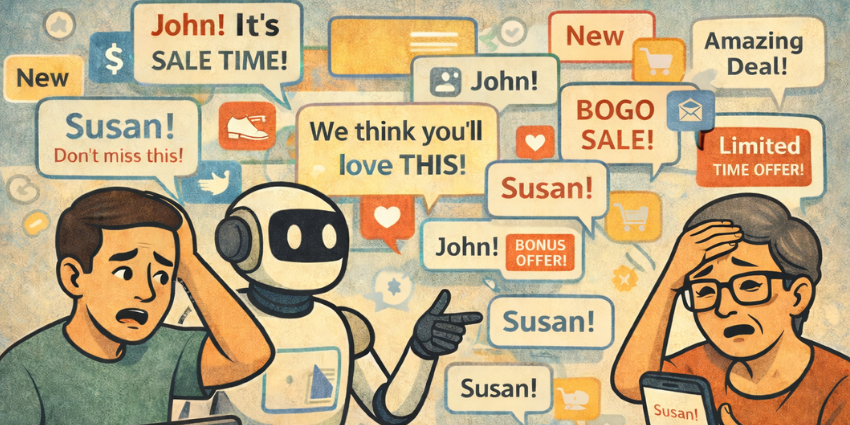
We all know customers want (and expect) personalized experiences, but that doesn’t mean they want to be bombarded with hyper-specific messaging from morning to night. You really can have too much of a good thing. Just look at the facts: 70% of customers actively tune out messages from companies these days, and 59% say repetitive messaging harms the overall customer experience.
Customers are already dealing with way too much noise today. You don’t get past that just by mentioning a customer’s name or a product they viewed recently.
“Personalization, and marketing in general, needs to be a lot more precise.”
If your goal is relevance (and better customer journeys), without endless harassment, you need to think more carefully about how you compare AI personalization engines.
AI Personalization Engines and Why They Go Too Far
AI personalization engines are basically just the intelligent tools that slot into your marketing and journey orchestration stacks to make messaging more relevant to your customer. They’re a fantastic tool for CMOs looking for ways to use AI to hit KPIs faster right now.
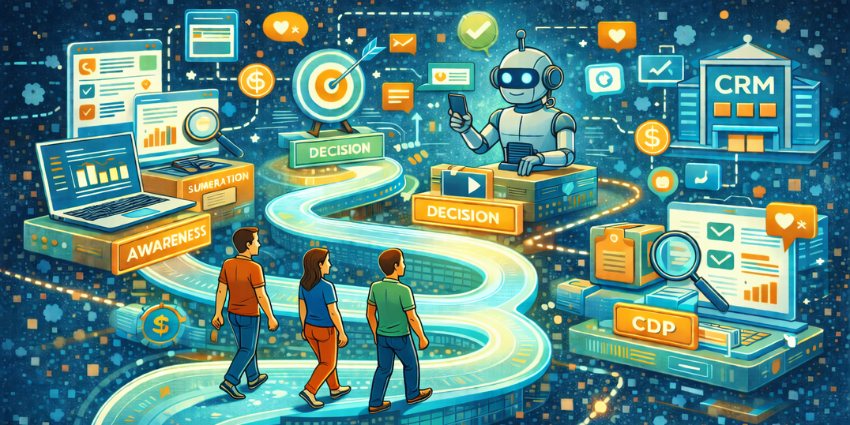
The data layer grabs everything a brand knows about its customers from CDP profiles, CRM notes, click trails, cart events, and purchase history. The decision layer plans a unique “marketing” journey for every customer based on that data and real-time events, and the execution layer runs your campaigns, managing emails, SMS, push alerts, and even web banners without humans.
It’s fast, efficient, and undeniably personal. But it’s also loud. Engines still optimize for channel engagement, not cross-journey sanity. Without suppression logic built into the core, these systems fire away long after the customer’s done listening.
Why AI Personalization Engines Over-Optimize
If you’ve ever wondered why AI personalization engines feel like they’re yelling over each other, the answer is rarely “bad AI.” It’s usually the way the organization around that AI is stitched together. Or, not stitched together at all.
- Structural reasons: Most companies run personalization like a house with too many light switches. Email has its own rules. Mobile push has another set. Ads do whatever the agency decides that week. The contact center is an entirely separate universe. Every team triggers journeys in isolation, so customers get caught in the crossfire.
- Technical reasons: how the AI is trained: A lot of engines optimize for engagement metrics like clicks, opens, and conversions, with zero penalties for fatigue, opt-outs, or complaints. It’s the system doing its job, but it’s missing a lot of the context to decide when another message is “too much”.
- Cultural reasons: the “more is better” mindset: Teams get excited about using AI and data to make messaging feel more relevant. All the stats tell us this should ramp up conversion rates and loyalty. It does to a degree. But eventually, customers start to feel hunted, rather than respected.
If you’re not careful, you end up with a “hyper-personalized” marketing strategy that feels just as much like spam as the spray and pray campaigns of yesterday.
The Cost of Over-Personalization and Overcommunication
Here’s the uncomfortable truth about AI personalization: the more “intelligent” it gets, the more noise it often produces. We talked about this in our article about the Buyer Attention collapse. 55% of customers want fewer messages from customers, and 59% have deleted important messages (stuff about outages or services), because they’re desperately trying to filter the excess noise.
You end up with customers adding you to spam lists, ignoring you completely, or complaining to their friends.
“Even worse, when you really need to reach those customers, you can’t, because they’ve already tuned you out.”
Plus, let’s not forget that personalization engines can only do so much. About 42% of shoppers say that their search results technically match their queries, but they miss the mark emotionally.
The irony is that when AI personalization engines slow down, they perform better. Bloomreach’s SMS experiments are a perfect example: once messages were spaced according to individual tolerance, engagement climbed despite fewer sends. Coca-Cola’s Adobe-driven journey work saw the same thing: a 36% revenue lift with more disciplined orchestration.
So yes, over-messaging costs money. But what it really erodes is trust and communication. No model can predict its way out of that once you’ve lost it.
How to Choose AI Personalization Engines with Guardrails
If your personalization strategy deafens your customers, you’re going to lose them. That’s why companies shopping for AI personalization engines can’t just focus on how many channels they support, or how effective they are at gathering data. You need a system that actually lets you maintain the distance between “smart personalization” and “annoying automation”.
Here’s what you need to be looking at:
Data Foundation & Journey Context
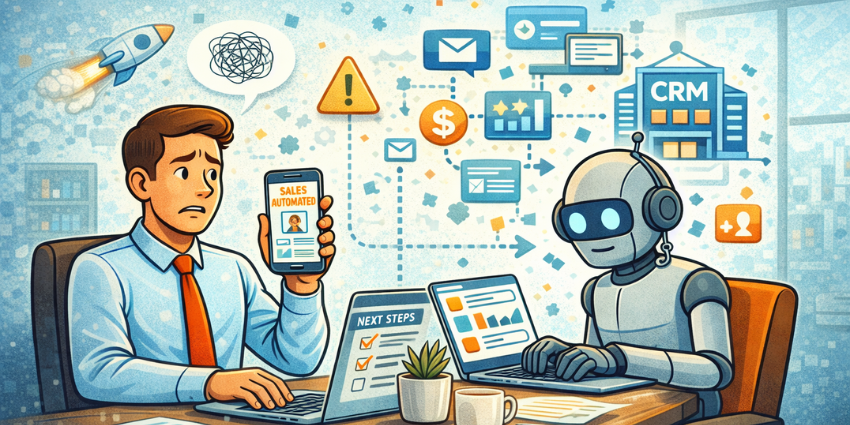
If the engine can’t see the full picture, it will make bad decisions. A system built for email doesn’t know you’ve already sent a customer 34 push notifications, SMS messages, and social nudges in a week. What you need is a system that understands the whole picture. Look for:
- A unified profile fed by CRM, CDP, orchestration platforms, and behavioral data.
- Real-time signals, not batch jobs that refresh every 24 hours.
- Journey awareness: onboarding, renewal, active complaint, re-engagement, etc.
Even service data helps. If service data isn’t connected, your “AI-driven upsell” message goes out while someone’s arguing with support. Ask the vendor to “open” a customer profile and walk you through everything the engine uses to decide the next action.
Suppression Rules & Fatigue Scoring
Honestly, quite a lot of AI marketing tools have suppression options these days, but most CMOs ignore them, because they assume “more content” means more chances for a sale. Really, your best results come from carefully timed messages that don’t annoy your buyers.
Look for:
- Dynamic frequency caps that adapt to behavior, not fixed numbers.
- Suppression triggers tied to service events, sentiment drops, and channel saturation.
- Customer-level fatigue scoring (deletes, no-opens, complaints, fast bounce rates).
If you don’t have (or use) those things, you’re going to end up with AI personalization engines that contribute to the collapse of your buyer’s attention, rather than fixing it. People only have so much focus they can give.
Ask the vendor: “Show me a scenario where your system decides NOT to send anything.” If they can’t surface a suppression explanation, there’s no intelligence behind the curtain.
Intent & Relevance Modelling
This separates real AI personalization from glorified segmentation. Sending customers messages that “technically” match what they might be looking for isn’t as helpful as it seems. Connecting with them in the right moment and adapting to what they’re actually doing is much better.
What to look for:
- Signals that change intent: long dwell time on FAQs, repeat returns, financial stress indicators, and troubleshooting behaviors.
- Predictive scoring that combines what someone is doing now with their historical patterns.
Research into sectors like banking using personalization strategies shows how important this is. Intent-blind personalization leads to disasters like pushing personal loans to someone in the middle of a dispute.
Ask: “If a customer shifts from shopping to troubleshooting in the same session, what happens?” The answer should not be “They stay in the journey until it ends.”
Timing & Prioritization Logic
Really “relevant” (not just personalized) customer experiences don’t just send the right messages; they send them at the time when it actually makes sense. Not when your customers are already overwhelmed, trying to make a purchase, or sorting out an issue.
Look for:
- One-best-action decisioning across channels.
- Priority rules that elevate service over sales during sensitive moments.
- Send-time optimization at the individual level.
Orchestration failures and a lack of real-time data analytics lead to customers getting three different “urgent” nudges simultaneously. Have the vendor simulate campaign collisions. You want to see the engine negotiate which message wins.
Transparency, Safety & Governance
This is one of the most important things to focus on when you’re looking at any AI in marketing. We’ve already created a guide covering why transparency, explainability, and safety in marketing tools is so important (and how to choose the right system).
Basically, though, you need to ensure your compliance team can trace the AI’s logic, not just to avoid fines, but to continuously optimize your messaging strategy. Look for:
- Reason codes
- Audit logs
- A clear map of which data fuels which decision
Opaque personalization creates legal and reputational risks. You should be able to click a message and see why it was sent and why others weren’t.
From Demo to Deployment: Testing AI Personalization Engines
Evaluating AI personalization engines in a sales demo is a bit like watching a magician who refuses to perform any trick you didn’t specifically ask for. Vendors show the real-time dashboards, the gorgeous segmentation UI, maybe a cute animation of a “next best action” being calculated. None of that tells you whether the thing will protect your customers from message overload.
So you have to force the issue.
Designing Real-World Demo Scenarios
Most vendors won’t volunteer their weak spots, so build scenarios that expose them.
Scenario 1: Fatigued but high-value customer
Ask them to simulate someone who’s ignored the last ten messages but still spends a lot. Watch what happens. A good engine sends fewer, better messages. A bad one sees “high value” and starts salivating.
Scenario 2: Critical ticket vs. promo
This one’s helpful because it breaks weak systems instantly. The customer has an open billing complaint. Now, trigger a campaign. A competent engine suppresses the promo automatically and shifts to service comms. No one needs a promotion when they’re already struggling.
Scenario 3: Cross-channel collision
Fire a welcome journey, an upsell sequence, and a renewal reminder all at once. If the engine can’t decide which message wins, it’ll send everything. That’s how you end up with marketing fatigue that drives customers away.
Questions to Ask About Algorithms & Guardrails
Questions reveal a lot:
- “Do your optimization objectives include fatigue or churn as negative outcomes?”
“What prevents your system from repeating the same message in slightly different ways?” - “How do you monitor and override AI behaviors if they drift?”
If a vendor dodges any of these, that’s its own answer.
Pilot Design: Proving Suppression Value Quickly
Pick one journey, usually onboarding or renewal, and split traffic:
- Control: your current campaigns + basic frequency caps
- Treatment: full suppression-based personalization, fatigue scoring, and intent-aware orchestration
Measure:
- Revenue per 1,000 messages
- Unsubscribe rate
- Complaint volume
- Churn or near-churn signals
These metrics expose the real health of your personalization program.
Measuring “Just-Right” Personalization
If you want to know whether your AI personalization engine is helping or just creating higher-quality spam, stop staring at open rates. What you need now is a pulse check on restraint, and whether the system knows when to slow down.
- Revenue per customer contact: If revenue drops as message volume rises, the engine’s hurting you.
- Retention signals: Lift in CLV, lower churn indicators, fewer complaints. Fatigue shows up long before customers hit “unsubscribe.”
- Fatigue + trust markers: Unsubscribes, “mark as spam,” rapid deletes, shorter dwell time.
If these creep upward, your “personalization” is just pressure. - Orchestration health: Fewer duplicate messages. Clear suppression logs. A rising count of “messages intentionally not sent.”
If a vendor can’t show improvements in at least three of these, you’re not dealing with intelligent AI personalization engines; you’re dealing with too much automation.
Redefining What “Good” AI Personalization Looks Like
After you’ve spent enough time with AI personalization engines, you start to realize the smartest systems aren’t the ones that churn out the most messages; they’re the ones that know when to stay quiet. That’s the real test.
A capable engine understands intent, fatigue, and context. It recognizes when someone’s researching and when they’re irritated. It knows that an open service ticket matters more than a seasonal promo. It treats suppression-based personalization as a strategy, not a cleanup.
So the real question for buyers isn’t, “How well does this platform personalize?” It’s, “How well does it stop?” If the answer isn’t obvious by the end of a demo, you already know everything you need to.
Once you’ve figured that out, you’ll be far better prepared to build a sales, service and customer service strategy that actually works. If you need help with that, start with our ultimate guide to sales and marketing technology, and start building a stack with a little more focus on control.