
If you’re choosing a customer experience (CX) platform, it’s important to look beyond just features, usability, or price. Customer interactions are now generating increasing volumes of sensitive data. Regulatory pressure is rising, cyber threats are evolving, and customers expect transparency about how their data is handled.
Enterprises are investing heavily in this area. Gartner recently predicted that pre-emptive cybersecurity solutions will account for 50 per cent of IT security spending by 2030. This means it’s important you get your investment right…
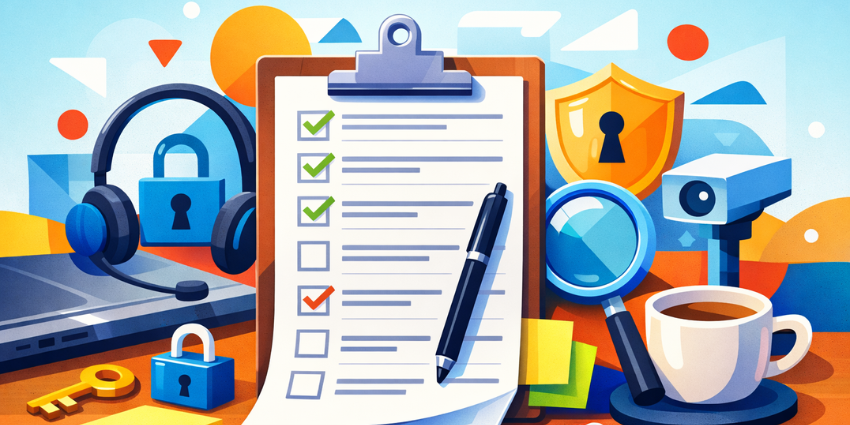
This buyer’s guide is designed as a practical checklist for decision-makers who are choosing a vendor. It focuses on what to verify, what evidence to request, and how to reduce long-term risk before signing a contract.
Related Stories:
- CX Trends Reshaping Security, Privacy, and Compliance – 2026
- Security, Privacy, and Compliance: How Do the Leading CX Platforms Compare?
- The Ultimate CX Security, Privacy, and Compliance Adoption Guide
1: Regulatory Compliance – What Proof Should Buyers Expect?
Compliance is about more than simply ticking boxes. It’s vital to confirm that platforms align with major regulations such as the General Data Protection Regulation (GDPR), California Transparency Act, Payment Card Industry Data Security Standard (PCI DSS), and any industry-specific requirements.
Vendors should clearly document which compliance obligations they manage, and which remain with the customer. Look for evidence such as independent audit reports, certifications, and clearly defined data residency options.
Key areas to verify include:
- Availability of audit logs and reporting for compliance reviews
- Ability to choose where customer data is stored and processed
- Up-to-date certifications rather than marketing claims
Promises and spurious safety guarantees are easy to make. Proof is what matters when regulators come calling.
2: Security Architecture and Data Protection
When assessing safety features in CX platforms, buyers should focus on how customer data is protected throughout its entire lifecycle, not just where it is stored. This means understanding the safeguards in place for data at rest, data in transit, and data in use, as each stage presents different risk profiles.
Strong encryption should align with recognised industry standards, such as AES-256 for stored data and TLS for data in transit. Equally critical is identity and access management (IAM), which governs who can access customer information, under what conditions, and with what level of privilege.
Effective IAM ensures that sensitive data is only available to authorised users and systems, reducing the risk of both accidental exposure and malicious misuse.
Buyers should also dig into the operational controls that underpin security controls. This includes examining whether the platform supports role-based access controls, enforces multi-factor authentication, and provides continuous monitoring with intrusion detection to identify suspicious activity in real time.
A robust contact centre security vendor checklist should also place heavy emphasis on incident response maturity. Ask how security incidents are detected, how quickly customers are notified, and how remediation is managed and communicated.
“Clear, documented incident response plans and breach notification processes are strong indicators of a vendor that treats security as an ongoing responsibility rather than a compliance checkbox.”
It’s also important to ensure any software is continually updated and potential new threats are guarded against. Studies have shown that 80 percent of companies that had a data breach or a failed audit could have prevented it by patching on time or doing configuration updates.
3: Customer Data Privacy and Consent Management
Privacy expectations extend beyond compliance. Effective platforms support data minimisation, meaning it only collects and retains the bare minimum amount of data. Consent management tools should make it easy to capture, update, and revoke consent across channels.
Buyers should also confirm that right-to-be-forgotten requests can be executed without manual workarounds. Transparency is critical. Customers should be able to understand how their data is used throughout the journey.
Important checks include:
- Configurable data retention and deletion policies
- Built-in workflows for access and erasure requests
- Clear visibility into how customer data flows between systems
Privacy should be operational, not theoretical.
4: AI, Automation, and Third-Party Risk Controls
AI and automation introduce a plethora of new risk considerations for CX leaders. So, how can buyers reduce risk when choosing CX vendors that use AI? Buyers must first understand how AI models are trained and governed. Specifically, clarify whether customer data is used to train models and, if so, under what conditions.
Buyers should also assess the transparency and explainability of the AI systems in use, as well as the vendor’s ability to audit and document model behavior over time. Finally, evaluating how vendors monitor for bias, model drift, and regulatory compliance can help ensure AI-driven CX capabilities remain trustworthy, ethical, and aligned with business and legal requirements.
Third-party risk is another major factor. CX platforms often rely on integrations, cloud providers, and subcontractors. Each introduces downstream risk that must be managed. Indeed, third-party platforms are the most common entry point for hackers into enterprise systems. Reducing risk means understanding not just the platform, but the entire ecosystem around it.
Finally, it’s important to look beyond the initial purchase and ensure that CX security offers long-term protection.
Strong governance includes clear documentation, internal controls, and structured change management. Buyers should review service level agreements (SLAs) related to security, uptime, and incident response, not just performance metrics.
“Vendors should demonstrate how they support compliance as regulations evolve. This includes regular updates, customer communication, and dedicated compliance resources.”
A robust CX security and compliance checklist should confirm:
- Regular security testing and vulnerability assessments
- Transparent change management and release processes
- Ongoing support for audits and regulatory reviews
Making a Confident, Informed Decision
Understanding how to evaluate CX vendors requires more than simple feature comparisons. It demands a structured approach to compliance, security, privacy, and governance. By focusing on evidence, transparency, and long-term accountability, organisations can select CX platforms that protect both their customers and their reputation.
What security features should CX platforms include?
Essential features include encryption, identity access controls, secure APIs, audit logging, compliance reporting, and secure data storage.
How do you evaluate CX vendors for compliance?
Enterprises should review certifications, data governance policies, security audits, incident response plans, and third-party risk management practices.
What compliance regulations affect CX platforms?
Key regulations include GDPR, CCPA, PCI DSS, and emerging AI governance laws such as the EU AI Act.
Why is vendor security assessment important?
A weak vendor can expose sensitive customer data, making vendor risk management a critical part of CX platform selection.