
For decades, the path from industry expertise to software business required substantial capital, large engineering teams, and months of infrastructure development.
A rancher who understood supply chain traceability or a healthcare administrator who knew patient engagement inside out faced an impossible gap between knowledge and commercialization.
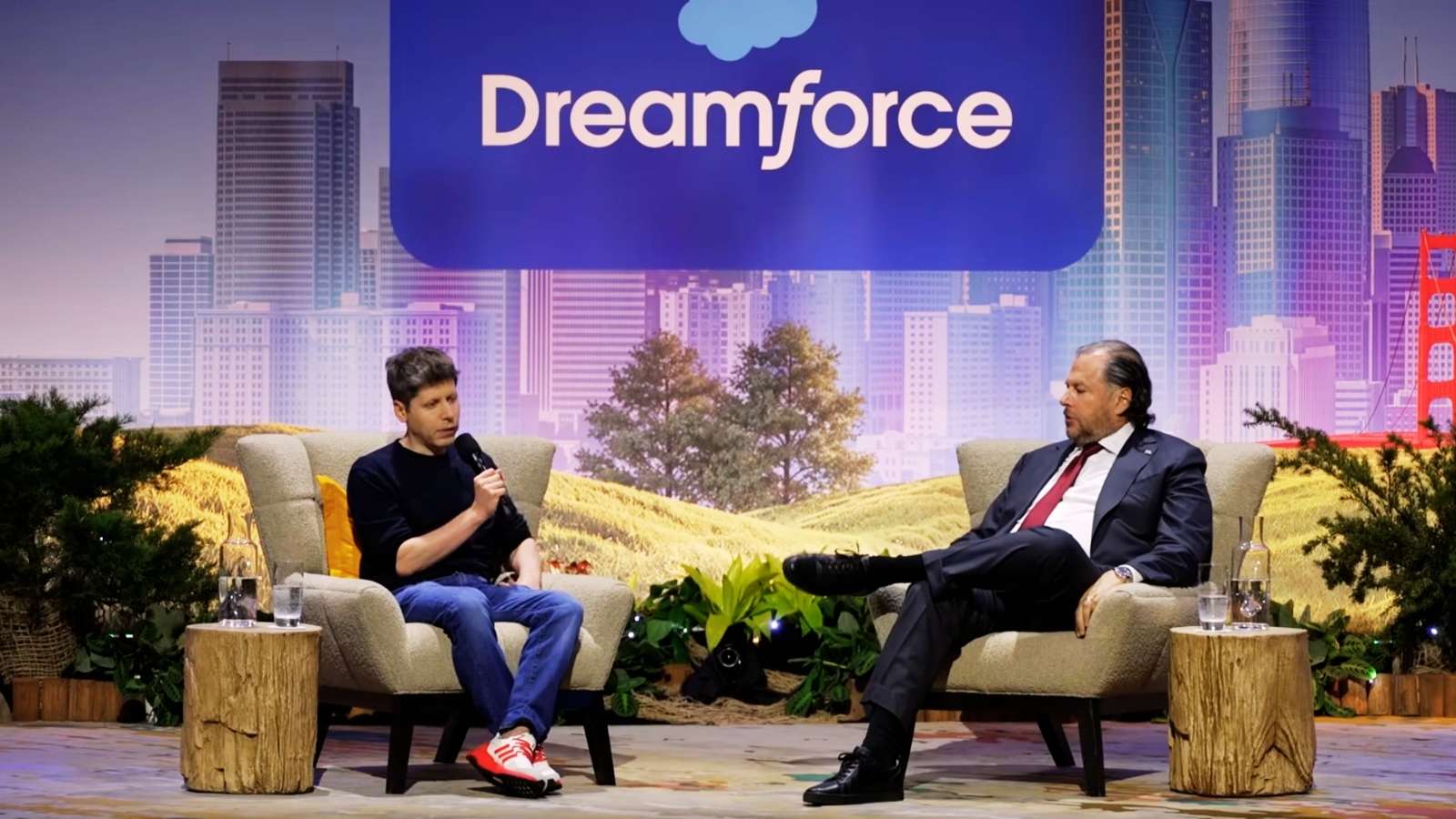
That barrier is crumbling. At the Dreamforce event back in October, Salesforce launched Agentforce 360, and today they announced a major refresh to their partner ecosystem, marking the largest expansion of its platform since Force.com debuted eighteen years ago.
The move transforms how domain experts can turn their insights into revenue-generating AI applications without building technology from scratch.
The Platform That Builds Businesses, Not Just Apps
Agentforce 360 makes an ambitious promise to enable anyone with deep industry knowledge to create, commercialize, and scale AI-powered business applications. The platform bundles Marketing Cloud Growth & Advanced, Financial Services Cloud, Automotive Cloud, Data 360, and enhanced security capabilities into a unified foundation.
Builders gain access to more than 500 prebuilt features spanning barcode scanning, mobile offline sync, document generation, automation tools, and reusable components for forms, approvals, and reporting.
The platform’s AI-native data foundation eliminates the need for custom ETL pipelines, allowing creators to connect any data source through zero-copy integrations.
“We built our entire business on the Salesforce Platform,” said Tom Richards, Founder and CEO of HarvestPath, a protein traceability platform that evolved from a family farm.
“It gives us the scalability and compliance we need, freeing us from the overhead of building complex infrastructure from scratch. That let us focus on perfecting our platform and go from idea to a fully operational, live business at lightning speed.”
Why This Matters for CX Leaders
Agentforce 360 positions AI agents as core building blocks rather than add-on features. These agents can engage customers, resolve issues, generate leads, support employees, and automate repetitive work while maintaining full auditability and trust controls.
Because Agentforce operates natively within the platform, organizations avoid the complexity and cost of integrating external LLM infrastructure.
The platform also supports model choice across providers including OpenAI, Anthropic, Google, and AWS, or allows businesses to bring their own models for industry-specific requirements.
Data 360 creates harmonized customer profiles with governed access, ensuring every team and agent works with consistent, trusted context.
In addition, Marketing Cloud Growth & Advanced delivers AI-driven personalization, instant audience segmentation, and cross-channel journey orchestration without custom logic.
In discussing the news, Brian Landsman, CEO, AppExchange & Global Partnerships, EVP, Salesforce, claimed that “we are entering a phase where expertise is more valuable than code.
“When expertise becomes a product, whether it is managing livestock, resolving patents, or optimizing shipbuilding, it shows how much potential exists once you give people the right foundation.”
Solving the Maintenance Treadmill
Traditional software development carries a hidden tax. Continuous maintenance, building missing functionality, and delivering new features can consume 20-40% of development costs, according to Salesforce. Features that should take days stretch into weeks. Deployment times spike. Bug rates triple.
Agentforce 360 attempts to address this through enterprise-grade capabilities that would typically require months to build manually. Shield provides encryption, audit trails, event monitoring, data retention policies, and automated compliance controls. The platform maintains SOC 2, GDPR, HIPAA, and FedRAMP certifications out of the box.
Multi-factor authentication, single sign-on, role-based access control, and continuous penetration testing come standard. Salesforce handles global 24/7 operations with continuous uptime monitoring, real-time threat detection, and platform auditing.
Builders report a 30% decrease in IT costs after moving to Salesforce, use almost a third fewer systems, and see significant gains in developer productivity, according to Salesforce FY26 Customer Success Metrics.
Flexible Business Models for Modern Markets
Agentforce 360 introduces commercial flexibility that matches how customers actually buy. Builders can adopt seat-based, usage-based, or consumption pricing through Flex Credits.
Moreover, the AppExchange marketplace will soon offer auto-provisioning and billing, allowing creators to generate private offers with automated order creation and license provisioning.
Real-time transparency comes through automated monthly usage statements and consumption data via App Analytics. Salesforce purchases LLM credits at scale, giving builders access to high-quality AI at efficient rates. The ecosystem includes more than 5,000 ISVs, 7,000 system integrators, Salesforce Ventures, and a twenty million member Trailblazer community.
The platform’s open architecture supports continuous improvements through three product releases annually. Open APIs and native extensibility connect seamlessly across ERP, GIS, legacy, and third-party systems, while a Zero Copy Partner Network enables secure, real-time data sharing without replication.
Early Success Stories Point to Broader Potential
Several organizations demonstrate what becomes possible when domain expertise meets platform infrastructure:
- Certinia embedded AI agents across its platform, from staffing to customer success, automating work that once took hours.
- Bariatric Centers of America turned their treatment and outreach model into a patient management platform that improves engagement across the care journey.
- Aster Software, Project Fortress, Infill, Hitteps, and Xotigo built purpose-driven products for growers, legal transactions, residential construction, real estate operations, and automotive supply chains.
These examples span industries, but share a common thread: deep knowledge of customer needs combined with infrastructure that handles technical complexity.
What’s Available Now and What’s Coming
Agentforce 360, Data 360, Financial Services Cloud, Automotive Cloud, and Shield are generally available now. Marketing Cloud Growth & Advanced will reach general availability in mid-December 2025.
Tableau Next and the Salesforce Partner Marketplace App are expected in Q1 2026, with expanded trust and compliance capabilities planned for FY27.
The platform provides no-code, low-code, and pro-code tools including Agentforce Vibes, Flow Builder, App Builder, CLI, and DevOps Center.
Builders can create applications that scale globally while maintaining startup-level agility.
A Moment Worth Considering
The convergence of AI capabilities, platform maturity, and flexible business models creates conditions we haven’t seen before in enterprise software. The question facing CX leaders isn’t whether AI will reshape customer interactions, but who will control the tools that define those experiences.
Agentforce 360 represents a bet that industry expertise, when properly equipped, can compete with traditional software companies. For organizations that have spent years understanding their customers’ journeys, pain points, and moments of truth, the platform offers a path to turn that knowledge into proprietary technology.
The barrier between knowing how to solve a problem and building the solution has never been lower. What remains is the question of whether organizations will recognize the opportunity before someone else in their industry does.
Join the conversation with 40,000+ CX professionals in our LinkedIn community and subscribe to our newsletter for weekly insights on the technologies reshaping customer experience.