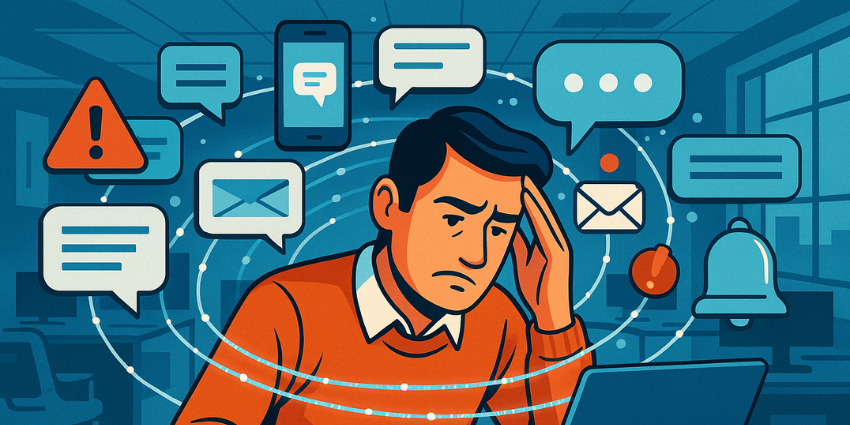

Have you ever suddenly realized after staring at a screen for a few hours, that you haven’t really been taking anything in? You probably skimmed dozens of emails, messages, and sites, but nothing’s stuck, or convinced you to actually “do” anything. It’s not just you. Buyer attention has all but flatlined lately, and it’s easy to see why.
Because the average buyer isn’t dealing with a tidy inbox or a couple of brand notifications. They’re wading through a digital swamp: promo emails stacked like old receipts, push alerts firing off for no good reason, chat apps nudging them about “updates” that aren’t remotely urgent. Then AI came along and multiplied all of it. Overnight.
So now we have this weird tension: brands shouting louder, and buyers hearing less. Statistically, around 70% of customers say they’re “tuning” brand messages out. Not just marketing messages, but service updates and account alerts too.
You can call it marketing fatigue, or message overload, or whatever label feels polite, but the bottom line is simple: people are tired. We need a way to wake them back up.
Why Buyer Attention Has Collapsed
As our guide on how AI helps CMOs boost their marketing metrics shows, companies definitely have more tools fueling better marketing strategies these days. But there are more challenges, too.
Channel Proliferation + AI Content Overproduction
It’s hard to keep track of how many touchpoints brands use now. Email was manageable. SMS was fine. Then push alerts, WhatsApp, in-app nudges, browser notifications, social DMs, RCS, and chatbot prompts all barged in. Customers went from “reachable” to “constantly interrupted”.
GenAI poured rocket fuel on everything. When content that once took a week can be spun up in fifteen minutes, brands inevitably overdo it.
Repetition makes it far worse. Show someone the same ad too many times, and purchase intent drops around 16%. Roughly 59% of people flat-out say repetitive messaging damages the experience. It’s telling that The Times in the UK capped their mobile alerts at four per day because readers were turning them off in frustration. When even high-value news has to ration itself, the rest of us should probably take the hint.
Buyer Journeys Have Shifted Upstream
Meanwhile, buyers changed where (and how) they start looking for answers. Today, about 51% of service journeys start somewhere that isn’t your website, usually Google, YouTube, Reddit, TikTok, or increasingly, AI assistants like ChatGPT.
Buyers show up later, more self-informed, and significantly less patient. They expect your content to match what they learned upstream, and they don’t want to scroll through a 7-email nurture sequence to get there.
Berlin Airport is a good example of how this can work. Their data-driven approach to structured, AI-friendly content helped them improve self-service performance because their information became easier for both humans and AI systems to parse. Their “discoverable upstream” strategy is one more brands will need to copy.
AI-Accelerated Buyers = Higher Standards, Lower Tolerance
Buyers aren’t wandering aimlessly through the funnel anymore. They arrive knowing more, expecting more, and giving less time to anything that doesn’t nail relevance right away.
The tolerance for generic messaging is almost non-existent now. “Hi [First Name], here’s our latest update…” is basically invisible to a customer.
But when personalization is done properly, the upside is huge. Coca-Cola’s journey orchestration program delivered a 36% revenue lift and 89% conversion on re-engagement journeys, not because they sent more, but because the messages actually mattered to the person receiving them.
Frequency Overload Has Crossed Tolerance Limits
If you want a slightly depressing statistic: 55% of customers actively want fewer messages. Their tolerance seems to hover somewhere around five emails per week per brand, and going past that line pushes engagement off a cliff.
41% say they’re simply receiving too many emails. 49% have avoided buying from a brand that contacts them too often.
Cross-channel inconsistency only accelerates fatigue. Disconnect and lack of orchestration between sales, marketing, and customer service teams leads to serious message overload. It’s the promo text that arrives during an outage. The support email that contradicts the marketing email. The push notification that pings while a customer is already mid-conversation with your service team. Everything blends into meaningless noise.
The Business Impact of Losing Buyer Attention
There’s a temptation to see dwindling buyer attention as one of those issues no-one can do anything about. We’re all sort of starting to accept that there’s just too much noise to stand out these days. But that’s the wrong attitude for any company to have.
Let message overload and communication inconsistencies get in the way and you end up with a situation where:
- Critical Messages Are Missed: About 59% of customers say they’ve trashed an important message because it looked like marketing clutter, a fraud alert, a bill, a service notification. When every message looks like a promo, customers treat it like one. That leads to higher support calls, more churn, and financial losses.
- Engagement and Revenue Decline: We tend to look at unsubscribes like they’re a cost of doing business, but they’re not. They’re a shrinking of your reachable universe and future revenue base. People aren’t just unsubscribing anymore. They’re walking away entirely. more people have paid for ad-free experiences this year. When customers are literally spending money to avoid brands, it’s a sign things have gone off the rails.
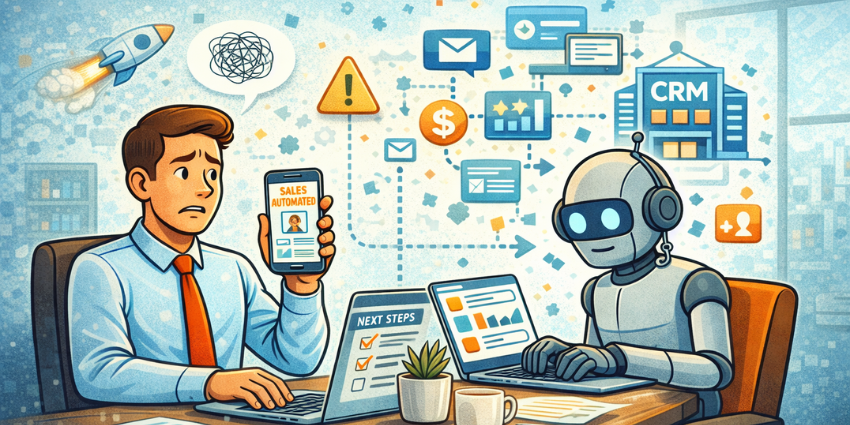
- Internal Attention Collapse: The irony in all of this is that the people building customer journeys are overwhelmed by alerts and updates themselves. It’s attention collapse on both sides of the glass. Sellers now spend less than one-third of their time actually selling. The rest is swallowed by internal noise: notifications, meeting pings, automatic CRM updates, “urgent” Slack messages, dashboards that refresh every 15 minutes. The whole thing creates a low-grade cognitive buzz that drains focus.
How Technology Can Fix the Buyer Attention Collapse
What’s strange is that the solution isn’t “better marketing.” It’s better control. Customers aren’t asking brands to be louder or more clever, they’re asking them to calm down. To stop treating every notification like a life-or-death situation. The upside is that the tech already exists to fix this; most companies just aren’t using it in the right places.
Real-Time Orchestration as the New Growth Engine
If there’s one piece of technology that actually makes a real difference to buyer attention, it’s orchestration. We covered this in our Techtelligence report, so check it out for more insights.
The idea is this: instead of twenty systems deciding independently when to “engage,” orchestration creates one brain that prioritizes, delays, or cancels messages based on what the customer’s actually doing.
Brands that use this right see huge lifts. Saïd Business School, for example, saw 10–20% higher engagement once they harmonized timing and tone across channels. Not new creative. Not more content. Just coherence.
Suppression Rules + Fatigue Scoring
Overcommunication kills customer experiences, across sales, marketing, and service. Good cross-channel suppression rules prevent the worst outcomes, you set rules, so you don’t:
- Send promos to someone with an open ticket.
- Message during a known outage.
- Push reminders when sentiment is negative.
- Double-message across channels within the same hour.
Then there’s customer fatigue scoring, which is basically a way of teaching your system to read “stop” signals. Deletes, quick swipes, zero engagement, and unsubscribes in related campaigns are all early warnings that you’re becoming noise.
Replace Batch Campaigns With Event-Triggered Pipelines
Batch campaigns only exist because technology used to be slow. Now it’s fast, so there’s no excuse. Event triggers do what traditional campaigns can’t: react to the moment something actually happens. It’s the next stage for proactive CX, covered in our ultimate guide here.
Examples:
- Self-service attempt fails → send a rescue message
- Payment bounces → deliver a retry link instantly
- Churn risk surfaces → send a personalized retention offer
- Cart abandoned → only nudge if the customer hasn’t already moved on
Build a Unified Data Backbone (CDP + CRM + CCaaS)
As our research shows, data issues are the poison harming AI-powered CX.
If your data lives in silos, your messaging will too. That’s the whole problem in one sentence.
A unified profile, the combination of CDP, CRM, and CCaaS, prevents systems from tripping over each other. Suddenly marketing knows what service knows. Sales knows what marketing knows. And the customer stops receiving three contradictory updates in the same afternoon.
Genesys customers who implemented unified data layers saw routing speed improve 34% and experience scores jump 20 points. It’s amazing what happens when the left hand finally sees the right hand.
Design Communications for Recognition & Trust
One of the simplest fixes? Make important messages instantly recognizable. Short subject lines. Consistent layouts. Clear sender domains. Plain language. One action per message.
Financial brands that moved to standardized, high-recognition templates saw missed-payment rates drop, people finally realized which emails they shouldn’t ignore.
Speaking of trust, get your automation strategy right too.
AI doesn’t need to replace humans; it needs to know when to step back.
A simple framework:
- Low-risk → fully automate
- Medium-risk → assist the agent
- High-risk → human-first, AI-second
Empathy failures cost more than automation saves.
The CMO Playbook for Protecting Buyer Attention: What to Do Now
This all seems like a lot, we get it, so here’s a checklist to get you back on track:
- Audit Message Volume & Collision Points: Before fixing anything, map the chaos. Literally. Lay out every email, SMS, push alert, chatbot nudge, WhatsApp message, and campaign trigger your company sends. Spot duplicates, tone conflicts, and irrelevant journeys that you no longer need.
- Build a Suppression Rule Library: Think of suppression rules as seatbelts for your messaging engine. They prevent the most trust-killing mistakes, like sending a promo during an outage, or a “we miss you” nudge to someone who opened a ticket an hour ago.
- Implement Fatigue Scoring & Intent-Based Cadence: Customers tell you “stop” all the time, just not in words. Deletes without reading, fast scrolling, ignoring three messages in a row: those are fatigue signals. Good customer fatigue scoring listens to them.
- Move From Campaigns to Event Pipelines: Most monthly newsletters shouldn’t exist. Neither should most drip sequences. They’re relics from a world with slower tech. Swap them for pipelines triggered by real customer behavior:
- Fix Cross-Functional Misalignment: This is the part where most organizations groan because it usually involves uncomfortable conversations. But misalignment between sales, marketing, and service is exactly what causes the worst message overload failures. Implement shared orchestration, data, and journey logic.
Finally, measure attention outcomes. Sends don’t matter anymore. Neither do impressions. Track the things that show you’re not drowning people with noise:
- Opened-with-action
- Time-to-action
- Fatigue score drift
- Critical-message recognition
- Friction-avoidance metrics (predictive CX KPIs)
Buyer Attention Governance Becomes a CX Discipline
We’re heading toward a future where buyer attention isn’t something brands “earn” with clever creative; it’s something they manage like a resource. If the last decade was about reach, the next one is about restraint. Companies can’t afford the fallout of marketing fatigue anymore, and the smartest teams are already treating attention like a measurable asset instead of a lucky accident.
We can look forward to an era where:
- Attention is a real KPI: The dashboards need to grow up. Counting sends and impressions feels almost childish when everyone knows customers are tuning out. New metrics are creeping in like attention value, message health, even noise-to-signal ratios.
- AI Gatekeepers & Machine Customers: AI assistants are changing the funnel faster than marketers realise. They’re not skimming your homepage; they’re parsing structured content, reviews, knowledge bases, and whatever else they can ingest. If your information isn’t machine-readable, you might as well not exist.
- Agentic AI for Autonomous Orchestration: Orchestration is about to run on autopilot. It adjusts cadence, channel, and timing based on behaviour. Think AI that applies customer fatigue scoring, pauses a promo during a service issue, or resolves cross-channel collisions before humans notice. Signals > schedules. Finally.
- Composable CX as the Enabler: None of this works on tangled tech stacks. Composable CX: modular services, shared data, event streams, gives brands the plumbing they need to coordinate everything without duct-tape integrations.
Stop Letting Buyer Attention Disappear
If there’s one thing this whole attention crisis makes painfully obvious, it’s that people aren’t running out of curiosity, but they are running out of capacity. Brands didn’t lose their audiences because customers stopped caring. They lost them because everything started shouting at once.
But it’s fixable. The teams winning right now aren’t the ones pushing more content or squeezing another drip campaign into the calendar. They’re the ones who finally said, “Enough,” and rebuilt communication around relevance, timing, and restraint. They’re using orchestration to stop collisions, cross-channel suppression to prevent self-inflicted disasters, and customer fatigue scoring to make sure they never cross the invisible line where interest turns into irritation.
If you’re ready to start moving in the right direction, check our guides to sales and marketing technology.