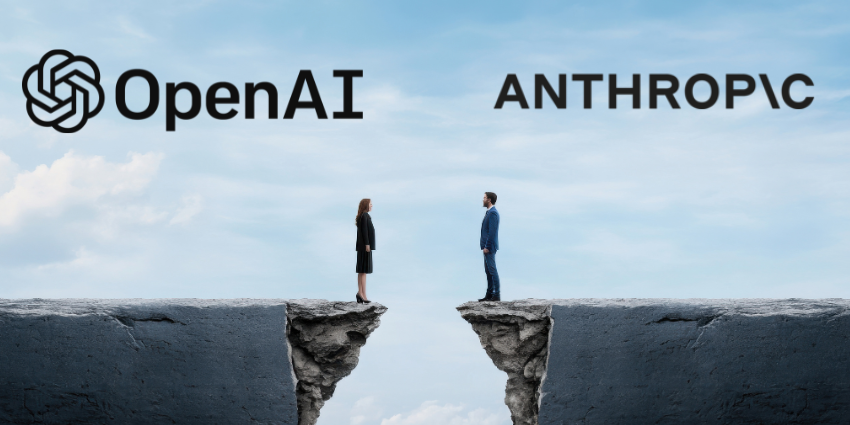

OpenAI CEO and Founder Sam Altman has criticized AI developer Anthropic after it released a series of Claude commercials allegedly mocking OpenAI and other AI competitors.
The four commercials, with one expected to air during Super Bowl LX on Sunday, used language to imply that its competitors would use users’ personal information for marketing purposes.
Anthropic said the campaign was intended to reinforce its commitment to keeping Claude free of advertising, after OpenAI announced plans to introduce ads on its own platform.
In a post on X yesterday, Sam Altman said the way Anthropic’s commercials depicted OpenAI and other competitors was misleading, calling its advertising techniques “dishonest”.
“Our most important principle for ads says that we won’t do exactly this; we would obviously never run ads in the way Anthropic depicts them,” he affirmed.
“I guess it’s on brand for Anthropic doublespeak to use a deceptive ad to critique theoretical deceptive ads that aren’t real, but a Super Bowl ad is not where I would expect it.
“We care a great deal about safe, broadly beneficial AGI, and we know the only way to get there is to work with the world to prepare.”
The Anthropic Campaign
With rumors rising around the soon-to-be released Claude Sonnet 5, users instead woke up yesterday to an Anthropic campaign, mocking its competitors by using jarring and satirical language in its ads to illustrate the absurdity of using personal information for advertising on AI platforms.
The four adverts feature human embodiments of AI assistants acting as trusted advisors and mentors, each asking the user for their personal information and then begin pitching products to them based on the context given.
The adverts all conclude with the tagline: “Ads are coming to AI. But not to Claude”, while titling each advert with words such as “Deception” and “Betrayal”.
Anthropic’s campaign highlights a common fear that by introducing advertising incentives into AI platforms could lead to unpredictable results in AI behavior.
Introducing Codex
These adverts come just a few days after the launch of OpenAI’s application and coding tool, Codex, providing “builders” with a central hub for agentic coding.
Altman used the product launch later in the post to contrast with Anthropic’s choice to block access to their coding products, committing to provide broad access to users across numerous budget types.
“We are enjoying watching so many people switch to Codex,” Altman continued.
“There have now been 500,000 app downloads since launch on Monday, and we think builders are really going to love what’s coming in the next few weeks. I believe Codex is going to win.
“This time belongs to the builders, not the people who want to control them.”
Anthropic’s Response to Advert-Free Approaches
On Wednesday, Anthropic released a statement reaffirming its decision to not use advertisements on its Claude platform.
It’s decision to keep Claude ad-free is based on the view that advertising does not align with deep, open-ended conversations, arguing that adverts could conflict with customer interests or influence responses.
The AI assistant is designed for deep work, complex problem-solving, and sensitive personal reflection, and is intended to be objectively helpful rather than commercially driven.
The AI developer has assured its customers that Claude will remain a distraction-free tool and support commerce and integrations initiated by users, not advertisers.
Anthropic has also assured customers that its revenue will come from business agreements and paid plans, rather than selling attention to advertisers.
OpenAI to Include Adverts
Anthropic’s adverts are allegedly mocking OpenAI and other competitors’ decision to include adverts in their platforms.
This comes after a speech made by Altman at Harvard University in 2024, stating the possibility of introducing ads onto ChatGPT would be a “last resort.”
Now two years later, OpenAI confirmed that it would be introducing adverts into its platform, ensuring these would be clearly labelled and separate from the conversation, and hidden completely for paying users.
The platform said that introducing advertising allows broader access across income levels, unlike Claude’s subscription-only model.
“More importantly, we believe everyone deserves to use AI and are committed to free access, because we believe access creates agency,” Altman said.
“More Texans use ChatGPT for free than total people use Claude in the US, so we have a differently-shaped problem than they do. (If you want to pay for ChatGPT Plus or Pro, we don’t show you ads.)”
By targeting products towards specific budget types, Altman argues that OpenAI’s willingness to use ads is what allows them to bridge the digital divide for users globally.
“Anthropic serves an expensive product to rich people. We are glad they do that and we are doing that too, but we also feel strongly that we need to bring AI to billions of people who can’t pay for subscriptions.”
This ad conflict highlights a tension between user experience and accessibility, while both tools offer what the other can’t, customers are likely to be limited in AI platforms’ offerings for the time being.
Techtelligence Insight
Advertising models are becoming a defining fault line in enterprise AI trust strategies.
- AI platform funding models increasingly shape perceived neutrality and long-term customer trust.
- Enterprise buyers must assess governance risks tied to advertising-driven incentives.
- Access versus control trade-offs will influence vendor selection across regulated environments.
This Techtelligence Insight is AI-powered and designed to highlight key implications from the story. It does not affect the editorial integrity or independence of the article.