
Customer experience (CX) is in the midst of a profound transformation. What was once defined by transactions, single-channel support, and static knowledge bases is evolving into something far more human and strategic. At the centre of this shift sits community and social engagement.
Today’s customers expect more than fast resolutions or feature parity. They want connection, relevance, and a sense of participation. They want to learn from others like them, share experiences, and feel supported beyond a single interaction. As a result, community and social engagement are fast becoming core pillars of modern CX – not peripheral initiatives or “nice to haves.”
Forward-thinking organisations are responding by building social-first, customer-centric ecosystems where people can learn, connect, contribute, and grow together. These ecosystems are increasingly shaping perception, loyalty, and long-term value. Those that invest early are not just improving experience – they are redefining it.
Navigation
Community Is a CX Operating Model – Not a Channel
Why Does Community And Social Engagement Matter in Modern CX?
How Does Community Drive Growth and Retention?
Knowledge Management or Peer Knowledge Sharing?
Dark Social: Where Trust and Influence Really Live
Activating Community-Led Engagement
Social Platforms as the New CX Community Layer
Community and Social Engagement in Practice
AI and the Future of Scalable Community CX
What a Modern Community Tech Stack Looks Like
A Community-First Checklist for Leaders
What is Community Community and Social Engagement in CX?
Successful customer communities balance people, process, and technology – combining human connection, operational governance, and scalable platforms. This might take the form of a branded online platform, a social-led network, a creator ecosystem, or a private peer group.
What it is not, is a support queue or a broadcast channel.
A true community is a living ecosystem where people:
- Ask and answer questions
- Share real-world experiences
- Exchange best practice
- Learn from peers and experts
- Build relationships with one another and with the brand
As Patrick Ward, NanoGlobals, puts it:
“Build a community that empowers people to grow and succeed, and your brand becomes an indispensable resource.”
Unlike traditional CX touchpoints, community spans the entire customer lifecycle – from discovery and evaluation, through onboarding, adoption, loyalty, and advocacy. That lifecycle-spanning capability is what sets community apart from isolated channels.
Community Is a CX Operating Model – Not a Channel
High-performing communities do not operate in isolation. They function as a shared CX capability, aligned across support, product, marketing, and customer success.
At an operational level, this typically includes:
- Clear ownership (community management and executive sponsorship)
- Defined moderation and escalation processes
- Closed-loop feedback processes
- Shared success metrics aligned to CX outcomes
While community is fundamentally human, its ability to scale, remain safe, and stay relevant increasingly depends on the processes and technologies that support it – and without governance, communities stagnate. With it, they become a durable part of the customer experience infrastructure.
Why Does Community And Social Engagement Matter in Modern CX?
In both B2C and B2B:
- Buyers trust people like themselves
- Decision-making happens socially
- Confidence is built through shared experience
Community provides something traditional CX channels struggle to deliver at scale: ongoing, trusted relevance.
How Does Community Drive Growth and Retention?
For organisations evaluating community-led CX , it is key to understand the value that community building brings – equating to sustainable growth, improved retention, and long-term value.
Studies show that:
- Companies improving retention by just 5% can increase profits by 25–95% (Intelemark)
- More than 70% or people trust recommendations from friends over brand messaging – a signal that community influence often outweighs formal communications (Gainsight Software).
- Community engagement also reduces support costs and increases product adoption. When customers help each other, the workload on support teams decreases
Beyond cost savings and support offload, communities drive long-term loyalty and customer lifetime value. By giving customers a space to connect, contribute, and belong, companies build trust and emotional investment that transcends a single purchase.
One industry guide argues that communities succeed when they treat customers not as transactions, but as people – with needs, aspirations, and a desire for connection. (Hubspot)
Knowledge Management or Peer Knowledge Sharing?
For years, customer experience has relied heavily on formal knowledge-management systems: FAQs, help centres, documentation libraries, and scripted support flows. These tools remain important – they provide clarity, consistency, and control.
But they no longer tell the full story.
Today, people don’t just want answers. They want context, reassurance, and proof. Increasingly, they turn to other customers to understand not just what a product does, but what it’s really like to use.
Research reflects this shift. In a survey of 285 people, 83% said they would use an online community for self-service support if it was available (Higher Logic).
Community-driven knowledge sharing introduces something formal systems can’t easily replicate:
- Lived experience
- Real-world trade-offs
- Emotional validation
- Social proof
In consumer contexts, this shows up through reviews, comments, creator explainers, and peer discussions. When it comes to B2B contexts, which comes with longer buying journeys, it takes the form of peer forums, expert-led sessions, and shared best practice. In both cases, the underlying behaviour is the same: people trust people like themselves.
As Ian Kirk, CEO of 1827 Marketing, notes:
“By making peer learning a cornerstone of your community, you create an environment where every question becomes an opportunity for collective growth.”
The result is a living knowledge ecosystem – continuously updated, socially validated, and far more aligned with how people want to learn and decide.
Dark Social: Where Trust and Influence Really Live
Social media now acts as the connective tissue of modern customer experience – not just where brands are discovered, but where meaning, trust, and relevance are collectively shaped.
Alongside public social platforms, a growing proportion of engagement takes place in private spaces: group chats, DMs, closed communities, and invite-only networks. These private conversations – often referred to as dark social – are difficult to track using traditional analytics, but they are far from invisible in their impact.
These spaces are powerful precisely because they feel personal and trusted. When someone shares content privately, it is rarely performative. It is an intentional act – a recommendation, an endorsement, a moment of relevance.
Research from RadiumOne suggests that up to 84% of content sharing now happens through private channels rather than public feeds.
For marketers, dark social is often framed as a blind spot. However, it also represents one of the most valuable opportunities in modern engagement.
While difficult to track, its impact is significant. Private sharing reflects intentional trust, not performative engagement.
For CX leaders, this signals three things:
- What content truly resonates
- Where trust is strongest
- How influence flows through networks
Dark social is not a measurement problem to solve – it is a behavioural signal to understand.
Activating Community-Led Engagement
Harnessing dark social does not require control – it requires enablement. Brands that want to succeed should focus on the following principles:
Pre-planning essentials:
Define the community clearly: Understand who the community is for, what they care about, their pain points, and what brings them together.
Set objectives for the community: What is the community for? Will it aim to provide customer support, or facilitate peer-peer conversations?
Create genuinely valuable content: Content that educates, inspires, or entertains is far more likely to be shared privately than promotional messaging.
Once the community has been created:
Facilitate authentic conversation
Communities thrive when brands listen, respond, and encourage participation – from Q&A sessions to user-generated content (UGC) that builds trust through lived experience.
Empower community leaders and influencers
Micro- and nano-influencers often act as trusted connectors within specific groups. When treated as partners rather than amplifiers, they help sustain engagement and credibility.
Design moments of exclusivity
Private events, early access, behind-the-scenes experiences, and member-only interactions strengthen bonds and give communities something worth sharing.
Over time:
- Monitor engagement qualitatively, not just quantitatively
- Maintain consistent presence and dialogue
- Avoid stagnation at all costs
Social Platforms as the New CX Community Layer
For B2C marketers, platforms like Instagram, Tiktok and Facebook are utilised the most, due to their visually driven models which appeal to consumers. On the other hand, LinkedIn has emerged as the backbone of B2B social-first strategies:
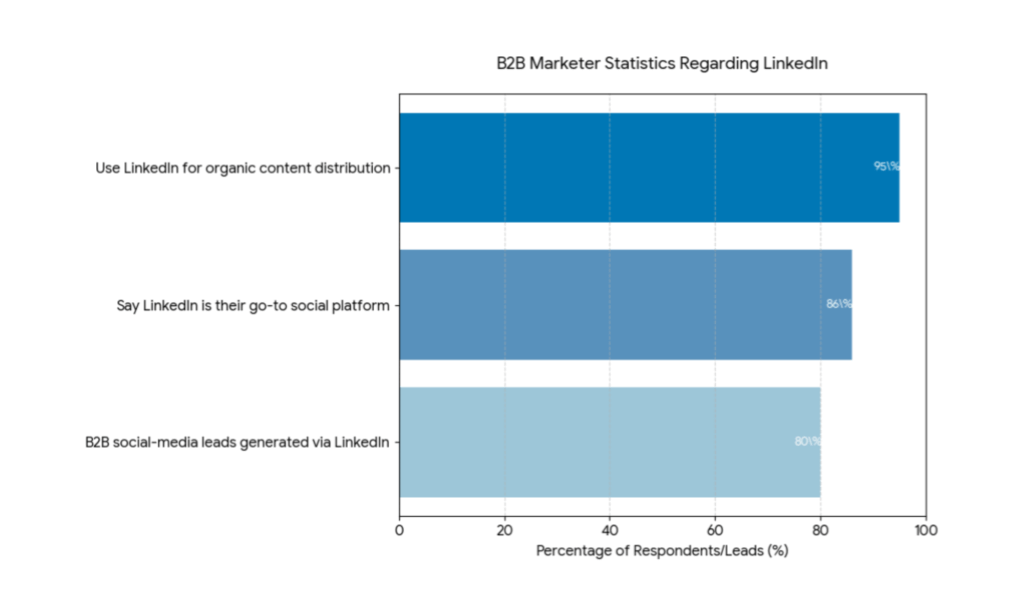
(Data from Amra and Elma LLC,Sales So)
Decision-makers are already there, seeking:
- Peer insight
- Practical expertise
- Credible perspectives
Used strategically, LinkedIn becomes the front door to deeper community engagement.
Beyond this, private platforms like Slack, WhatsApp, and Teams increasingly host the conversations that shape B2B buying decisions — particularly as Millennials and Gen Z take on greater influence.
Community and Social Engagement in Practice
Notion: A Social-First, B2B Ecosystem
Notion built one of the strongest B2B SaaS communities by enabling users to teach each other. Templates, workflows, tutorials, and creator content turned the product into a shared learning ecosystem — driving adoption and advocacy at scale.
This ecosystem has been widely credited as a driver of strong product stickiness and advocacy, helping Notion grow to a valuation exceeding $10 billion (Forbes).
What makes Notion’s approach notable is not the technology, but the mindset: community as an extension of the product experience itself.
Duolingo: Community, Culture, and Habit in a Consumer Context
Duolingo transformed language learning into a collective experience through humour, challenges, and participation. Community and culture became core drivers of habit, retention, and brand relevance.
According to Duolingo, social engagement has been a key driver of brand growth, helping the app reach over 500 million total users globally.
In both cases, the underlying principle is the same:
People stay longer when they feel connected – not just supported.
AI and the Future of Scalable Community CX
For leaders moving from pilot to scale, the challenge shifts from “How do we build community?” to “How do we manage, moderate, and personalise community at scale?”
As communities grow, scale becomes the challenge.
AI now plays a critical role in:
- Moderation and safety
- Content recommendation
- Personalisation by role or behaviour
- Insight into community health
According to recent analysis, AI-powered community solutions can automate moderation, analyse member behaviour, and deliver personalised experiences that keep users engaged long-term. (McKinsey & Company)
Evidently, AI does not replace human connection. It amplifies it – allowing community teams to focus on relationships, culture, and long-term value rather than manual oversight.
AI can also act as a creative sparring partner, helping to ideate and excecute engaging campaigns or content – the type that those Gen Z leaders are looking for. Linkedin, for instance, has its own AI powered ‘accelerate’ tool to do just that.
What a Modern Community Tech Stack Looks Like
Effective CX communities require integrated infrastructure:
- Community platforms (forums, groups, content hubs)
- AI-powered moderation and discovery
- Analytics and engagement measurement
- CRM and customer data integration
There are multiple tools and platforms today, from community-hosting platforms to AI-enabled moderation engines to analytics suites, that together enable branded communities that scale.
Dave Gerhardt, Founder of Exit Five says:
When done well, community becomes a core CX system, not a silo.
For example:
- AI-powered community tools can personalize user experience and surface relevant content.
- Good community platforms allow for forums, private groups, content libraries, resource hubs, and peer-to-peer networking, all under one branded roof.
- Integration with CRM / customer data systems ensures that community engagement becomes part of the broader customer journey
What to Do Next- A Community-First Checklist for Leaders
If you’re a leader or marketer starting to explore community-first CX, here’s a practical checklist to begin building:
Audit current customer interactions :
Identify where people already learn, share, connect, and ask questions – across social platforms, private groups, reviews, support channels, and peer networks.
Define a clear community purpose:
Be explicit about the role the community plays, such as: Confidence and education Peer connection and shared learning Feedback and co-creation Advocacy, belonging, and identity A strong community knows why it exists.
Choose a flexible community platform + supporting tools:
Suitable for hosting, moderation, personalization, analytics, integration
Assign dedicated ownership:
Hire or designate a community manager / enablement lead / evangelist.
Design for participation, not consumption:
Knowledge sharing, peer support, events, Q&A, resource libraries, user-generated content, feedback loops
Combine public community presence:
This can be via professional network, with private or owned community spaces, to capture both broad reach and deep engagement.
Use data and analytics to measure:
Measure community health: engagement, adoption, retention, contribution, satisfaction – then iterate.
Maintain:
Treat community as an integral part of your customer lifecycle strategy – not an add-on.
Final Word On Community and Social Engagement
Community and social engagement are no longer optional.
They are becoming the architecture of modern customer experience – shaping trust, learning, loyalty, and growth.
As we move into 2026, the organisations that win will be those who understand that the future of customer experience lies at the intersection of human connection, operational discipline, and intelligent technology.
They connect, learn, and belong.