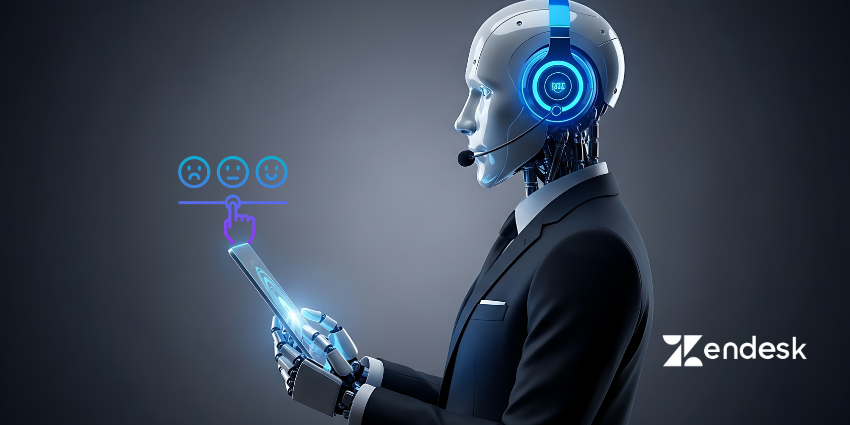

There’s something a bit odd about the moment we’re in with Voice AI. For years, chatbots were clunky, frustrating things that mostly made you want to yell “agent” into your phone. But something’s changed, rather quietly.
I spoke with Nuri Gocay, Director of Platform Architecture at Zendesk, and he helped me understand why voice AI has reached a turning point. It’s not just that it sounds better. It can detect frustration, maintain credibility in high-stakes conversations, and handle more nuanced interactions that once required human judgment.
You get the sense that we’ve been here before, though. Promises about automation saving customer service. Grand claims about efficiency. So I began to wonder… is this time actually different?
The Subtle Art of Detecting Frustration
Modern AI voice agents can now pick up on emotional cues in real time. Tone, pacing, word choice. When the system detects frustration or urgency, it adjusts. Maybe it escalates. Maybe it changes its response style.
This matters because emotion is contagious in customer service. When frustration builds during a long wait or a confusing interaction, it poisons the entire conversation before it even begins. Voice AI that can sense and respond to emotion in the moment prevents that contamination. It keeps normal questions from escalating into tense confrontations.
“[Customers are] looking for justice. And that means more hostility and more escalation and cognitive load because the agent is not just solving the customer’s problem, but they’re repairing customer trust.”
By handling routine interactions with emotional intelligence, AI protects both customers and agents from unnecessary friction.
“The tragedy is agents don’t leave because they dislike customers. It’s just because the system makes it so hard to help customers well.”
Related Stories:
The Trust Paradox
There’s an interesting contradiction here. Customers are comfortable letting AI handle simple requests like password resets. But when something truly matters, they still want a human voice.
Nuri was candid. Voice AI works brilliantly for high-volume, repeatable tasks. But fraud investigations, billing disputes, life-saving healthcare decisions? Those require judgment and reassurance that only a human can provide.
“The goal here is basically to eliminate uncertainty, regardless of the type of contact the customer has.”
By offloading the 40% to 60% of queries that are routine—password resets, status checks, FAQs—you protect your human agents from burnout and ensure your customers get instant answers, 24/7. This drives massive improvements in First Call Resolution and customer satisfaction while reducing operational costs.
Crucially, it preserves your highly skilled human agents for complex, high-value conversations that require genuine empathy and negotiation. The only conversations that truly build customer loyalty and ultimately drive revenue.
What’s Happening Under the Hood
When Voice AI works well, there’s a fair bit going on behind the scenes. Natural language processing interprets intent across multiple conversation turns. The system maintains memory. When a human steps in, the handoff is seamless with full context.
Nuri described it as connected service AI. Not a bolt-on brain, but a system integrated with ticketing, knowledge bases, CRM, quality assurance, governance.
There are more than 650 conversational AI vendors in the market. But many sit beside the service stack, not inside it. They demo beautifully but fall short when it comes to actually processing a refund or escalating a case.
“You basically get AI theater. Great conversations, weak outcomes. Customers don’t remember the bot was charming. They remember that the return didn’t process or that their refund didn’t happen and they still had to call back.”
The difference is integration.
“In customer experience and service, the demo isn’t the conversation, what happens to the customer, it’s the outcome of that resolution. And if it doesn’t integrate, it doesn’t resolve.”
Who’s Leading, and Why
Healthcare, telecoms, e-commerce, and government are moving fastest. High-volume sectors where the same questions get asked thousands of times daily. Organizations start with low-hanging fruit, then scale up as systems mature.
Zendesk finished 2025 with about 20,000 customers using their AI. Some are hitting 80% automation rates. They’re doing about 5 billion automated resolutions annually.
“The AI conversation is finally moving from look what it can say to look what it can resolve. And in service, resolution is the only demo that matters.”
The Future of Conversational Commerce
Voice AI is moving beyond reactive service. Proactive outreach, appointment scheduling, even sales conversations. The shift is from “call us when you have a problem” to “we’ll reach out before problems occur.”
The challenge is doing it without feeling intrusive. But when done right, proactive voice engagement reduces inbound call volumes, boosts customer satisfaction, and strengthens loyalty by solving problems before customers even notice them. It transforms service from a cost center into a relationship builder.
Stop Designing for Patience
The real shift isn’t about adding technology on top of broken processes. It’s about rethinking what causes customers to reach out in the first place.
Nuri’s advice was clear:
“The real shift isn’t about adding technology. Don’t just start with let’s add AI because with that kind of approach, you’re going to get those kind of results. Take those contact drivers and treat them like product bugs. Fix the root cause, the knowledge, the policy friction, the repeats.
Stop designing for customer patience and start designing for customer progress.”
That’s the shift. From managing wait times to eliminating uncertainty. From coping mechanisms to actual solutions.
Voice isn’t dead. It’s just finally got the infrastructure to do what we always hoped it would.
To hear more from Nuri Gocay on why waiting on the line is over, watch the full video interview here.
Learn more about Zendesk’s approach to AI for service and contact center at zendesk.com.