
AI readiness isn’t a slogan anymore, it’s quickly becoming the dividing line between CX teams that can scale automation safely and those that keep getting stuck in pilots.
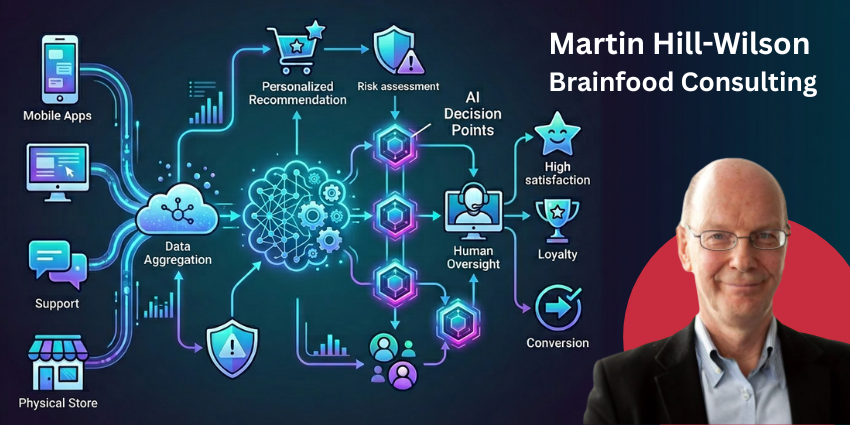
As Martin Hill-Wilson, Owner at Brainfood Consulting, told CX Today, many organizations are learning the hard way that “readiness is more than just technology,” and that chasing outcomes without foundations can lead to what he calls “AI recklessness.”
AI readiness in CX is becoming a board-level obsession, but Hill-Wilson argues many enterprises still lack the shared understanding to execute safely and consistently, as he explains:
“My first instinct was foundation, understanding education. A lot of people still actually got imposter syndrome, to be blunt about it, from the boards downwards.”
That confusion shows up in extremes, he adds, from “it’s magic, it will do it,” to “it’s total tosh,” with too few leaders holding practical mental models of what modern AI can, and cannot, deliver.
Why CX Teams Keep Getting Stuck In POCs
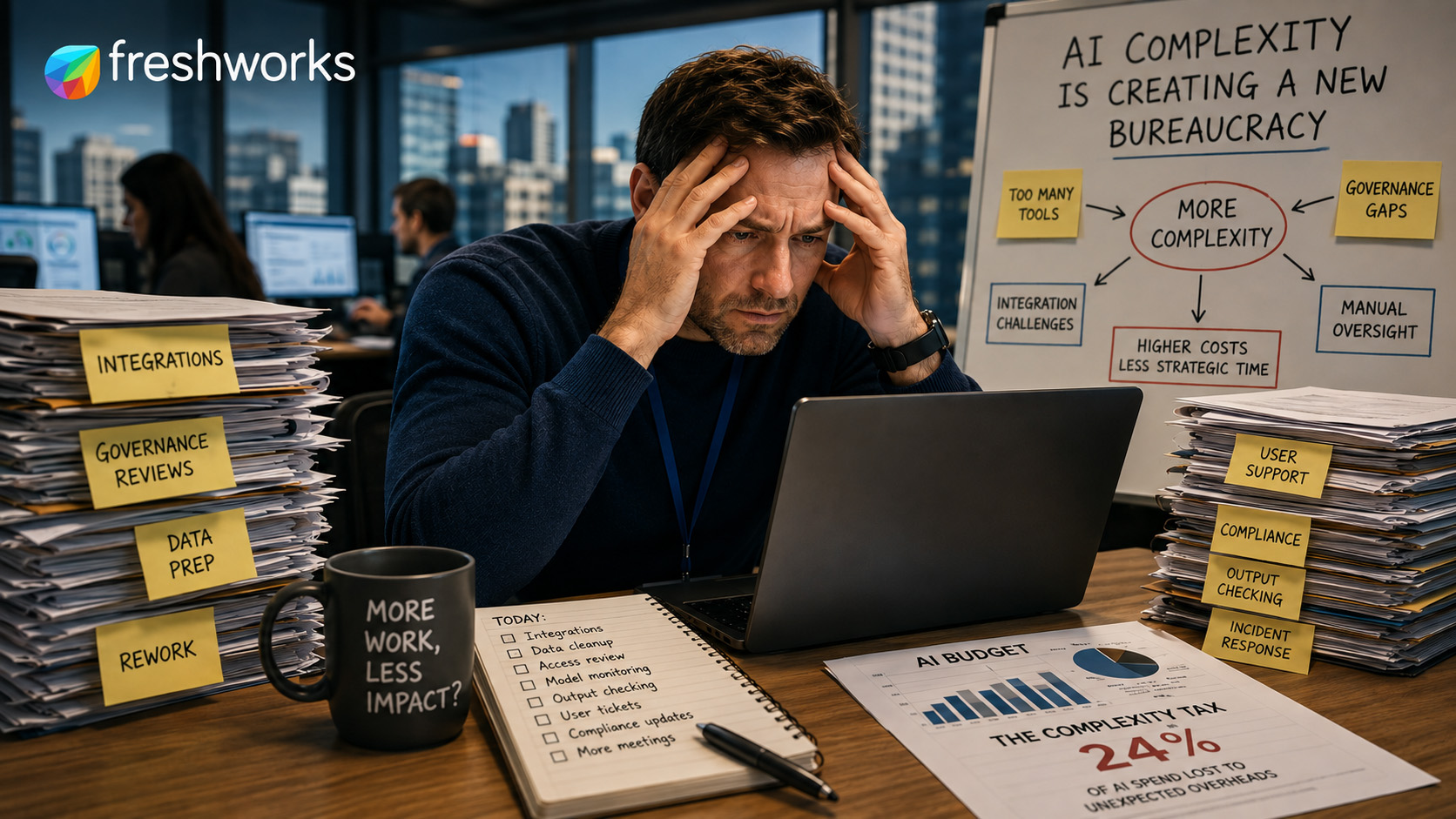
Hill-Wilson describes today’s landscape as “a transformative opportunity, a disruptive opportunity, and a dangerous opportunity.” The danger is not theoretical. It is operational.
“The easiest thing to do is to get POCs working,” he says. “What we discovered last year is that everyone’s in POCs and they can’t get out of POCs into production.”
And even when teams do go live, he says the broader organization often cannot support the deployment.
“If they get into production, the associated readiness of the enabling part of the organisation, the data, the governance, etc., is brittle,” Hill-Wilson says. “It falls over and they crash and burn.”
That brittleness creates a costly pattern: pilot success, production friction, then retrenchment. It also burns internal confidence in the program.
The Boardroom Gap, And The Cost Base Question
Hill-Wilson sees a familiar tension getting worse in the AI era: strategic ambition rising faster than delivery capability.
“The mismatch between how the board has been wound up to be excited and the teams that are operationally responsible for deploying it, there is that gap,” he says.
“The missed expectations is causing frustration all over the place.”
He also questions whether boards understand what they are truly authorizing when they pursue agentic AI, beyond cost reduction.
“I don’t think [boards] actually understand the detail of what they’re really trying to evoke necessarily,” Hill-Wilson says. “They don’t understand anything beyond their immediate concern, which quite frankly, is ‘can I change my cost base?’”
“You Can’t Busk This Stuff”: The Rise Of “AI Recklessness”
Hill-Wilson’s central warning is that speed without discipline increases risk, and makes failure more likely.
“All of those things are symptomatic of the fact that people are chasing it without necessarily planning it,” he says. “And you can’t busk it in this way. You really can’t busk this stuff because all AI is in fact doing is accelerating things.”
That acceleration cuts both ways. If an organization has fragmented data, brittle processes, and unclear ownership, AI can amplify those weaknesses.
“All AI is in fact doing is accelerating things. So if you’re accelerating, if you’ve got chaos and you want to accelerate it, guess what you get.”
Hill-Wilson calls the healthier alternative “creating discipline,” and he frames 2026 as a year when many organizations will be forced into a harder conversation about return on investment.
“It’s expensive to keep failing,” he says. “And this year, if there is a theme, optimistically, it’s a realism and also it’s a chase for genuine value return on that investment.”
Hill-Wilson’s AI Readiness Framework, Five Stages, and 12 Dimensions
To make readiness measurable, Hill-Wilson says he and Brian Manusama, Co-founder at Brainfood Training developed a suite of readiness assessments designed to help boards and program owners anchor what ‘ready’ means.
The maturity view includes five stages, starting with foundation model usage and chatbots, then moving into a ‘workflow phase’ in 2025 and into 2026, followed by a transition toward controlled autonomy and single-agent capabilities. A later stage, ‘future world,’ is framed as 2027 at best through to the end of the decade, where multiple agents collaborate.
Hill-Wilson also emphasizes that readiness depends on 12 dimensions, not just tooling.
“If you go back to 2025, what didn’t work? The answer to that was readiness is more than just technology,” he says. “So it’s to do with data… governance… process maturity… the skilling… and actually design work as well, CX design.”
The takeaway for CX leaders is simple: the organization does not ‘become ready’ because it bought the right platform. It becomes ready when those dimensions reach a baseline maturity together.
Trust Is The Hidden Constraint, Inside And Outside The Contact Center
Hill-Wilson frames trust as two parallel problems: employee trust in the system, and customer trust in AI-led experiences.
“Trust within the organisation is to do with where’s my role, what’s my role, can I actually trust what I’m being told in agent assist,” he says, adding that it often “tracks back to knowledge quality” and “data quality.”
On the customer side, he argues the industry still under-delivers on basics. He points to chatbots as an example, noting that they should be solving straightforward issues well by now.
“We ought to be at a stage, for example, with chatbots right now where most work. They should be targeted at simple, repeatable, low-complexity, non-emotional stuff.”
At the same time, he acknowledges that narrower AI capabilities are helping, especially in the agent desktop.
“Simple things like summarisation, agent assist… is definitely making a difference to the amount of time it takes,” he says.
A Slower, More Structured Path To AI Value
Hill-Wilson’s advice is less about waiting, and more about sequencing.
He points to the Aesop fable of the hare and the tortoise to underline the case for methodical progress over rushed rollouts.
A methodical, structured way gets you there first. And in this particular instance, that particular piece of advice is 100 percent correct.
For enterprise CX teams, that implies a shift in how AI programs get led and measured. Readiness becomes a management discipline across data, governance, operating models, skills, and journey design, not a sprint to deploy the latest capability.
And it raises the next question many leaders are now asking: if readiness is the constraint, what does a practical readiness program look like, and what changes as CX moves into workflow and autonomy. Watch this space, Martin Hill-Wilson will answer that very question in a follow up very soon.
Join the conversation: Join our LinkedIn community (40,000+ members): https://www.linkedin.com/groups/1951190/
Get the weekly rundown: Subscribe to our newsletter: http://cxtoday.com/sign-up