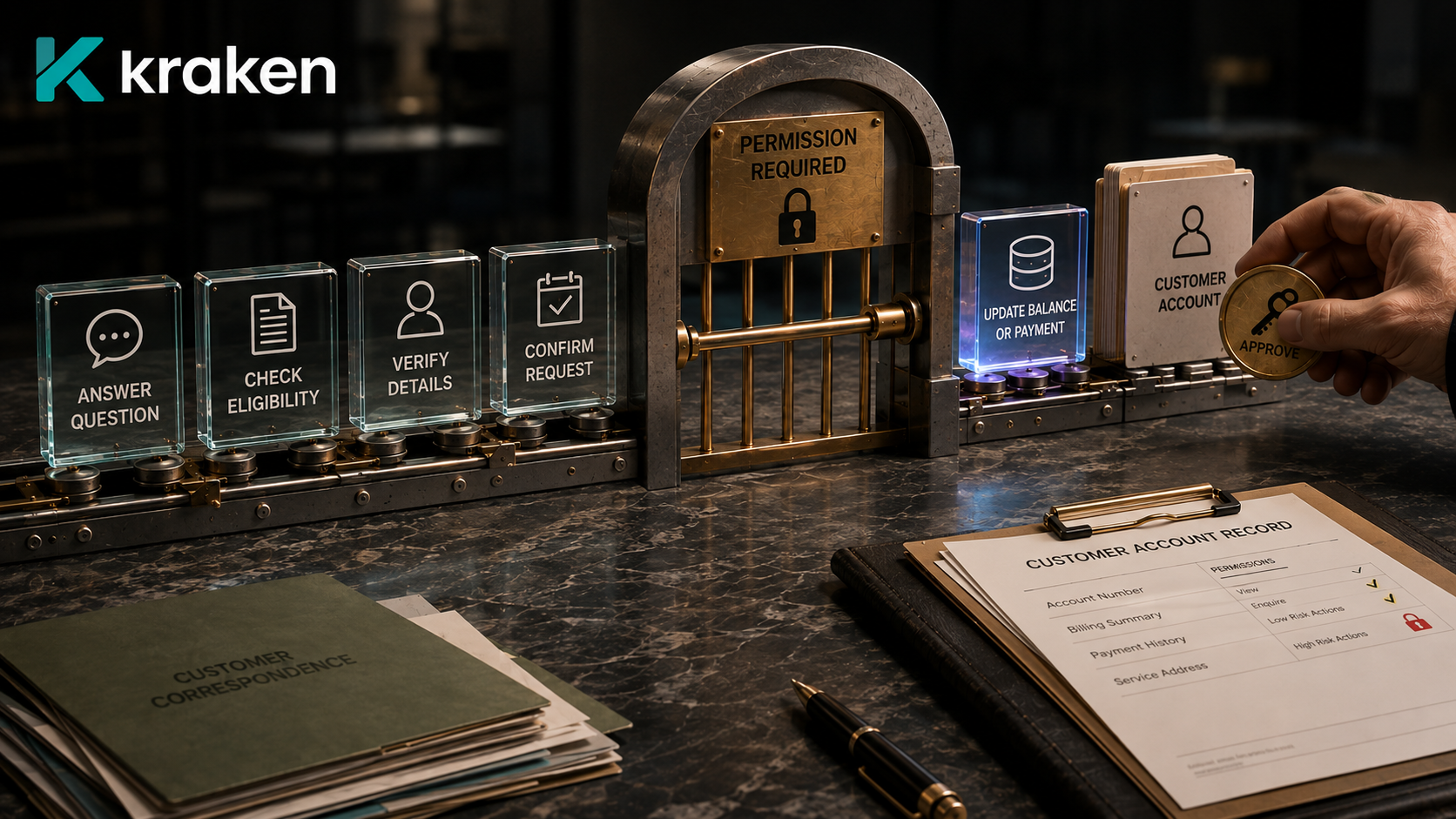

8×8 CPaaS is proving its value to APAC retailers that need one campaign to switch between LINE, Zalo, WhatsApp, and SMS. Buyers still need to prove that cross-channel fallback recovers incremental margin rather than adding message costs, duplicate reminders, and another support dependency.
Regional retail campaign managers have one job: bring the shopper back before the cart goes cold. The problem is that the customer in Thailand expects LINE, the shopper in Vietnam may live on Zalo, and someone in Singapore is more likely to answer on WhatsApp. SMS waits in reserve, but poor timing can send both messages.
8×8 is clearly tackling that issue head-on. A lot of the company’s strongest recent public customer evidence sits in regional commerce, including ShopBack and aCommerce. Plus, its January 2026 Maven Lab acquisition added Southeast Asian messaging and automation depth.
The useful question isn’t how many channel logos 8×8 can display. It’s whether one retail event can become one controlled journey.
Related Articles
TL;DR: Does 8×8 CPaaS Solve the Cart-Recovery Problem?
- The retail job: Run one abandoned-cart journey across several APAC markets without rebuilding the campaign for each local channel.
- The 8×8 mechanism: Use 8×8 Connect, messaging APIs, fallback rules, and purchase events to choose a channel, manage replies, and stop reminders after checkout.
- The strongest proof: ShopBack reports 2 to 3 times more engagement per campaign and up to 5 times at peak, but the case study doesn’t isolate incremental cart revenue.
- The buyer risk: WhatsApp and fallback SMS can be billed separately, and poor timing can deliver both messages.
Why Does APAC Retail Need Customer Journey Orchestration?
APAC retailers can’t run every market from the same messaging playbook. A single purchase may trigger different channels, consent checks, templates, and delivery rules depending on where the shopper lives. Journey orchestration keeps that shopper’s identity and goal attached as the campaign sends, waits, switches channels, hands off, or ends.
Imagine one abandoned cart moving across four markets. The Thai shopper gets LINE, the Vietnamese shopper gets Zalo, and WhatsApp carries the offer in Singapore or Indonesia. SMS can cover a failed app message. The campaign goal hasn’t changed, but the delivery path has.
Unfortunately, ordinary multichannel campaign management tends to have problems here. One system says the customer hasn’t responded while another has already recorded the purchase. A cheerful “Still thinking it over?” message lands five minutes after checkout, making the retailer look careless rather than attentive.
More channels don’t automatically mean better orchestration. A platform can support every major messaging app and still annoy a shopper with an SMS five minutes after they converted on WhatsApp. What matters is whether the journey can adjust by market while one system keeps the customer, intent, permission, and purchase connected.
Key Takeaways
- The APAC problem is coordination, not channel coverage.
- Purchase-based stopping is as important as message delivery.
How Does 8×8 CPaaS Turn a Cart Event Into a Coordinated Journey?
8×8 CPaaS can turn an abandoned-cart event into a coordinated journey by using 8×8 Connect to apply eligibility, timing, channel, fallback, and exit rules. Messaging APIs handle delivery, commerce data confirms whether the shopper bought, and 8×8 Converse can carry a reply into a human conversation with its history attached.
Say a cart event arrives from the commerce platform. The workflow waits, checks whether the shopper has already purchased, and sends the approved message for that market. If WhatsApp fails, the API can move to SMS after a defined delay. If the order appears, the remaining reminders should stop.
That final step is particularly valuable. Plenty of weak orchestration knows that a message was sent but never hears that the customer paid. A reply creates another branch too. Questions about stock, delivery, or payment need to reach an employee without forcing the shopper to start again.
Still, 8×8 notes that there is a risk. SMS fallback timing must exceed the WhatsApp template’s time-to-live, or the shopper may receive both messages. The platform also requires a usable phone number for SMS and separate fallback copy when rich WhatsApp elements can’t travel into a text message.
Key Takeaways
- The differentiator is the full loop from cart event to purchase-based stop.
- Fallback rules need deliberate timing, identity data, and channel-specific copy.
Learn more about fixing journey orchestration issues in this guide.
What Changed in 8×8 CPaaS in 2026?
In 2026, 8×8 strengthened the APAC and operational case for its CPaaS portfolio rather than adding channels for their own sake. Maven Lab expanded regional messaging depth, API traffic rose sharply, the Integration SDK reduced some CRM build friction, and new identity controls moved closer to the customer-engagement workflow.
| 2026 change | Why it matters to retailers | What remains unproven |
|---|---|---|
| Maven Lab acquisition, January | Adds Southeast Asian messaging, automation, carrier relationships, and Moobidesk customer-engagement capabilities. | 8×8 hasn’t published a retail migration result showing how the combined stack changes journey performance. |
| Q3 and Q4 API growth | Messaging interactions rose 269% year over year in Q3 and 218% in Q4; more than 5 billion digital interactions crossed 8×8 APIs during FY2026. | Volume doesn’t prove conversion, customer patience, or margin. |
| Integration SDK, May | Customers and partners can build homegrown and industry-specific CRM integrations without a standard professional-services engagement for supported configurations. | The builder owns full support responsibility for partner-built integrations. |
| Meta verification and Silent Mobile Authentication | Faster WhatsApp business verification and background carrier authentication can reduce launch and checkout friction. | Buyers still need market-by-market approval, coverage, and false-rejection data. |
Key Takeaways
- The most relevant 2026 change is regional depth, not raw feature count.
- Growth and product releases show momentum, but retailers still need outcome evidence.
What Evidence Supports the Value of 8×8 CPaaS for APAC Retail?
8×8 CPaaS has credible APAC proof around message reach, campaign engagement, and local operational support. ShopBack is an impressive retail case, aCommerce adds regional commerce scale, and Recommend Group shows why human fallback matters. Still, none of the published studies so far isolate the revenue created by cross-channel abandoned-cart orchestration.
ShopBack sends more than 6 million SMS messages a year through 8×8 and reports a 98% delivery rate. Choosing channels around local behavior produced 2 to 3 times more engagement per campaign and up to 5 times during peak events. Scott Tan, Product Lead at ShopBack, credits 8×8’s local expertise with supporting regulatory compliance during expansion.
aCommerce uses 8×8 messaging across operations serving more than 150 brands and 120 million end customers in Southeast Asia. Recommend Group reports SMS click-through rates three times higher than email, then added WhatsApp and 8×8 Converse after customers began ignoring automated texts that felt impersonal.
8×8 has analyst support behind it as well. Metrigy included 8×8 alongside Bandwidth, Gupshup, RouteMobile, and Twilio in its 2026 CPaaS Top Providers. 8×8 reported a business-success score of 302, compared with the category average of 283, plus strong customer marks for reliability, no-code tools, and integrations. Those detailed scores come from 8×8’s account of Metrigy’s research, so they should be treated as vendor-published figures.
Key Takeaways
- The retail evidence supports reach and engagement, not incremental cart margin.
- Recommend Group’s human fallback is a useful warning against over-automating the journey.
How Does 8×8 Compare With the Ways Retailers Already Run Messaging?
8×8’s advantage isn’t that retailers lack ways to send messages. It is the possibility of reducing the handoffs between commerce events, local channels, fallback logic, customer replies, and contact-center work. The trade-off is that a more unified layer can shift dependency toward 8×8’s configuration, support model, and consumption pricing.
| Current approach | Where it works | Where it struggles |
|---|---|---|
| Separate channel providers plus custom workflows | Maximum control over local suppliers and bespoke logic. | Teams duplicate templates, status handling, consent logic, reporting, and support across markets. |
| Marketing automation plus channel connectors | Campaign teams get familiar segmentation and journey tools. | Fallback, two-way replies, identity matching, and purchase-based stopping can depend on connector quality. |
| 8×8 CPaaS orchestration | Connect, messaging APIs, and Converse can keep campaign delivery and replies closer to one operating layer. | Subaccounts, default fallback rules, custom integrations, and channel billing still create ownership questions. |
This is the comparison buyers should run, rather than asking whether 8×8 has more channels than a shortlist rival. A retailer already using a mature marketing platform may need 8×8 as the delivery and conversation layer, not the master journey system. Another retailer may value consolidation enough to move more logic into 8×8 Connect.
Key Takeaways
- Compare operating models, not channel lists.
- Decide which system owns identity, consent, journey logic, and revenue attribution before procurement.
How Should Retailers Test and Measure 8×8 CPaaS?
Retailers should test 8×8 CPaaS with one live cart journey and measure incremental gross profit, not delivery or click rates alone. The proof should highlight identity matching, consent, market-specific templates, fallback timing, human handoff, purchase-based stopping, attribution, and every charge added before a recovered order reaches the margin line.
| Ask 8×8 to prove | What to watch |
|---|---|
| Trigger from a real cart record | How quickly the event reaches the workflow and whether the shopper is matched correctly. |
| Run the same journey in two APAC markets | Whether consent, language, sender, template, and preferred channel change correctly. |
| Force WhatsApp to fail | When SMS starts, whether both messages arrive, and how each attempt is billed. |
| Complete the purchase mid-journey | Whether every remaining reminder stops immediately. |
| Reply with a delivery question | Whether the employee receives the conversation history and customer record. |
| Trace the order to the journey | Incremental orders, gross profit, opt-outs, duplicate messages, and employee time. |
Use a holdout group of similar abandoned carts that receives no reminder. Incremental recovery rate is the extra orders caused by the journey divided by eligible carts.
Count the whole recovery bill, too: WhatsApp attempts, backup SMS messages, platform fees, discounts, support work, and employee involvement. Without a control group, 8×8 can end up taking the bow for customers who were going to return anyway.
Key Takeaways
- Force the WhatsApp failure test before approving the design.
- Get post-launch configuration ownership and every fallback charge in writing.
Is 8×8 CPaaS a Strong Fit for APAC Retailers?
8×8 CPaaS makes the most sense for APAC retailers dealing with real differences between markets, especially when a customer reply needs to become a managed conversation. It’s a harder sell for a single-market retailer built around one channel, or for a team that hasn’t decided who owns journey rules, integrations, support, and attribution.
The evidence works best as a whole: Maven Lab brings regional expertise, API volumes point to live scale, ShopBack provides a named retail result, and the fallback documentation spells out the costs and ways a journey can fail.
There’s still a hole in the evidence. No public study shows that 8×8’s cross-channel fallback recovers more abandoned-cart revenue than a strong campaign running through one channel. Buyers should make the live test, holdout group, and post-launch campaign controls do the deciding.
The pitch is still useful: one orchestration layer could keep every regional rollout from becoming its own IT job. But buyers should sign only after the journey survives real customer data, a failed message, a reply, a purchase, and an honest cost count.
FAQs
Can 8x8 CPaaS automate abandoned-cart recovery?
Yes. 8x8 CPaaS can automate abandoned-cart recovery when the retailer sends cart and purchase events into the workflow. 8x8 Connect can wait, select a channel, trigger fallback, branch on a reply, and stop after purchase. The retailer still has to build or connect the event logic and test every exit condition.
Which APAC messaging channels can 8x8 CPaaS use?
8x8 CPaaS supports regional messaging options including LINE, Zalo, WhatsApp, Viber, RCS, and SMS. Availability, sender registration, templates, consent, and pricing vary by market and channel. Buyers should test the exact countries in scope rather than treating a global channel list as proof that every local journey is ready in production.
Can a retail marketing team manage 8x8 without developers?
Retail marketers can use 8x8 Connect for campaign management and no-code automation, but they may still need technical work for commerce events, customer identity, CRM connections, webhooks, and revenue attribution. 8x8’s Integration SDK reduces some integration friction, while its support policy leaves partner-built connection ownership with the builder during implementation.
How should retailers prove ROI from 8x8 CPaaS?
Retailers should compare eligible carts in the 8x8 journey with a similar holdout group that receives no reminder. Measure incremental orders, incremental gross profit, cost per recovered order, duplicate messages, opt-outs, and employee handling time. Delivery, read, and click rates are diagnostic metrics, not proof that the platform created profitable revenue.
How should retailers handle consent and opt-outs across 8x8 CPaaS channels?
Consent and opt-out status must travel with the customer across every channel in the journey, not sit separately in each one. Retailers should confirm that an opt-out on SMS suppresses WhatsApp and email in the same flow, check how quickly suppression takes effect, and test that regional rules across APAC markets are enforced by the platform rather than managed manually by the marketing team.