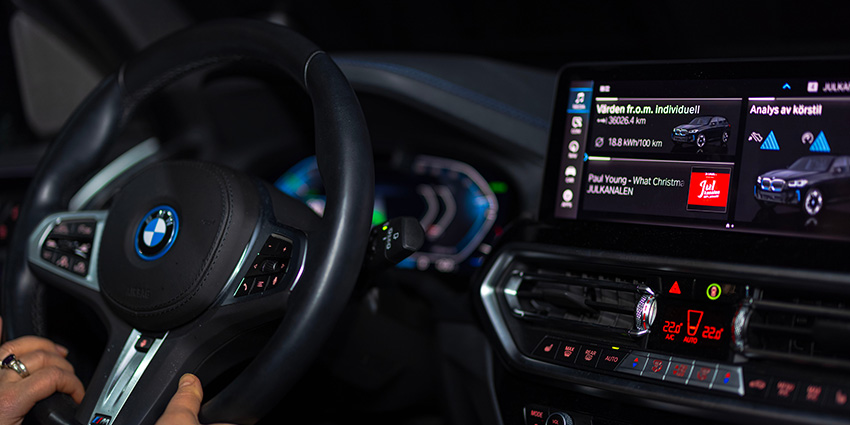

BMW is shifting into a higher gear to deliver data-driven customer experience, with a new initiative that uses vehicle data captured directly from customer cars to improve safety systems and personalize driving technology.
The move signals a broader shift in the use of technology in automotive customer experience, as cars are advancing from engines on wheels to becoming connected platforms that continuously learn from real-world usage.
Why Real-World Driving Data Is Powering Next-Gen CX
BMW’s approach is based on the premise that better data leads to better experiences. By analyzing how drivers interact with their vehicles in real conditions, the automaker can refine its advanced driver assistance systems (ADAS) and tailor performance to actual customer behavior.
The initiative started on 1 April in Germany with the iX3 vehicle model equipped with BMW Panoramic iDrive powered by the BMW Operating System X, and will expand across Europe, according to reports. Vehicles will collect image, video and sensor data to improve systems ADAS systems including automatic emergency braking, lane-change assist, and cross-traffic warning.
Rather than relying solely on simulations or controlled testing, BMW is using real customer journeys to fine-tune everything from hazard detection to responsiveness in complex environments.
Turning Vehicle Data into Personalised Customer Experiences
While the headline focus is safety, collecting context-rich data, combining environmental inputs with driver behavior, creates opportunities to deliver more adaptive in-car experiences.
Over time, vehicles equipped with systems like iDrive X platform can evolve to feel more intuitive, responsive, and aligned with how customers actually drive. This indicates a shift toward experience optimization based on behavioural data rather than assumptions, bringing automotive closer to the feedback loops seen in digital products.
As BMW’s annual report for 2025 highlights:
“The BMW Panoramic iDrive takes personalization to a new level. For the first time, users can define their own preferred driving characteristics such drive system and steering settings.”
Systems could become better at anticipating driver intent, adjusting assistance levels based on habits, or optimizing alerts depending on real-world driving patterns.
Consent as the Foundation of Trust
Technological advancement in the automotive sector is demonstrating how brands are rethinking the relationship between customer, product, and data, and how behavioral data can tailor experiences in ways that feel seamless rather than intrusive. It also highlights familiar questions about privacy, data ownership, and third-party access.
Data is only recorded during specific events, rather than constantly uploading videos, and only with the driver’s consent, according to BMWBlog. Recordings through the vehicle’s cameras and sensors last for up to 120 seconds.
This opt-in model places control in the hands of the customer, which is an increasingly important factor in data-led CX strategies.
BMW has stated that sensitive details such as faces and license plates are blurred before the vehicle transfers the data, BMWBLOG reported, while Carscoops added that identifiers such as vehicle IDs are removed once the data reaches BMW’s servers. However, the automaker has also acknowledged that data including video recordings may be shared with third parties.
BMW did not respond to a request for comment on how the data will be used.
From a CX perspective, this is where the balance becomes delicate. Customers may accept data sharing when the value is clear, as in the case of safer driving and better assistance. But transparency around who accesses that data, and for what purpose, remains critical.
There’s also the broader regulatory backdrop to consider, particularly in Europe, where frameworks like GDPR set high expectations for data minimization, purpose limitation, and user consent.
Personalization is increasingly powered by real-world behavioural data, but its effectiveness depends on how responsibly that data is handled. Keeping customers informed, in control, and confident in how their information is used will define whether these strategies succeed as they scale across markets.
The implications extend beyond automotive. BMW’s model of capturing live data, continuously refining systems, and delivering improvements using software mirrors the evolution of digital services, but with far higher stakes. Here, the outcome directly affects safety, which makes trust just as critical as the data driving innovation.