
For more than two decades, Verint Systems has been a steady fixture in the contact centre stack. Its latest earnings suggest that it is about to change.
In Q2 FY2026, Verint reported that its AI Annual Recurring Revenue had reached $372 million, growing 21.2% year-over-year. On the surface, a strong number. But set it alongside the corresponding figure for non-AI ARR - $356 million, down 5.6% over the same period - and a different story emerges. For the first time in the company's history, AI revenue has overtaken its legacy product base.
AI ARR Surpasses Legacy Revenue: A Turning Point for Verint
Verint's total subscription ARR stands at $728 million, up a respectable 6.4% year over year. But that headline figure masks a structural divergence happening beneath it. AI and legacy revenues are now moving in opposite directions at roughly equal and opposite speed - one growing north of 20%, the other contracting toward 6%. For the first time, Verint’s future is larger than its past.
That kind of divergence doesn't happen by accident. These figures signpost which direction investment in flowing and where their product roadmap may be heading.
Verint’s Shift from Workforce Engagement to CX Automation
The financial shift has a strategic parallel. Verint has been quietly but systematically repositioning itself not as a workforce engagement management vendor, but as a CX Automation platform - a move that broadens its competitive surface area and, notably, changes the conversation it's trying to have with buyers.
Verint’s expanding library of AI-powered bots signals a shift from tools to outcomes - embedding automation directly into core CX workflows.
Its messaging has also moved firmly away from workforce optimisation and toward end-to-end, AI-driven customer experience orchestration. Their latest corporate tagline – ‘Stronger, Faster, Measurable AI Outcomes’ - is pitched squarely at enterprise buyers who've grown sceptical of marketing fluff AI announcements that don't translate into meaningful results.
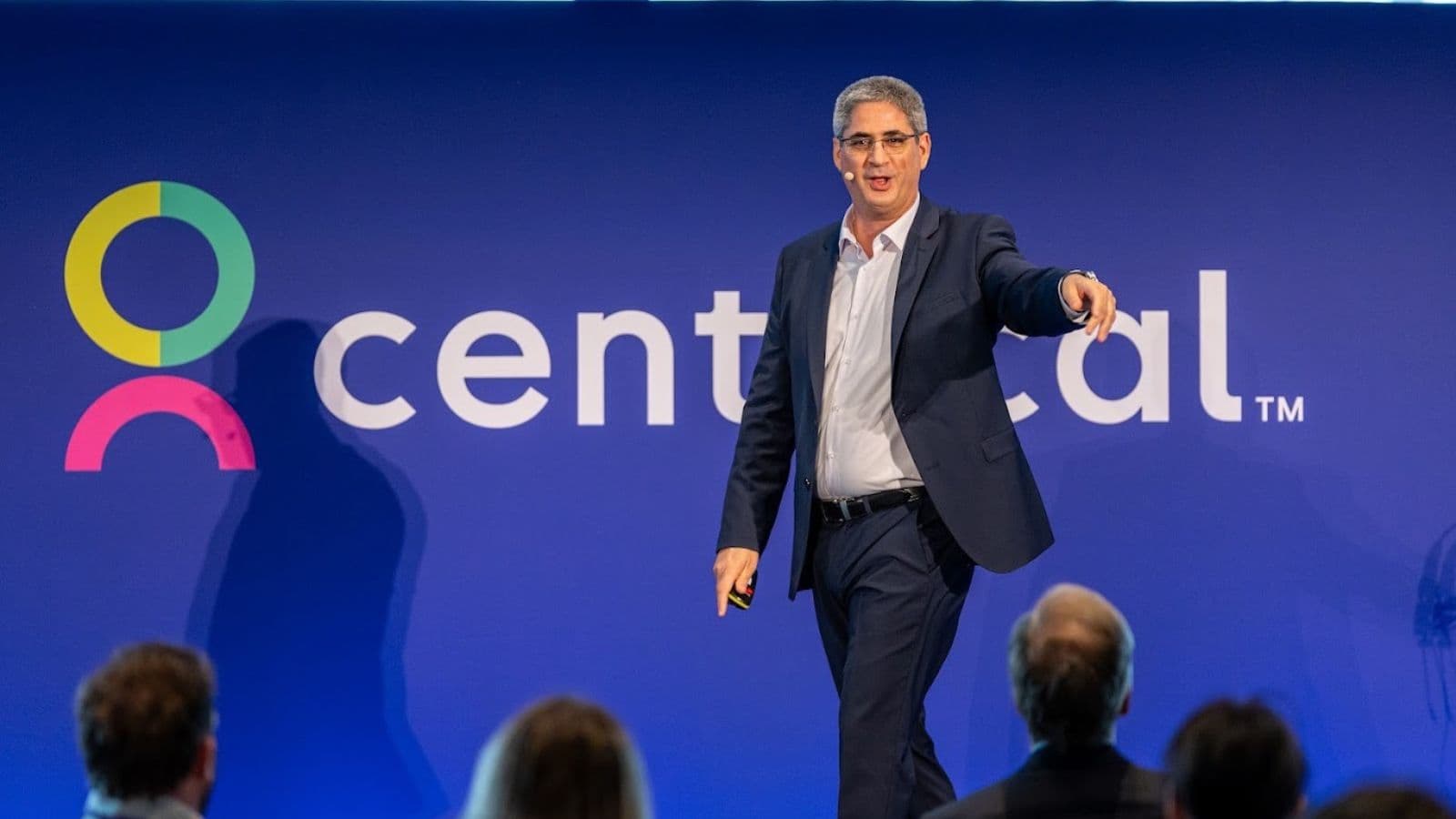
“Behind our strong AI momentum are two key differentiators. First, our ability to transform the latest AI technology into […] strong business outcomes [...]. Second, our ability to deploy AI in a hybrid cloud model.”
– Dan Bodner, Former CEO and Chairman, Verint Systems
Architecturally, Verint is positioning its open platform as modular and integrated - a deliberate contrast to the closed, suite-based approaches of rivals like NICE CXone and Genesys Cloud.
What Thoma Bravo’s Verint Acquisition Means for Verint’s AI Roadmap
None of this is happening in a vacuum. Private equity firm Thoma Bravo recently acquired Verint in a transaction valued at approximately $2 billion, taking the company off public markets after years as a NASDAQ-listed entity.
Simultaneously, Verint merged with Calabrio, the workforce engagement management specialist, with the combined entity continuing to operate under the Verint brand. Dave Rhodes was appointed CEO of the merged organisation in February 2026, with Bodner moving to an advisory role.
“Verint’s market leading CX Automation platform, enterprise customer base and talented employees position it well to shape the future of customer experience with AI.”
– Mike Hoffman, Partner, Thoma Bravo.
The implications of PE ownership are significant. For Verint, that likely means accelerating the shift toward higher-margin AI offerings while scrutinising investment in legacy capabilities.
The Calabrio integration adds another dimension. The reported strategy - positioning Calabrio's capabilities for the midmarket while reserving the Verint platform for enterprise - is logical on paper.