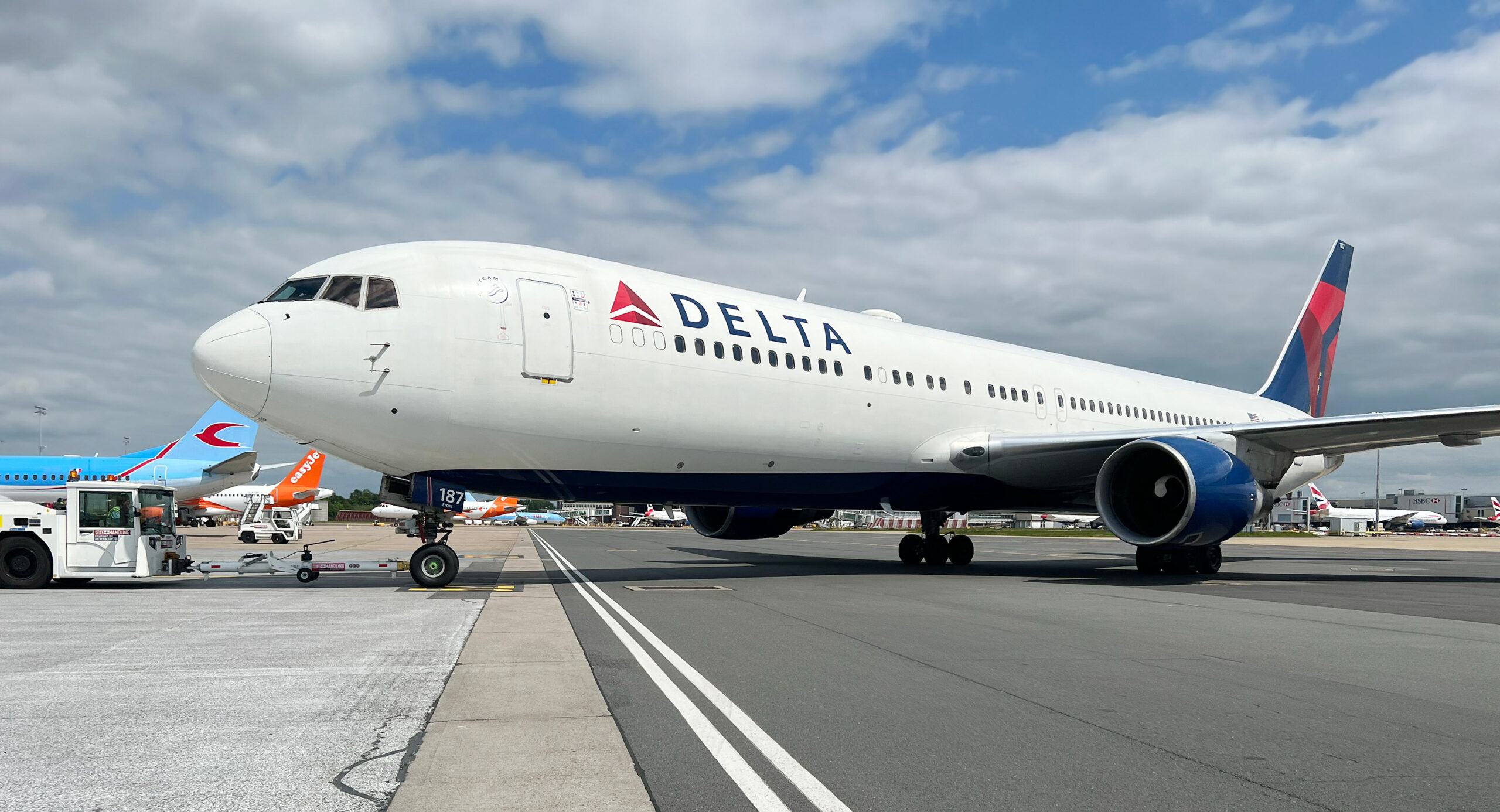

Delta Air Lines has signed a long-term agreement with Amazon to bring its low Earth orbit satellite network, Amazon Leo, to its aircraft fleet. The move is an indication of how in-flight connectivity is enhancing customer experience strategies in the airline sector.
The rollout, which is scheduled to get underway in 2028, will initially install high-speed, low-latency Internet access delivered by Amazon Leo on 500 Delta aircraft. While it’s framed as a step forward for onboard Wi-Fi, the move is also part of a longer-term shift in how airlines structure their digital experience across the customer journey—figuratively and literally.
The U.S.-based airline said it will work with Amazon to expand its Delta Sync Wi-Fi and seatback entertainment system with more personalized digital experiences on its domestic and international flights, including streaming movies and TV shows, listening to podcasts and audiobooks, and connectivity.
Andy Jassy, President and CEO of Amazon, stated in the announcement:
“People increasingly want to stay connected wherever they are in the world, and Leo’s speed and reliability is going to have a big impact for businesses, governments, and consumers. It’s going to make the in-flight experience so much better, and it’s going to change what’s possible while traveling.”
Airlines have spent years treating connectivity as a premium add-on service, often inconsistent in quality and limited in scope. That model is starting to change.
Related Articles
- Personalization in Travel: How Berlin Airport Turns Data and AI Into Real Passenger Value
- How Tui Transformed Customer Experience with Connected Data
- AI, Data and Orchestration Mark a Turning Point for CX Growth, Research Finds
Connectivity Becomes Core to Airline CX Strategy
The adoption of SpaceX’s Starlink satellite services as well as Amazon Leo suggests that connectivity is being repositioned as core infrastructure that supports operational systems and data flows alongside passenger use.
Delta’s approach brings together satellite connectivity with its cloud environment powered by Amazon Web Services (AWS). That combination indicates a move toward more integrated systems, where customer data, content, and service delivery can be managed in closer alignment.
Customers increasingly expect stable, higher-speed connections that support streaming, messaging, and work on the move as part of the travel experience. The more interesting shift is occurring behind the interface, in how airlines use connectivity to link previously separate parts of the journey. Delta stated:
“Since 2020, Delta and AWS have successfully migrated nearly 600 of Delta’s applications to the cloud and accelerated the adoption of new technologies that empower Delta employees to deliver enhanced care and elevated service to customers throughout their journey.”
Now, with more reliable satellite connectivity in place, airlines can also make better use of live data to refine how they interact with passengers at an individual level.
The combination of persistent connectivity and cloud infrastructure allows data to move continuously between touchpoints, in turn supporting more relevant and timely personalization. It gives airlines clearer visibility into customer behaviour across the full journey, helping them to identify patterns, test changes and iterate on experience design.
That includes the ability to update services in real time, respond to operational changes more dynamically, and deliver more consistent experiences to the customer across the booking, airport, and in-flight environments.
Rather than relying on pre-set profiles or static segmentation, systems can adjust offers, content and service prompts during the journey, from rebooking options triggered mid-flight during disruptions to tailored retail suggestions based on recent behaviour, or crew receiving updated passenger insights to inform interactions.
Personalization and Ecosystem Competition Intensify
The agreement also reflects growing competition around how well connectivity providers integrate with broader technology stacks.
In that context, Delta’s work with Amazon emphasizes the focus on alignment between connectivity, cloud and data infrastructure. Other players are taking different approaches. Starlink, for example, has expanded with a focus on high-performance connectivity across multiple carriers.
As connectivity improves, the opportunity—and expectation—is for customer experience operations to use that capability to support more responsive and personalized experiences.
Platforms such as Delta Sync point to how airlines are attempting to connect identity, content, and communication in real time.
At the same time, the shift raises familiar challenges. Greater personalization depends on effective data integration, governance, and consistency across systems, which are areas where many enterprises continue to face complexity. Research from Adobe, for example, found that 76 percent of practitioners say siloed data gets in the way of real-time personalization, with fragmented systems making it harder to engage customers at the right moment.
Connectivity is moving into the role of enabling layer, supporting a model where the customer journey is treated as continuous rather than segmented. As that model develops, differentiation is likely to come from how effectively airlines use the infrastructure they are building, rather than the infrastructure itself.