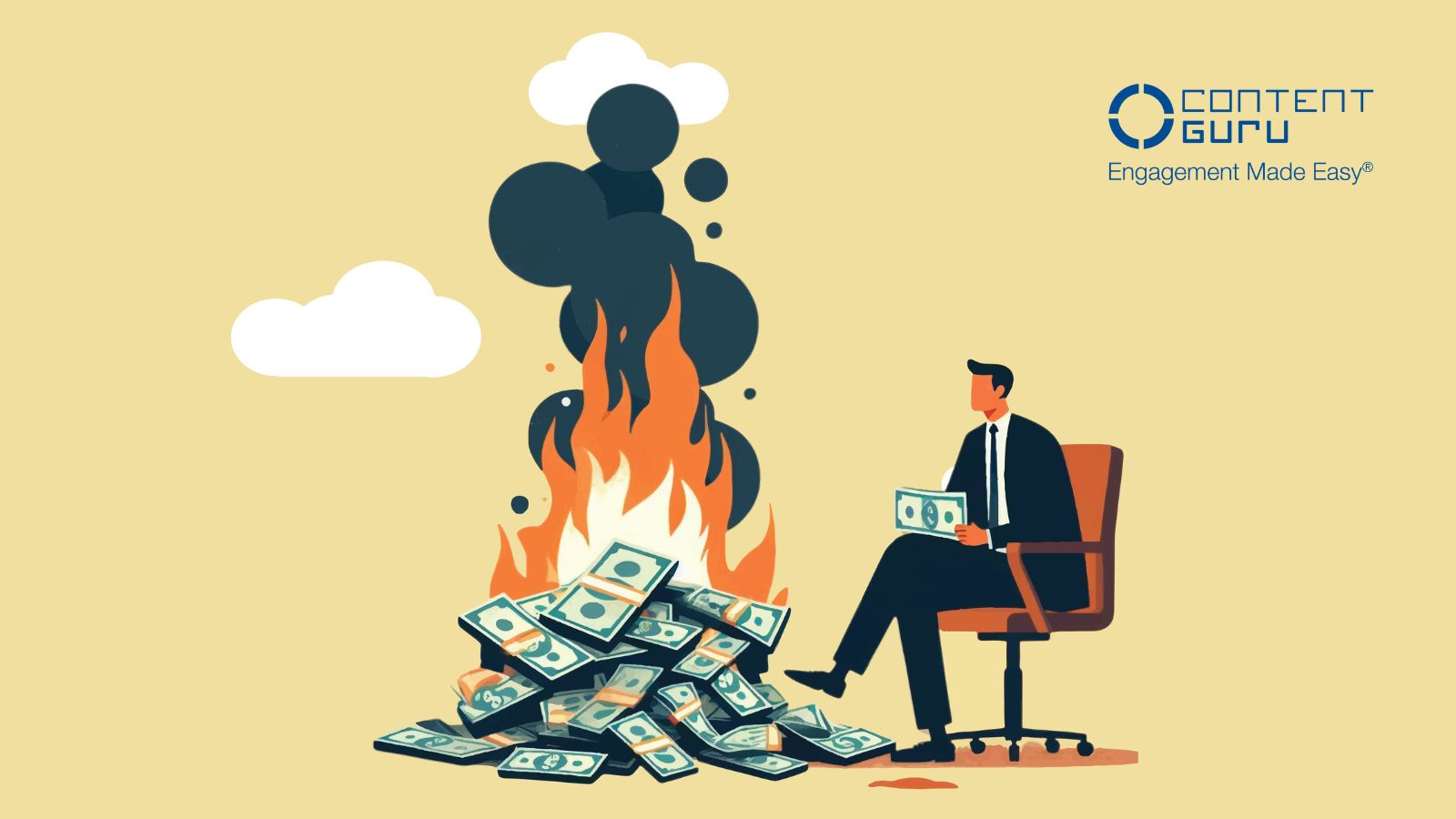

Omnichannel governance is where many customer experience strategies quietly fall apart. Not because the channels are missing. Not because the technology is always weak. But because no one truly owns the customer journey from start to finish. Marketing owns acquisition. Digital owns the app. Service owns the contact center. IT owns the systems. Operations owns the process. Meanwhile, the customer owns the frustration.
That is the ownership gap sitting underneath many omnichannel failures. Organisations optimise individual channels, teams, and metrics, then wonder why the customer experience still feels inconsistent. The problem is not always execution. It is often the CX accountability structure itself.
Greg Thomas, Senior Director of Thought Leadership at Genesys, captures the issue clearly:
“Too often, data lives in silos across marketing, sales, service and product teams. Each group has its own metrics, tools and priorities. This fragmentation limits visibility and prevents coordinated action.”
For Chief Customer Officers and COOs, that sentence should land uncomfortably close to home. If every department owns one part of the experience, but no one owns the full journey, customer journey ownership becomes theoretical. The customer does not experience your org chart as separate departments. They experience it as one brand either working or failing.
Related Articles
- Solving Customer Journey Fragmentation
- Customer Journey Mapping Broke in Omnichannel. Here’s What Replaces It
- What Is Proactive Customer Service?
Why Does Omnichannel Strategy Fail Without Clear Ownership?
Direct answer: Omnichannel strategy fails without clear ownership because teams optimise their own channels, tools, and KPIs instead of being accountable for the end-to-end customer outcome.
Most omnichannel programmes start with the right intention. Give customers more ways to engage. Connect digital and voice. Improve service availability. Reduce friction. Lovely. Sensible. Looks fantastic in a strategy deck.
However, the difficulty begins when each team interprets omnichannel through its own lens. Digital focuses on containment. The contact center focuses on handle time. Marketing focuses on conversion. Product focuses on adoption. IT focuses on stability. None of those goals are wrong. Yet none of them, in isolation, guarantees a good customer journey.
This is why cross channel management needs governance, not just integration. Without a journey owner, each department can hit its target while the customer still has a poor experience. The chatbot contains the interaction, but fails to resolve it. The agent closes the case, but the product issue remains. The email campaign drives traffic, but support cannot honour the promise. Everyone can technically succeed while the customer loses.
Talkdesk identifies this misalignment directly in its guidance on omnichannel customer journeys, warning that different teams often work toward different goals and that misaligned KPIs can create resistance when implementing cross-functional strategies such as journey mapping.
What Happens When No One Owns the Customer Journey?
Direct answer: When no one owns the customer journey, customers experience inconsistent answers, repeated context loss, delayed resolution, and handoffs where every team believes the problem belongs somewhere else.
The symptoms are easy to spot. Customers repeat themselves. Agents blame systems. Digital teams celebrate self-service usage while contact center volumes stay stubbornly high. Marketing launches promotions that support teams only discover when customers start calling. Product releases features before knowledge bases update. Sales makes promises service cannot fulfil. If that sounds familiar, the issue is not just communication. It is governance.
Talkdesk describes several common breakdowns that appear when teams lack shared journey visibility: marketing creates promotions without informing support teams, product launches features without updating knowledge bases, sales makes promises support teams cannot fulfil, and IT implements changes without considering journey impacts.
These are not minor internal mistakes. They are customer-facing failures. The customer does not care whether the gap came from marketing, service, operations, or IT. They only know that the company made a promise in one place and failed to keep it in another.
That is why CX leadership strategy must move beyond channel ownership. A customer journey owner should be accountable for outcomes that cross functions: successful resolution, customer effort, handoff quality, recontact rate, and journey completion. Otherwise, every team optimises its own square of the chessboard while the customer is quietly knocked over like a pawn.
How Does Fragmented Responsibility Impact CX?
Direct answer: Fragmented responsibility impacts CX by creating disconnected metrics, siloed data, inconsistent decision-making, and poor handoffs between teams that should be working toward the same customer outcome.
The biggest danger is that fragmented responsibility often looks productive from the inside. Each team has dashboards. Each team has owners. Each team has weekly meetings, roadmap items, and performance targets. Very grown-up. Very efficient-looking. Unfortunately, the customer journey cuts across all of it.
Genesys makes this point in its analysis of changing CX measurement:
“Without [full visibility across channels], teams operate in silos, each optimizing their own metrics without understanding the broader impact.”
That is the heart of fragmented CX responsibility. Teams are not necessarily negligent. They simply lack shared visibility and shared accountability. A digital team may reduce chatbot transfers, but if unresolved customers call back later, the contact center absorbs the pain. A service team may reduce handle time, but if the customer issue is not fully resolved, another department inherits the complaint. The cost moves. It does not disappear.
Salesforce reinforces the importance of a shared data foundation in its State of Service report, noting that 82% of high-performing organisations use the same CRM platform across service, sales, and marketing, up from 62% two years earlier. Salesforce also states that a solid data foundation makes it easier to share accountability for metrics such as CSAT, NPS, and customer effort score.
That is the operational lesson. Shared accountability is much easier when teams are working from the same customer truth. Without that, governance becomes theatre. Everyone agrees the customer matters, then returns to separate systems, separate metrics, and separate excuses.
Where Do Organisations Lose Accountability?
Direct answer: Organisations lose accountability at handoff points, channel boundaries, departmental transitions, and anywhere success is measured by local performance rather than journey completion.
The handoff is where accountability goes to die. A customer moves from chatbot to agent. A service case moves to billing. A technical issue moves to product. A complaint moves to retention. Each transition creates an opportunity for ownership to blur. Unless governance defines who owns the final customer outcome, the journey becomes a relay race where nobody checks whether the baton actually arrived.
Five9 frames the customer-side requirement in simple terms in its customer journey tools guidance:
“Regardless of the channel or channels your customers choose, their history follows them.”
That is the standard customers expect. Yet the same principle should apply internally to ownership. The journey should follow a named owner, not vanish into the nearest queue. If ownership resets every time the channel changes, the customer experiences the organisation as fragmented, even if every individual team is doing its best.
There are four common accountability gaps:
- Metric gaps: one team measures containment, another measures handle time, another measures conversion, but no one measures journey success end to end
- System gaps: customer data sits across multiple platforms, making it hard to know who owns the latest state of the journey
- Decision gaps: teams can see a problem but lack authority to fix it without another department’s approval
- Escalation gaps: handoffs move work but not ownership, so customers chase updates across teams
These gaps explain why customer journey accountability issues can persist even in mature contact centers. The contact center may be well managed, but if it does not own the upstream promises or downstream fulfilment, it becomes the place where governance failures become visible.
How Should Enterprises Govern Omnichannel CX?
Direct answer: Enterprises should govern omnichannel CX by assigning end-to-end journey owners, aligning cross-functional KPIs, centralising journey data, and creating decision rights that allow teams to fix issues across channels.
The practical answer is not to create another committee that meets monthly, produces a spreadsheet, and then gently dissolves into nothing. Enterprises need governance with teeth. That means clear ownership, shared metrics, decision authority, and escalation routes that force the organisation to solve journey problems rather than admire them from multiple dashboards.
A strong omnichannel governance model should include:
- Named journey owners: assign accountable leaders to high-value journeys such as onboarding, billing, claims, complaints, renewals, and technical support
- Shared journey KPIs: measure outcomes such as resolution, effort, recontact, handoff success, and journey completion across channels, not just within them
- Cross-functional operating forums: bring service, digital, operations, product, marketing, data, and IT together to review journey performance and remove blockers
- Unified customer data: ensure every team works from the same customer identity, interaction history, and journey state
- Decision rights: give journey owners authority to change policies, workflows, knowledge, routing, and escalation rules when the customer outcome demands it
- Closed-loop feedback: turn contact center insight into product, process, and digital improvements rather than leaving it trapped in service reports
Talkdesk makes a similar point about journey management, noting that organisations with effective journey management establish cross-functional teams with representatives from each department. Those teams meet regularly to review journey metrics, upcoming initiatives, and potential issues so customers receive consistent experiences regardless of channel.
From Channel Management to Journey Governance
The most important shift is mental. Omnichannel is not just a channel strategy. It is a governance model for how the business makes and keeps promises across touchpoints. If no one owns the journey, no one owns the gaps. If no one owns the gaps, customers become the integration layer. And customers, strangely enough, did not sign up for that job.
The enterprises that get omnichannel right will not be the ones with the longest channel list. They will be the ones with the clearest ownership model. Every journey will have a responsible leader. Every handoff will have a defined owner. Every channel will work from the same customer truth. That is what turns omnichannel from a contact center feature into a business-wide accountability structure.
FAQs
Why does omnichannel strategy fail without clear ownership?
Omnichannel strategy fails without clear ownership because teams optimise individual channels and metrics rather than the full customer outcome. Without an accountable journey owner, handoffs, data gaps, and inconsistent decisions continue to damage CX even when each channel appears to perform well on its own.
What happens when no one owns the customer journey?
Customers experience repeated context loss, inconsistent answers, delayed resolution, and poor handoffs between teams. Internally, departments may each meet their own targets while the overall journey still fails because no single leader is accountable for completion, effort, and resolution across every touchpoint.
How does fragmented responsibility impact CX?
Fragmented responsibility creates siloed data, conflicting KPIs, and disconnected decision-making. Marketing, service, sales, product, operations, and IT may all control different parts of the journey, but if they are not governed by shared outcomes, customers experience the gaps between those teams as friction.
Where do organisations lose accountability?
Organisations lose accountability at channel transitions, departmental handoffs, escalation points, and any place where work moves but ownership does not. If a customer moves from chat to voice, or from service to billing, the organisation needs a defined owner for the final outcome, not just the next task.
How should enterprises govern omnichannel CX?
Enterprises should govern omnichannel CX by assigning named journey owners, aligning cross-functional KPIs, unifying customer data, creating regular journey performance forums, and giving leaders the authority to change workflows, policies, and escalation rules when the customer outcome requires it.