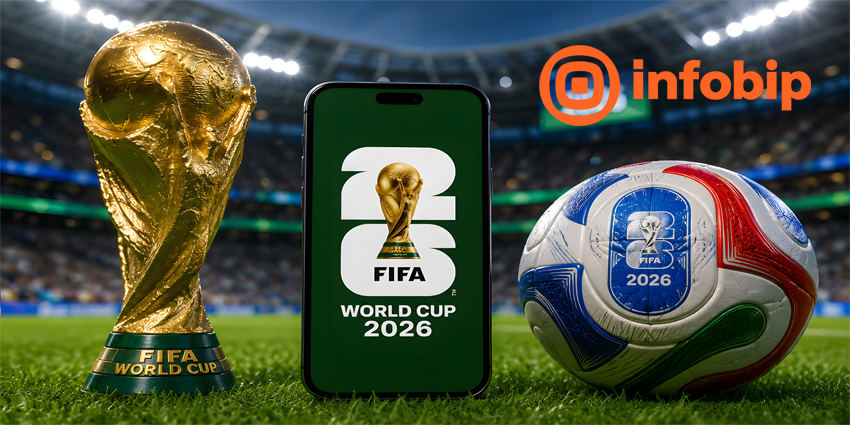

This month, all eyes are on the football World Cup and its many intriguing storylines.
Will FIFA’s 48-team gamble pay off? At 39, can Lionel Messi still play at an elite level? Is the newly implemented hydration break just a money grab? And how will the US perform at home?
Beyond the sporting storylines, there’s also a technology story worth watching. This is the first World Cup where AI will be used to enhance the fan experience, and there’s a lesson here for IT and CX professionals across all industries.
This week, Infobip announced its new PitchMate AI “fan companion,” which brings agentic, omnichannel AI that can turn passive audiences into engaged participants.
PitchMate, launched as the tournament got underway, is a personalized AI companion built for global football fans. Delivered via mainstream messaging channels such as WhatsApp and RCS, it brings fixtures, stats, and interactive experiences into the same threads fans use to chat with friends and family.
I know many hardcore football fans hate the integration of technology into the sport, believing all eyes should be on the pitch. But this is the reality we live in, and sticking one’s head in the sand is the wrong approach.
The question for CX and IT leaders is simple: if an AI can keep a distracted global audience engaged throughout an entire tournament, what could similar agents do for your most critical customer journeys?
Inside Infobip’s AI Fan Playbook
PitchMate follows Infobip’s earlier rollout of RaceMate, an AI companion for the TGR Haas F1 Team, ahead of this year’s motorsport season.
RaceMate runs on WhatsApp and Apple Messages for Business and is designed to make fans feel part of the team rather than spectators. It delivers real-time race data, team radio highlights, trivia, and native multilingual support, all delivered through natural conversations.
The engagement metrics from F1 are notable. Since launch, RaceMate has reached fans in more than 60 countries, generated tens of thousands of messages, and achieved a healthy return-user rate, with top fans returning dozens of times and exchanging hundreds of messages. This fosters an ongoing, conversational relationship between the Haas team and its fans.
PitchMate applies the same pattern to football but leans into tournament dynamics. Fans choose their favorite team and receive a fully tailored experience, including personalized schedules and fixtures, match statistics via a “Match Central” hub, quizzes and gamified features in “Fan Arena,” and flexible match reminders across time zones in the “Back Office” component.
Cross-session memory and optional match-day alerts turn the World Cup from a series of isolated matches into a continuous journey from kickoff to the final whistle.
From Fan Engagement to Customer Engagement
The World Cup context makes the story headline-friendly, but the underlying design problem is universal. In football or F1, the journey spans a season or a tournament. In enterprise CX, it might be:
- A multi-step onboarding for a new customer
- A renewal cycle for a subscription or managed service
- A complex buying journey involving multiple stakeholders
In each case, the challenge is the same: keep someone engaged across a series of moments that matter, in real time, across channels, without forcing them into a new app or portal.
Infobip treats engagement as an agentic problem, not a channel problem. Rather than rolling out yet another static app or FAQ bot, the company uses its AgentOS platform as a single orchestration layer to power autonomous, goal-driven AI agents.
AgentOS combines generative AI, conversational data intelligence, and omnichannel messaging, enabling brands to build agents once, connect them to live data sources, and deploy them wherever customers spend their time.
With RaceMate and PitchMate, WhatsApp, RCS, and Apple Messages for Business become the front door to rich, personalized experiences.
Fans don’t need to download a new app or remember a portal. Engagement happens in everyday messaging threads, while the AI manages context, personalization, and orchestration behind the scenes.
For CX and IT leaders, the “no new app” principle is crucial. If your customers must change their behavior to get value, you’ve already lost a significant share of your audience.
The future of CX is about bringing the experience to the customer, not asking the customer to come to the experience.
Why This Matters Outside Sports
Strip away the jerseys and grandstands, and many industries have event-centric engagement patterns that resemble a tournament or race calendar.
The difference is that most organizations still manage those patterns with batch emails, static portals, and human-only workflows. A few examples:
- Travel and Transportation: Trips have natural milestones: booking, check-in, security, boarding, disruptions, and arrival. A “travel companion” agent could orchestrate this end-to-end journey using live flight data, gate changes, and personalized guidance, much like RaceMate does for race weekends.
- Retail and Loyalty: Product launches, seasonal promotions, and loyalty tiers can become game-like journeys. Instead of generic campaigns, an AI agent can deliver tailored offers, quizzes, challenges, and rewards, embedded within the messaging channels customers use daily.
- Healthcare and Wellness: Treatment plans and preventive care programs are episodic by design. An AI “care companion” could provide reminders, educational content, and structured check-ins between appointments, much as PitchMate keeps fans engaged between matches.
AgentOS is positioned to enable these scenarios. It brings together campaign tools, customer data, chatbots, and contact center capabilities into a single AI-native platform.
On that foundation, brands can build agents that not only answer questions but also act: triggering workflows, integrating with back-office systems, and orchestrating journeys end-to-end.
For IT and CX teams, these use cases can serve as a reference architecture for moving from siloed channels and point solutions to autonomous, agent-driven experiences that run continuously across the customer lifecycle.
Patterns IT leaders should take from the World Cup
There are several concrete patterns in PitchMate that IT and CX leaders can adopt directly, even if they never sponsor a sports team.
1. Make Cross-Session Memory a Core Capability
PitchMate and RaceMate remember preferences, such as favorite team, language, and prior interactions, and carry that context forward for days or weeks. Enterprise agents should do the same for products of interest, support history, and interaction context, so that customers don’t have to start from scratch each time.
2. Wire Real-Time Data into the Conversation Layer
RaceMate ingests live race intelligence and team radio highlights. PitchMate surfaces match stats and dynamic schedules. On the enterprise side, that means connecting agents to inventory, logistics, IoT telemetry, CRM, and billing so conversations always reflect the current reality, not yesterday’s batch export.
3. Use Gamification to Drive Repeat Engagement
PitchMate’s quizzes and Vocalize feature turn watching into participation. Fans challenge friends, earn points, and return for more. Similar mechanics can make onboarding, training, and loyalty programs stickier: micro-challenges, streaks, and embedded rewards in the agent experience are often more effective than static content.
4. Standardize on an Orchestration Layer, Not Channel Silos
Infobip’s approach is “create once, deploy everywhere.” The same agent logic runs across WhatsApp, RCS, Apple Messages for Business, and other channels, centrally orchestrated. Many IT teams still run separate tools for each channel, leading to inconsistent CX and operational drag. Consolidating around an orchestration layer is a prerequisite for scalable agentic CX.
5. Measure Engagement with Fan-Grade Metrics
Sports organizations track metrics such as return-user rate, messages per user, and interaction diversity. Enterprise CX teams should adopt similar KPIs for their agents and treat them as products, not projects. Engagement data will tell you which micro-experiences warrant investment, and which flows need to be redesigned.
Why This is Important for Infobip
This launch is important to Infobip because it’s a high-visibility, World Cup-scale proof point that helps the company break out of its perennial role as a “second or third fiddle to the much bigger and better-known Twilio.”
The company is not large enough to compete with Twilio in Twilio’s core strength, commodity messaging. Infobip’s ability to compete and win requires reframing the value of CPaaS, and it has done so by demonstrating outcome-driven, agentic CX.
By putting PitchMate and RaceMate in front of millions of fans, Infobip demonstrates that its AgentOS stack can orchestrate persistent, personalized, omnichannel journeys that feel more like a relationship than a campaign.
That gives Infobip something Twilio doesn’t automatically own: a differentiated story as the platform that turns live data, generative AI, and messaging into real-time companions, not just notifications.
For enterprise buyers who already know Twilio as the default CPaaS, sports-grade deployments like these give Infobip a way to say, “We don’t just move messages; we run the kind of AI-driven experiences your customers will expect next.”