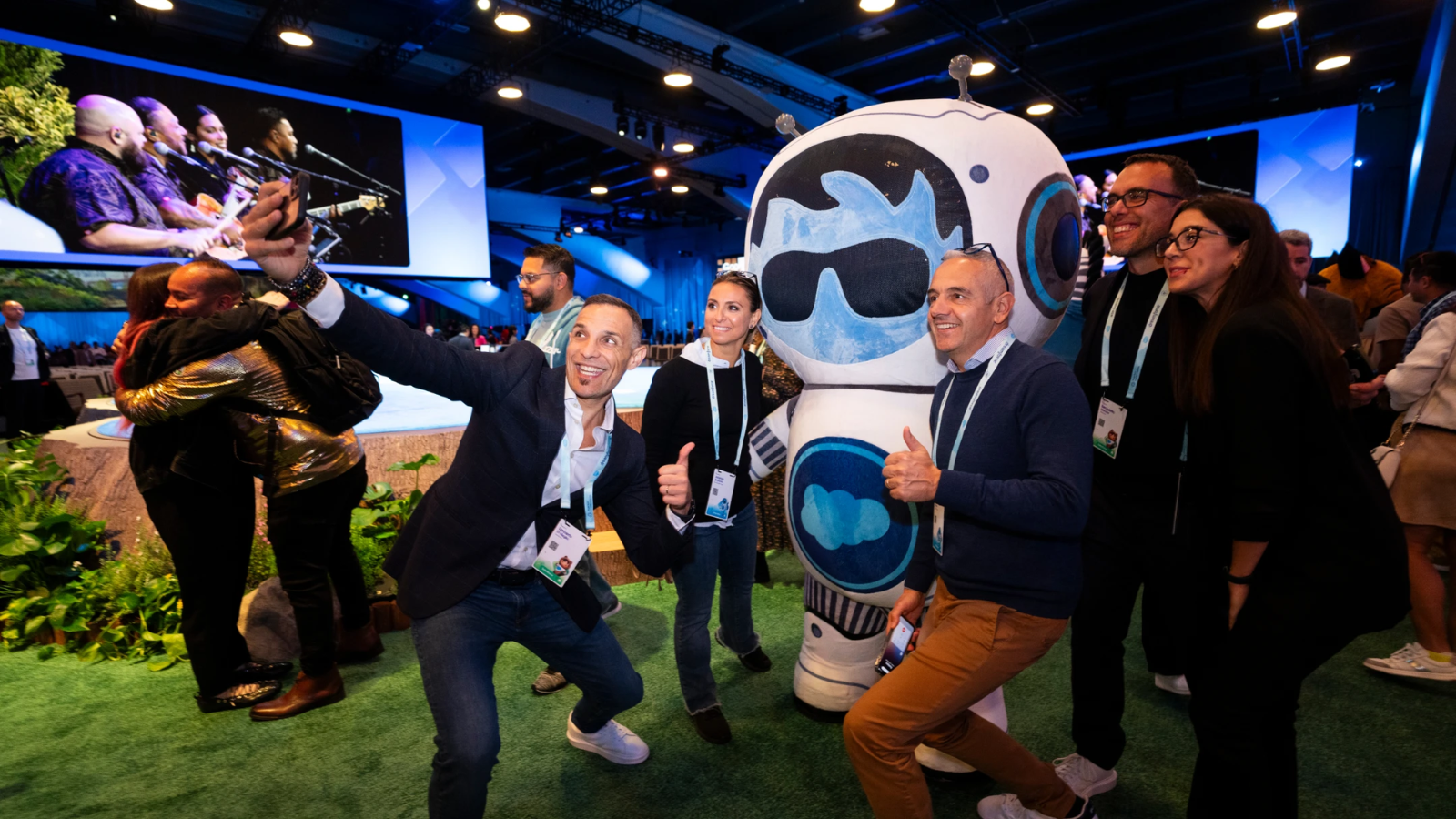

Dreamforce 2026 is Salesforce’s chance to prove that Agentforce can improve real customer service journeys.
Every technology vendor now promises more personal customer service through AI. Yet, for many customers, the reality still means repeating an account number to a chatbot, moving to an adviser who cannot see the previous conversation, and being called by their first name while trying to solve the same issue for the third time.
At Dreamforce 2026, Salesforce must show it can offer something better.
From September 15-17 in San Francisco, Salesforce will put its Agentic Enterprise strategy in front of customers, partners, and a very large audience of people who have heard the AI pitch before. The company wants AI agents, CRM data, service workflows, commerce, marketing, and human employees to work as one connected system.
For CX leaders, that is either the beginning of a more intelligent service operation or a very expensive new way to expose old data problems.
Both outcomes are possible.
The question at Dreamforce is not whether an AI agent can hold a conversation. We are past being impressed by that. The question is whether it can resolve a billing issue, identify a vulnerable customer, process a return, understand an entitlement, preserve context across channels, and know when to get out of the way and bring in a capable human.
That is why CX leaders should pay attention.
The Dreamforce CX Reality Check
Salesforce will have plenty of AI demos. CX leaders should look for something harder: proof that an AI agent can use reliable customer context, complete an approved task, improve the customer journey, and hand over gracefully when a person is needed.
In This Guide
- Salesforce Is Selling an Agentic Customer Experience. Does It Hold Up?
- Containment Is Not the Same as Resolution
- The Customer Does Not Care Which System Owns Their Data
- The Most Important AI Feature May Be Knowing When to Stop
- Your Service Team Will Notice the Difference Before Your Customers Do
- Who Should Actually Go to Dreamforce?
- Fine, But What Is Actually Happening at Dreamforce?
- How CX Leaders Should Prepare for Dreamforce
- Questions CX Leaders Should Ask at Dreamforce
- What to Do When the Full Agenda Is Released
- Reader Perspectives on Dreamforce 2026
- Official Dreamforce Resources
- Dreamforce 2026 FAQs
- Follow Dreamforce 2026 With CX Today
Salesforce Is Selling an Agentic Customer Experience. Does It Hold Up?
Salesforce’s pitch is broader than a customer service chatbot. Agentforce is positioned as an AI layer that can work across CRM records, customer data, knowledge, workflows, commerce, and connected applications.
In theory, that means a customer can get an answer, complete a task, receive a relevant recommendation, or be routed to the right employee without the usual game of digital pass-the-parcel.
In theory is doing some heavy lifting here.
Customer experience teams already know the difference between a well-designed digital journey and a disconnected one. The hard work is rarely the interface. It is the data underneath it: duplicate profiles, missing order information, poorly maintained knowledge, unclear ownership, conflicting policies, and integrations that behave beautifully in a demo but not necessarily at 8am on a Monday when a service queue is full.
Dreamforce is useful because it puts Salesforce’s product vision next to the customer deployments that are supposed to prove it. The event gives CX leaders a chance to ask what was connected, what had to be cleaned up, what the AI can actually do without a person, and what happens when the AI gets it wrong.
There is a very big difference between an AI agent that can answer “Where is my order?” and one that can handle an exception without making a customer explain their entire life story twice.
Salesforce is bringing the Agentic Enterprise message to Dreamforce at a moment when CX leaders are under pressure to improve both customer outcomes and operational efficiency. The company’s strategy connects Agentforce with Service Cloud, Data 360, Customer 360, MuleSoft, Tableau, Slack, commerce tools, and its broader CRM platform.
The strategic promise is straightforward: give AI agents the customer context, knowledge, workflow access, and guardrails required to do useful work. The real-world question is much less straightforward: can an organisation safely connect all of that without creating another expensive layer of complexity?
What CX Leaders Should Investigate
Prioritise production customer stories that explain the data work, integrations, knowledge management, governance, human oversight, implementation effort, costs, and measurable outcomes behind an AI deployment.
Is It a Win Just Because the Customer Didn’t Reach an Agent?
Containment is not resolution.
A customer who gives up, abandons a journey, or returns later through a more expensive channel may never have reached a human adviser. That does not mean the experience worked. It means the contact-centre dashboard may have looked better than the customer journey actually was.
Many AI service projects are initially measured by the number of interactions handled without a person. That is understandable. Contact volumes cost money, service teams are stretched, and repetitive enquiries are a reasonable place to look for automation.
But CX leaders should be more demanding than the average AI business case.
Ask how a deployment has affected first-contact resolution, repeat contacts, complaint volumes, escalation quality, abandonment, customer effort, customer satisfaction, and resolution time. Ask whether the organisation has measured what happened after the chatbot conversation ended. Ask how customers behave when the agent cannot complete the request.
The right outcome is not the fewest possible human conversations. It is the lowest-friction route to a reliable resolution.
At Dreamforce, look for customer examples that provide more than an automation percentage. A credible deployment should show which journeys were automated, what customers could complete, what happened when the AI was uncertain, how the business measured quality, and whether the experience improved for the people using it.
Cost to serve matters. Of course it does. But an AI strategy that saves money by making customers work harder is not efficiency. It is a delayed cost.
The Customer Does Not Care Which System Owns Their Data
Customers do not think in CRM records, commerce platforms, knowledge bases, contact-centre queues, or service desks.
They think: “I bought this. It has not arrived. I need someone to fix it.”
Salesforce’s Data 360 strategy means that an AI agent cannot offer a genuinely useful experience if it has only part of the story. A service agent needs the right account information, interaction history, product or order details, entitlement, consent status, and approved knowledge at the point of need.
That sounds obvious, but it is exactly where many AI projects become uncomfortable.
Before asking what an agent can do, CX leaders should ask whether the organisation has a dependable view of the customer in the first place. If the answer is “not really,” an AI agent will not solve that. It will make the gap more visible, faster.
Dreamforce should help attendees investigate how Salesforce connects service data, CRM records, commerce information, marketing interactions, loyalty data, knowledge, and third-party systems. The useful conversations will be about identity resolution, permissions, consent, data quality, freshness, retention, data residency, lineage, and ownership.
Because the real CX challenge is not collecting more data. It is making the right information available, safely and appropriately, at the exact moment a customer needs help.
Personalisation Is Not a First Name in a Chat Window
Customers may welcome a faster, more informed interaction. They are less likely to welcome an AI experience that appears to know too much, makes a wrong assumption, blocks access to a person, or cannot explain why it took an action.
Personalisation only feels useful when it removes friction. Knowing that a customer has an open delivery issue and should not be offered a new product is useful. Making a customer repeat that issue because one system cannot see another is not.
CX leaders should use Dreamforce to examine how Salesforce applies consent, permissions, and customer context across AI-led journeys. The strongest approach will not be the one that knows the most about a customer. It will be the one that uses customer information responsibly and makes the interaction easier.
The Most Important AI Feature May Be Knowing When to Stop
There are customer moments that should not be automated into a dead end: vulnerability, bereavement, fraud, high-value retention, a complex complaint, an urgent service failure, or simply a customer who has already tried everything else.
The handover is not a failure of automation. It is part of good service design.
At Dreamforce, CX leaders should look closely at how Agentforce supports human escalation. Can the AI recognise uncertainty? Can it identify a high-risk interaction? Does it transfer the full conversation context? Does the adviser receive a useful summary, the information used, and a clear record of what has already been attempted?
Can a customer reach a person when the situation calls for one?
Because if the handover starts with “Can you explain the issue again?”, the technology has failed the customer even if it technically worked.
Governance Is a Customer Experience Issue
Governance is often treated as a technical or compliance conversation. It is also a CX conversation.
An AI agent with access to customer data and the ability to trigger workflows needs boundaries. CX leaders need to know which systems the agent can access, what actions it can take, when a person must review an action, how activity is recorded, how errors are detected, and how a customer is protected if the technology makes the wrong call.
For regulated industries, those questions are particularly urgent. But they matter everywhere. A mistaken response about a refund, payment, subscription, delivery, account status, or customer entitlement can quickly become a trust problem.
Dreamforce should provide an opportunity to ask Salesforce and its customers how permissions, auditability, monitoring, testing, policy controls, human approval, and escalation rules work in practice rather than on a slide.
Who Should Actually Go to Dreamforce?
Not everyone needs a flight to San Francisco. But Dreamforce is worth serious consideration if you own a customer experience problem that Salesforce says its agentic strategy can solve.
Go if You Own Customer Service or Contact Centre Performance
You need to know whether AI can improve resolution, adviser productivity, self-service, quality, and cost to serve without creating more customer effort or a queue of messy escalations.
Prioritise sessions and conversations that explain real service journeys, customer outcomes, employee workflows, knowledge management, and the metrics used to assess success.
Go if You Are Responsible for Digital Customer Journeys
You are trying to reduce friction across web, messaging, mobile, customer portals, and assisted service. Dreamforce is a chance to assess whether Salesforce can keep a customer’s context intact as they move between those journeys.
The practical question is whether a customer can complete something meaningful without abandoning the journey, entering the same information repeatedly, or being pushed into a channel they did not choose.
Go if Your Customer Data Is Not as Connected as Everyone Pretends It Is
Agentic AI has made customer data a boardroom issue. If identity, consent, service history, commerce data, and knowledge are fragmented, the real value of Dreamforce may be in understanding what has to be fixed before an AI deployment becomes credible.
Data, CRM, and customer-journey leaders should focus on Data 360, Service Cloud, integration, governance, identity, knowledge, and the role of third-party systems in the architecture.
Go if You Need to Put Guardrails Around AI Before It Reaches Customers
Security, compliance, data, governance, and IT leaders should be in the room. An AI agent with customer data and the ability to trigger workflows is not a small experiment. It needs access controls, monitoring, auditability, testing, escalation rules, and clear accountability.
Go if You Lead Commerce, Loyalty, or Revenue-Critical Journeys
Service interactions do not stop being commercial interactions simply because a customer has a problem. Returns, deliveries, subscriptions, account changes, loyalty status, renewals, and payment issues can shape retention just as much as a marketing campaign.
Commerce and loyalty leaders should investigate how Salesforce connects customer service, commerce, CRM, and AI-led journeys without treating a frustrated customer as just another conversion opportunity.
Go if You Support Customers as a Salesforce Partner
Consultancies, systems integrators, managed-service providers, and technology partners should attend to understand where Salesforce is directing product investment and where customers will need support.
The opportunity will extend beyond implementation. Organisations moving AI agents into production will need help with CX strategy, journey design, data readiness, knowledge management, integrations, governance, workforce enablement, quality assurance, and ongoing optimisation.
What Is the Agenda at Dreamforce?
Dreamforce 2026 takes place September 15-17 at the Moscone Convention Center in San Francisco. Salesforce says the event will include 1,600+ breakout sessions, 50+ visionary and product keynotes, 150+ hands-on trainings and demos, and 240+ community roundtables.
The company’s free Salesforce+ virtual programme runs September 15-18, with 400+ sessions, live keynotes, virtual training, product launches, and interviews.
Keynotes and Product Announcements
Opening keynote with Marc Benioff and special guests – Salesforce has confirmed its opening keynote, where the company is likely to set out its Agentic Enterprise strategy and wider product direction.
50+ visionary and product keynotes – Salesforce has announced more than 50 keynote sessions featuring product leaders and outside speakers.
For CX attendees, the useful exercise is to separate the strategic vision from the practical announcements. Watch for what is available now, what remains on a roadmap, what depends on other Salesforce products, and what needs significant implementation work to become useful in a real customer journey.
1,600+ Breakout Sessions
Salesforce says Dreamforce 2026 will include more than 1,600 breakout sessions across products, roles, and industries. CX leaders should expect sessions around Agentforce, Service Cloud, Data 360, CRM, commerce, digital customer journeys, AI governance, customer data, and industry-specific use cases as the agenda develops.
Start with customer-led sessions rather than product-led sessions. The customer story is where the awkward but important details are more likely to surface: implementation time, data work, change management, employee adoption, integration issues, governance controls, and metrics.
Hands-On Training, Demos, and Trailblazer Bootcamp
Dreamforce will include 150+ hands-on trainings and demos, alongside Trailblazer Bootcamp, which Salesforce describes as immersive, expert-led learning focused on building, deploying, and applying AI.
This is where CX teams should bring a real use case. Do not ask whether an AI agent can improve service in the abstract. Bring a specific journey: a customer unable to amend an order, a delayed claim, a complex account query, a renewal risk, a returns process, or a case that crosses multiple teams.
Then ask how the technology would work with your data, your knowledge, your current channels, your existing contact-centre environment, and your governance requirements.
Customer Meetings and Product-Expert Sessions
Salesforce says attendees will be able to book one-to-one sessions with Agentforce and Slack product experts. CX leaders should use those conversations carefully. A 30-minute meeting is not enough to solve an architecture problem, but it is plenty of time to establish whether the person across the table can answer the questions that matter.
Ask for comparable live deployments. Ask what was difficult. Ask which capabilities are generally available and which are still evolving. Ask what the customer had to change in its data, knowledge, workflows, and operating model before value appeared.
Peer Conversations, Community, and Networking
Salesforce has announced 240+ community roundtables, alongside formal and informal networking activity across the Dreamforce campus.
Leave room for these conversations. A keynote can tell you what Salesforce wants the market to believe. A customer-service leader who has been through a deployment can tell you what happened when the data was messy, the service team pushed back, or a customer did something the journey map had not anticipated.
Salesforce+ Virtual Access
For people unable to attend in San Francisco, Salesforce says its free Salesforce+ programme will run from September 15-18. It will include 400+ sessions, virtual hands-on training, live launches across Slack, Agentforce, Customer 360, and Data 360, plus exclusive interviews and broadcast programming.
Salesforce also says Salesforce+ will provide 72 hours of live content, including global programming designed to support viewers in different time zones.
Virtual access will not replace in-person meetings, customer conversations, or practical training. But it is a useful way for wider CX, service, data, and technology teams to follow the announcements and compare notes with colleagues attending on site.
How CX Leaders Should Prepare for Dreamforce
Choose the Customer Problem Before You Choose the Sessions
Start with one or two customer or operational problems your organisation needs to solve. This could be an AI self-service use case, a poor handover between digital and human support, a fragmented customer-data challenge, a knowledge-management issue, a contact-centre productivity problem, or a journey that is creating avoidable repeat contacts.
Without that focus, Dreamforce can become three days of impressive demos and vague optimism. With it, the event becomes a way to test whether Salesforce has a credible answer to a defined problem.
Bring More Than One Point of View
CX transformation is not owned by one team, even if one team gets blamed when it goes wrong.
Consider sending a small cross-functional group, or agree in advance how attendees will divide coverage. A service leader can assess frontline operations and customer outcomes. A data leader can investigate identity, consent, quality, and integration. An IT or security leader can focus on permissions, architecture, and governance. A digital CX leader can examine journey design and self-service.
Schedule a daily debrief. It is much easier to spot a gap in a vendor story when people with different responsibilities compare what they heard.
Be Specific About the Evidence You Need
Ask for customer stories that are comparable to your organisation in industry, complexity, channel mix, regulation, or operating model. A great consumer retail example may not answer the questions a financial-services, healthcare, public-sector, telecoms, or B2B service organisation needs answered.
Ask for implementation timelines, integration requirements, data preparation, employee adoption, governance design, human escalation, commercial assumptions, and measurable outcomes. A polished demo is useful. It is not due diligence.
How Should CX Leaders Prepare?
Pick the customer journey or service problem you need to improve, bring the people responsible for data and delivery into the conversation, book key meetings early, and judge every claim against evidence from a comparable live deployment.
What to Do When the Full Dreamforce Agenda Is Released
Salesforce has confirmed the scale of the programme, but the detailed Dreamforce 2026 agenda is still to come. Once it is available, use it to turn your broad objectives into a practical plan.
Start With Customer Stories, Not the Biggest Stage
Keynotes are useful for understanding strategy. Customer-led sessions are more useful for understanding reality.
Prioritise stories from your industry or a comparable operating environment. Look for sessions that explain a particular customer journey, the data and workflow changes behind it, the role of the AI agent, the role of employees, and the results achieved.
Build a Coverage Plan
If several people are attending, divide the programme by topic: Agentforce, Service Cloud, Data 360, customer-data strategy, knowledge management, digital self-service, contact-centre operations, governance, integration, commerce, or industry-specific use cases.
Agree what each person needs to bring back. A useful post-event note does not need to capture every announcement. It needs to answer whether Salesforce has moved the organisation closer to a decision.
Reserve Time for the Hard Conversations
Book hands-on training, product-expert meetings, customer conversations, and partner meetings early. Bring the use case, the current-state architecture, the constraints, and the questions you cannot answer internally.
Do not be afraid to ask where the product is not the right fit. If a vendor cannot explain the limits of its technology, it is probably not ready to explain how to deploy it safely.
Leave Time for People Who Have Already Done It
Do not fill every hour with sessions. Peer conversations often provide the detail that a keynote never will: where data quality caused trouble, how the team handled employees’ concerns, which integrations took longer than expected, where the AI struggled, and what the organisation would do differently.
Agree the Next Step Before You Leave
Before leaving San Francisco, agree what happens next. It may be a customer-reference call, a journey-design workshop, an AI governance assessment, a data-readiness project, a technical architecture review, a pilot, or a partner evaluation.
The value of Dreamforce will not be determined by the announcements. It will be determined by whether your team returns with the evidence needed to make a better CX decision.
Reader Perspectives on Dreamforce 2026
What are you most looking forward to hearing about at Dreamforce 2026?
CX Today will update this section with perspectives and predictions from customer experience leaders, Salesforce customers, contact-centre professionals, partners, and the wider community as the event approaches.
To share your perspective on the event or the announcements you are watching for, email [email protected].
Official Dreamforce Resources
The official Dreamforce website will have the most up-to-date information on registration, pricing, speakers, sponsors, programming, and event logistics.
Register for Dreamforce
View Dreamforce Speakers
Watch on Salesforce+
Dreamforce 2026 in One Line
Dreamforce will bring product keynotes, 1,600+ breakout sessions, hands-on training, customer examples, community roundtables, and networking to San Francisco from September 15-17, 2026. For CX leaders, the serious work is separating AI theatre from evidence that customer journeys are actually getting better.
Dreamforce 2026 FAQs
When is Dreamforce 2026?
Dreamforce 2026 takes place in San Francisco from September 15-17, 2026. The free Salesforce+ virtual programme runs from September 15-18, 2026.
Where is Dreamforce 2026 held?
Dreamforce 2026 will take place at the Moscone Convention Center in San Francisco from September 15-17. Salesforce+ will stream a free virtual programme from September 15-18, including 400+ sessions, virtual hands-on training, live keynotes, and exclusive interviews.
Why should CX leaders attend Dreamforce 2026?
Dreamforce gives CX leaders a chance to investigate Salesforce's Agentforce, Service Cloud, Data 360, CRM, and AI strategy. The event is relevant to teams assessing customer-facing AI, agent assist, self-service, customer data, human escalation, AI governance, and the evidence that a deployment improves customer and employee outcomes.
Can I attend Dreamforce 2026 online?
Yes. Salesforce says Dreamforce 2026 will stream live on Salesforce+ from September 15-18, and registration is free. The virtual programme includes 400+ sessions, virtual hands-on training, live product launches, the main keynote with Marc Benioff and special guests, Dreamforce Today broadcasts, and exclusive interviews.
What should CX leaders ask about AI at Dreamforce?
CX leaders should ask which customer-facing AI use cases are live in production, how resolution quality is measured, when an AI agent hands a customer to a person, what data the agent can access, how knowledge and permissions are governed, how errors are monitored, and what evidence shows an improvement in customer and employee outcomes.
What does good AI-to-human customer service handover look like?
A good AI-to-human handover preserves the customer's conversation history and relevant context, tells the adviser what has already been attempted, explains why the interaction was escalated, and allows the customer to continue without repeating their issue. The handover should be measured as part of the overall customer journey, rather than treated as an exception.
Who is speaking at Dreamforce 2026?
Salesforce is continuing to add speakers. Confirmed speakers so far include Salesforce CEO and Chair Marc Benioff, Rob Smedley, Chief Customer Officer for Data 360 at Salesforce, Nitin Mangtani, EVP and GM for Commerce and Retail Cloud at Salesforce, Matthew McConaughey, Anton Osika, and Renée Richardson Gosline. Check the official Dreamforce website for the latest speaker lineup.
Follow Dreamforce 2026 With CX Today
CX Today will be following Dreamforce 2026 with news, interviews, product analysis, and on-site coverage from San Francisco.
Our coverage will focus on the questions that matter to CX leaders: how AI agents affect real customer journeys, where human service remains essential, how organisations build reliable customer context, how employee roles are changing, and what evidence shows that a technology investment is improving both customer and business outcomes.
Follow CX Today’s Dreamforce coverage for updates on Agentforce, Service Cloud, Data 360, CRM, customer service, contact-centre transformation, customer data, AI governance, and the customer deployments that matter after the keynotes end.