
AI platforms have been selling themselves at a loss to win market share. That era is ending.
The cost of running artificial intelligence is rising, and the subscription-based pricing model that enterprise buyers have come to rely on is unlikely to survive it.
Driven by a global chip shortage, spiraling energy consumption, and trillion-dollar infrastructure investment, the economics underpinning today’s AI platforms are faltering.
For CX leaders who have banked on AI to cut costs and replace headcount, the math is beginning to look far less convincing.
Why Are AI Platform Costs Rising?
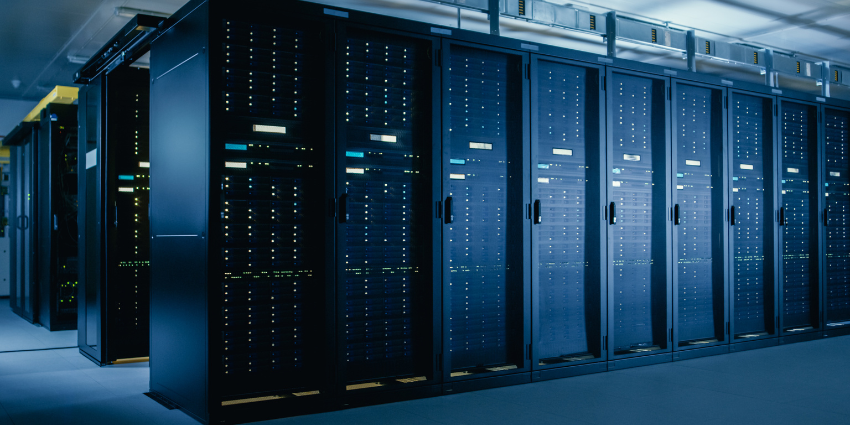
It’s easy to forget that AI technologies require physical hardware. Lots of it. RAM prices more than doubled between October 2025 and early 2026, with some 32GB DDR5 components jumping 122% to $282 in the first quarter of this year alone, according to Counterpoint Research. AI companies are buying up chips at a pace the supply chain cannot match.
Shares in major chipmakers have surged accordingly, with SK Hynix up 310%, Micron up 296%, and Sandisk up 780% in the first half of 2026 alone. Meanwhile, Nvidia is reportedly building up to $500 billion of AI infrastructure in the U.S. as chip tariffs loom.
The ripple effects of this scarcity are already visible visible across consumer tech. Apple raised iPad and MacBook prices by nearly 20%, citing chip costs, while Xbox consoles are now 30% to 40% more expensive than they were a year ago. If chip scarcity is already repricing personal computers and gaming hardware, it is only a matter of time before it fully reprices enterprise AI.
James Bull, tech senior analyst at RSM UK, put the dynamic bluntly:
“The MacBook on consumers’ desks is now competing for the same DRAM as the data centres powering ChatGPT and is losing.”
Energy costs are also a major factor. Data centers now consume 6% of total electricity supply in both the UK and the U.S., while global annual investment in data centers approaches $1 trillion, representing nearly 1% of the entire global economy. With geopolitical tensions and climate concerns pushing up energy prices, the consumer will likely suffer. Indeed, electricity bills in major AI data center hotspots, including Northern Virginia and Oregon, have already jumped by as much as 200%, according to Gartner.
Are AI Vendors Currently Subsidizing Their Platforms?
Most AI vendors are currently operating at a loss. According to Gartner, LLM vendors are currently subsidizing their services by up to 90% to build market share. That era is ending.
As reported by American Banker, OpenAI, Anthropic, and Microsoft are actively moving away from flat per-seat licensing toward per-token pricing models based on actual data consumed. Some enterprise customers have already exhausted a full year’s AI budget within months of switching.
The underlying economics are stark. To realize a 25% return on compute investment, token prices need to reach between 1.05and1.05 and 1.05and2.10 per token. That is a dramatic departure from the introductory pricing many enterprise buyers locked in during the AI gold rush.
Perhaps we are living through a situation comparable to the ‘Millennial Lifestyle Subsidy’ – a term coined by Kevin Roose to describe the proliferation of cheap consumer technology services throughout the 2010s such as Uber, Airbnb, and DoorDash. Many of these companies operated at significant losses, bankrolled by venture capital, to establish market share. It is likely that we see a similar situation unfold with AI technologies.
What Does the Compute Cost Crisis Mean for CX Leaders?
The implications for customer experience are direct and pressing. Gartner’s landmark analysis forecasts that the cost per resolution for generative AI in customer service will exceed $3 by 2030, surpassing the cost of many B2C offshore human agents.
Patrick Quinlan, Senior Director Analyst at Gartner, identified three cost factors organizations consistently underestimate: specialized AI talent commanding significantly higher salaries than traditional agents, unpredictable usage patterns under per-token pricing, and rising infrastructure costs including AI chips that typically burn out and require replacement within one to three years.
Quinlan was direct in his assessment:
“I think organizations who expect big cost savings from GenAI will be disappointed.”
The headline promise of AI-driven cost reduction in the contact center is not yet supported by the cost trajectory. Gartner’s own survey from October 2025 found that only 20% of customer service leaders have actually reduced agent headcount because of AI. Most reported that headcount has remained steady – a finding that sits uncomfortably against the industry’s prevailing narrative.
How Are Enterprises Responding to Rising AI Compute Costs?
The more pragmatic organizations are already adapting. As American Banker reported, PNC is building its own in-house AI infrastructure to take compute ownership away from hyperscalers. Others are shifting toward open-source or older models that remain performant but carry lower running costs.
Within the contact center specifically, Gartner’s Quinlan recommends a triage-first architecture: using AI to collect information and route interactions, then handing off to human agents or rules-based systems for actual resolution. Summarization, note-taking, and intent classification are identified as high-value, lower-cost use cases that improve efficiency without the token-heavy expense of autonomous resolution.
Emily Potosky, Senior Director of Research at Gartner, reinforced the case for keeping humans in the loop:
“AI simply isn’t mature enough to fully replace the expertise, empathy, and judgment that human agents provide. Relying solely on AI right now is premature and could lead to unintended consequences.”
Who Pays When AI Gets Expensive?
The structural answer is: everyone. UBS Global Wealth Management predicts continued strength in AI capital expenditure through mid-2027, meaning the buildout is far from finished. With early funding from hyperscalers giving way to bank and private credit financing, the pressure on AI companies to demonstrate profitability is intensifying. Subsidized pricing is incompatible with that pressure.
For enterprise buyers and CX leaders, the message is unambiguous. The pricing environment for AI platforms will tighten. The vendors that survive the transition will be those that can prove genuine ROI at market-rate compute costs. The buyers that navigate it well will be those that stopped treating today’s pricing as a permanent baseline and started building cost scenarios that reflect what AI costs to run.
The cheap era was never going to last. The question now is how many enterprise budgets were built as if it would.
Want to learn more? Check out our Ultimate Guide to AI & Automation.