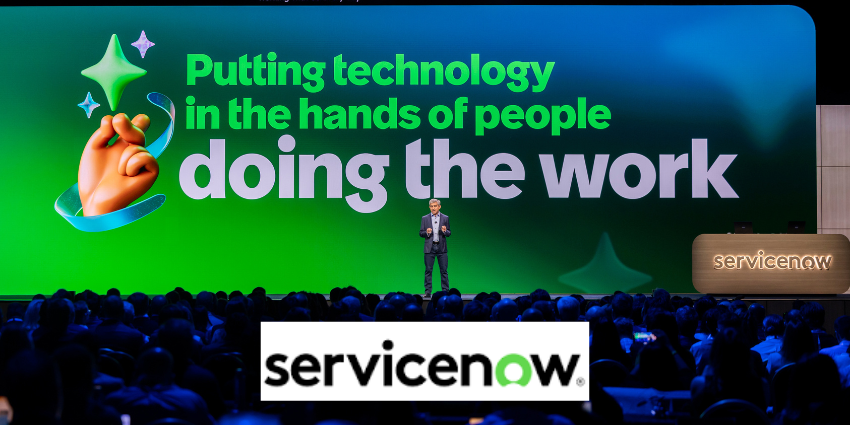

ServiceNow used its Knowledge 2026 keynote to position agentic AI as the next operating model for enterprise customer experience. The company tied its roadmap to a clear promise: reduce manual CRM and service work while keeping AI decisions governed.
Day two’s keynote built on earlier event coverage about ServiceNow’s push to replace manual CRM work with agentic AI and its focus on AI agent governance. Those themes matter to CX leaders because automation only helps when it stays reliable at scale.
ServiceNow described AI agents as systems that take action across workflows. It positioned that shift as a step beyond conversational assistance.
The company’s message matches the story it has been telling across Knowledge 2026. It wants enterprises to move away from manual CRM tasks and toward autonomous execution.
Looking ahead, Amit Zavery, President, Chief Product Officer, and Chief Operating Officer at ServiceNow argued:
“ServiceNow is still about putting the power of technology in the hands of people doing the work.”
For CX enterprise buyers, that line lands as a procurement question. What work moves to agents, and what stays with people.
Governance Becomes A CX Buying Requirement
ServiceNow centered governance as the gating factor for enterprise adoption. It presented AI Control Tower as a layer to discover AI systems and apply controls across agents.
That governance theme has also been a major thread across Knowledge 2026 coverage. It speaks directly to risk teams that will need visibility into what agents can do and what data they can touch.
From an execution standpoint, Zavery outlined the goal: “If you cannot govern it, you cannot scale it.”
The keynote also demonstrated how security teams could respond when an AI agent looks over-privileged. The flow showed the system flagging an issue, disabling the agent, removing elevated permissions, and creating exposure management records.
ServiceNow positioned Workflow Data Fabric as the data layer that supports insight and action. It said the fabric spans structured and unstructured data across internal and external systems.
Context was emphasized as a practical requirement for customer service automation. With a Context Engine that connects multiple graphs across the platform, including knowledge, CMDB relationships, cyber assets, and decision logic.
For CX leaders, the message is simple. Better automation needs better situational awareness. That is how you prevent fast service from becoming wrong service.
Customer Proof Points Put CX Outcomes Behind The Narrative
The keynote leaned on customer metrics to show that autonomous work can translate into real outcomes. CVS Health was the strongest proof point in this section.
ServiceNow and CVS Health described millions of AI conversations and high deflection. They also described reduced load on service operations. That type of impact matters because internal service bottlenecks often become customer-facing failure points.
For enterprise buyers, that board-level alignment is where ‘agentic CX’ either becomes a durable operating model or stalls out in pilots. Looking ahead, Alan Rosa, CISO and SVP, Infrastructure and Operations at CVS Health stressed:
“Lastly, zero trust. Trust nothing. Verify everything. We have to make sure that we’re taking the right steps. The last thing is the most important part, engagement of your board, your ELT, your stakeholders, make sure you bring them along for the ride.”
ServiceNow’s day 2 keynote treated agentic AI as operational technology, not a feature add-on. It tied the vision to governance, security, and data context.
The decision is now whether your organization can run autonomy with accountability. In the next phase of CX, the customer experience will be shaped by what the back office can automate safely and consistently.
Join the conversation: Join our LinkedIn community (40,000+ members): https://www.linkedin.com/groups/1951190/ Get the weekly rundown: Subscribe to our newsletter: http://cxtoday.com/sign-up