
The contact center AI race is increasingly focused on what happens during the conversation, not simply before it reaches an agent.
Zendesk’s latest move puts multilingual voice support at the center of that shift.
The vendor has introduced Real-Time Voice Translation for Zendesk Contact Center, aiming to remove one of the most persistent barriers in global service operations: finding the right agent who speaks the right language at the right time.
It is a sizable announcement in a week that also saw Genesys lay out its plans to become the AI coordination layer for enterprise CX, the New York Mets move fan engagement to RingCentral’s cloud platform, and Verint warn that fragmented data could undermine the value of contact center AI.
Here’s the breakdown of the biggest contact center news stories from the past seven days:
Zendesk Brings Real-Time Voice Translation Into the Contact Center
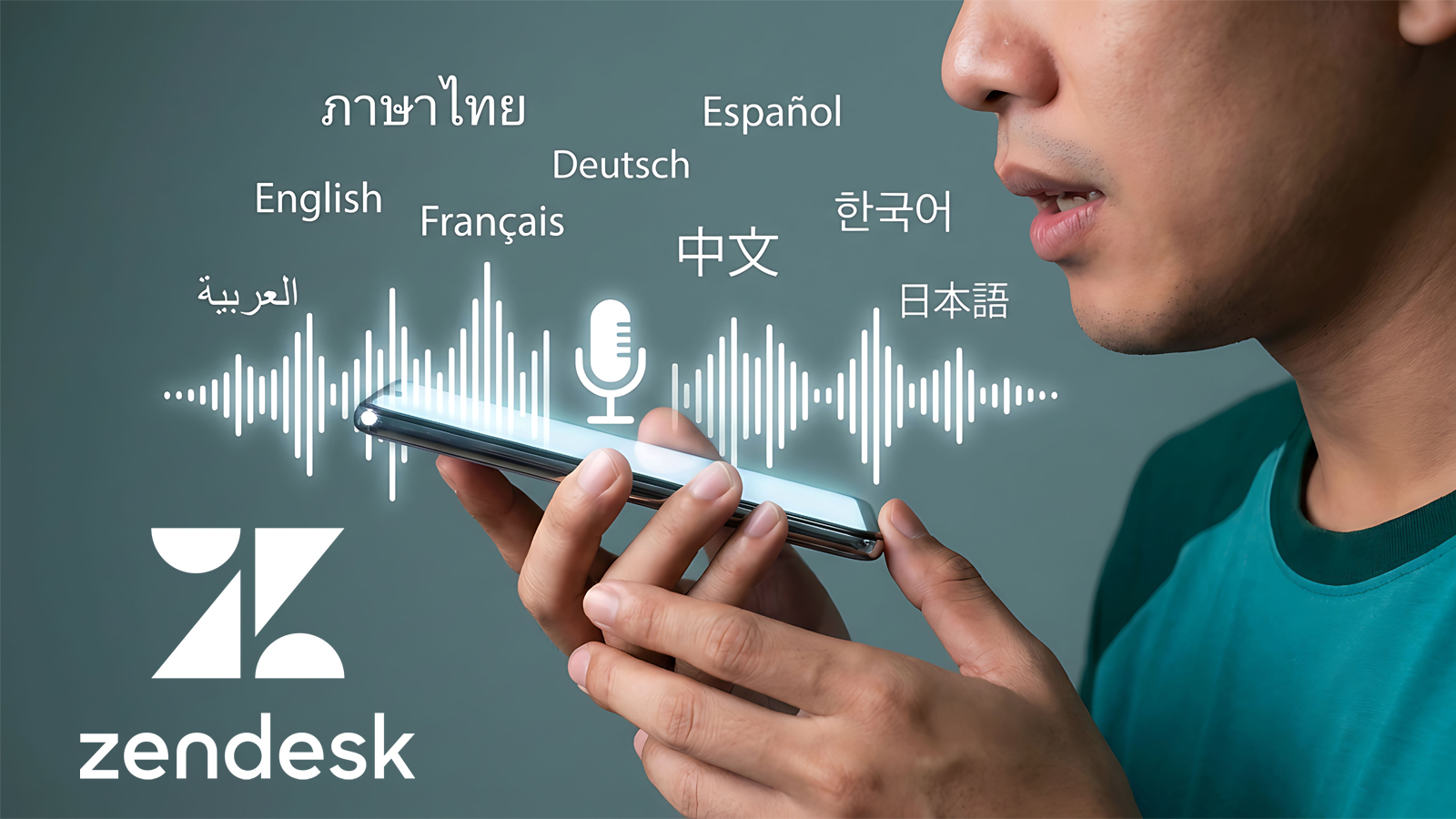
Zendesk has announced Real-Time Voice Translation for Zendesk Contact Center, allowing customers and agents to speak different languages during live calls.
The AI-powered capability translates the conversation in both directions. Rather than routing callers into language-specific queues or bringing in third-party interpreters, Zendesk is positioning the feature as a way to let agents focus on the issue itself.
Shashi Upadhyay, President of Product, Engineering, and AI at Zendesk, said:
“Customers should not have to choose between speaking the language that feels most natural to them and getting the support they need.”
“Real-Time Voice Translation helps businesses make that kind of voice support available to more customers, while agents stay focused on solving the problem.”
The feature is due to enter a closed Early Access Program in October for eligible customers using Zendesk Contact Center Native. It will support Chinese, English, French, German, Hindi, Indonesian, Italian, Japanese, Korean, Portuguese, Russian, Spanish, and Vietnamese.
For contact center leaders, multilingual support has traditionally been a staffing and routing challenge. Organizations either build expensive pools of language-specialist agents, outsource the work, or push customers toward text-based channels where translation is easier to manage.
Zendesk is attempting to turn that into a workflow problem. If the technology works as intended, a business could route an interaction based on the agent’s product expertise rather than their language skills.
That could be especially valuable for companies expanding into new regions, where call volumes may not justify a dedicated local support operation.
However, Zendesk will still need to prove that its translations hold up in complex, emotional, or highly regulated conversations.
A mistranslated delivery query is one thing; a mistranslated insurance claim, medical issue, or fraud report is another.
Genesys Wants to Become the AI Control Layer for Customer Service
Genesys made the week’s other significant product move at Xperience 2026, unveiling its AI Control Plane and Contextual Intelligence capabilities, while previewing Navigator and Orchestrator.
The vendor’s pitch is a customer service portfolio that coordinates AI agents, human employees, customer data, and enterprise workflows around the resolution of a customer issue.
Navigator is designed to act as an AI-native front door, using conversational understanding, customer history, and interaction signals to determine whether a customer needs an AI agent, workflow, or human employee.
Orchestrator, meanwhile, is intended to retain the state of the customer journey and coordinate next-best actions across systems and channels.
In discussing the news, Mike Szilagyi, SVP and Head of Product at Genesys, said:
“The future of CX is AI that understands intent, preserves memory across resources and moves the interaction forward until the customer’s problem is solved.”
That is an ambitious claim, but it reflects where the market is heading. The contact center is no longer being framed purely as a place to route interactions. Vendors increasingly want to own the context, decision-making, and governance layer behind those interactions.
The risk for buyers is that another control layer could add complexity rather than remove it. Genesys will need to show that it can connect with the CRM, service management, data, and AI tools already embedded in enterprise environments.
New York Mets Turn to RingCentral to Modernize Fan Engagement
The New York Mets have selected RingCentral to replace a legacy on-premises phone system and support communications for around 800 employees.
The deployment includes RingEX for business communications and RingCX for contact center capabilities. The aim is to improve internal collaboration while helping the organization scale ticket sales outreach and fan engagement.
Oscar Fernandez, Senior Vice President of Technology for the New York Mets, said:
“Our goal is to be the most fan-friendly and technology-driven organization in baseball, that means continually investing in tools that strengthen how we connect with our fans and one another.”
Sports franchises are becoming sophisticated customer engagement operations. They manage high-value season-ticket relationships, game-day service spikes, merchandise sales, membership programs, and constant digital communication with supporters.
The Mets are looking to connect operational communications with more proactive fan outreach through calling and SMS. The real test will be whether those interactions become more relevant and timely, not simply more frequent.
Verint Warns That Contact Center AI Has a Data Problem
Verint’s State of Contact Center AI 2026 report offered a useful counterweight to the week’s product launches.
According to the vendor’s research, 87% of contact center leaders plan to increase spending on automated agent assistance. However, the average contact center uses technology from at least three providers, while one in five uses five or more.
That fragmentation can quickly undermine AI ambitions. An assistant cannot provide much useful guidance if it lacks access to reliable customer history, knowledge content, quality data, or workforce information.
Verint found that 94% of organizations believe AI tools have improved human-agent performance, while 62% now view the contact center as a value center rather than solely a cost center.
Yet customer confidence remains less certain. The report found that 64% of consumers have noticed AI’s impact on customer service, but only 62% believe that impact has been positive.
That is the thread connecting this week’s news.
Zendesk is trying to make voice support more accessible; Genesys is building a layer to coordinate AI and human work; RingCentral is replacing legacy communications infrastructure; and Verint’s research is a reminder that none of it will matter if the data beneath those experiences remains disconnected.