Why Does Your CX Break Only When Customers Need It Most?

The Hidden Flaw in Your CX Stack That Only Shows Up When You Can Least Afford It.

8
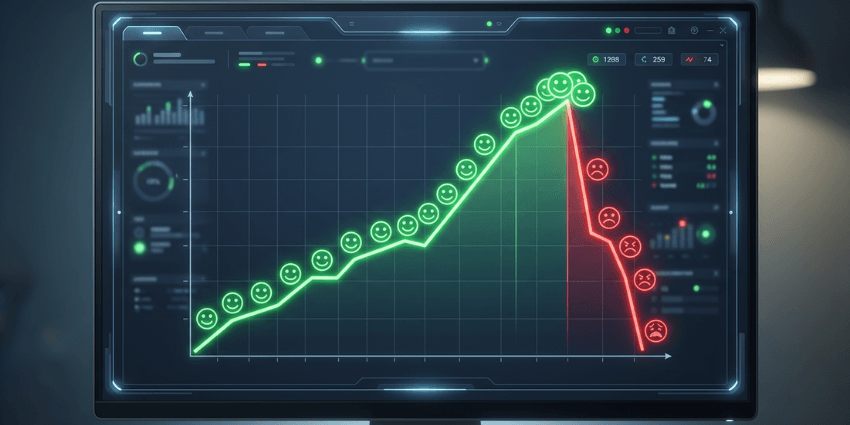
CX operations dashboard showing performance degradation during a peak traffic event
Service Management & ConnectivityExplainer

Published: May 14, 2026

Sean Nolan

Your CX breaks at peak moments because it was designed for average ones. Most platforms are built, tested, and provisioned for expected conditions, not the surges that actually define customer relationships. A genuine customer experience uptime strategy means designing for the worst day, not the most typical one. Teams that prioritize CX peak load performance understand that service reliability under load is where loyalty is won or lost. The system scalability CX choices made during procurement set your platform’s performance ceiling during a crisis. Organizations that get infrastructure scaling CX right don’t just survive peak moments. They come out the other side with customer trust intact.

Related Articles

Why Do CX Systems Fail During Peak Demand Periods?

Most CX failures during high-traffic events are not random. They are entirely predictable. Systems get sized and tested for expected load, with a modest buffer built in. When actual peaks arrive, that buffer disappears fast.

A missing customer experience uptime strategy is the root cause in the majority of these failures. Organizations without one are essentially hoping for the best when demand spikes. Hope is not an architecture.

According to widely cited Gartner estimates, IT downtime costs organizations an average of $5,600 per minute. For CX environments, that figure climbs even higher. Every minute of unavailability during a peak event means abandoned interactions, lost revenue, and shaken trust.

Strong CX peak load performance demands more than a platform that passes a vendor benchmark. It requires that every component in the stack, from routing to integrations to the knowledge layer, holds up when demand multiplies. Most organizations have never tested for that scenario. The gaps in system scalability CX architecture only show up when it is too late to do anything about them.

What Breaks When Customer Activity Spikes?

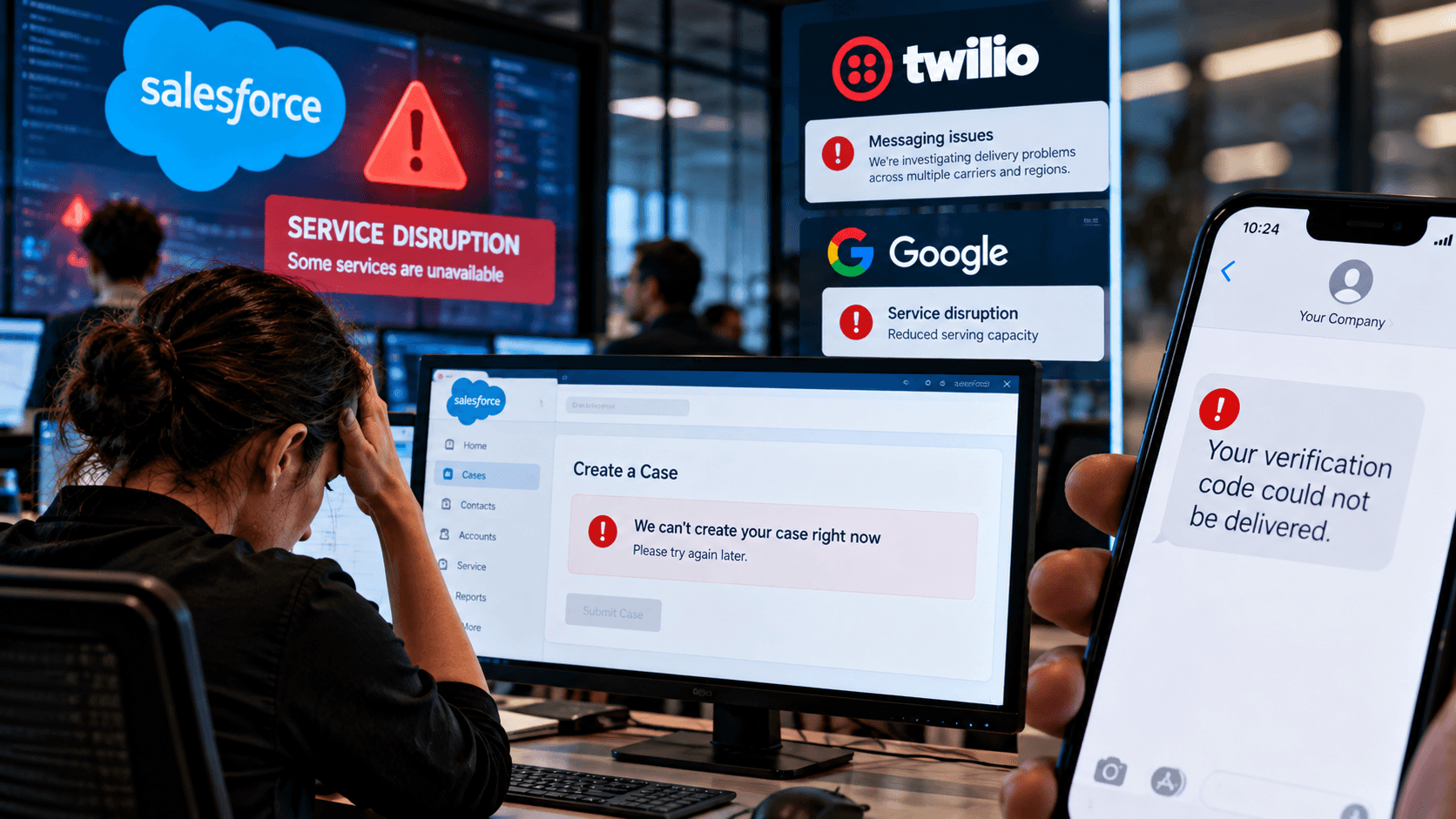
Demand spikes don’t just slow things down. They expose every weak point in your architecture at once.

Integrations tend to fail first. A CRM lookup taking 200 milliseconds under normal conditions can balloon to several seconds under heavy load. That delay cascades upward, affecting agent handle times, data accuracy, and the overall quality of the interaction.

Poor infrastructure scaling CX planning is almost always behind these integration failures. When supporting infrastructure can’t expand to absorb demand, every dependent system starts to crack. Routing logic suffers next. Intelligent routing depends on real-time data to match customers with the right agent or resource. Under load, that data pipeline lags, queues back up, and self-service options time out.

CX peak load performance also breaks at the knowledge layer. Agents under pressure need fast answers. When knowledge management systems slow down, resolution times spike and first-contact resolution rates fall sharply.

Genuine service reliability under load is not just about keeping the lights on. It is about keeping every component of the service experience functional and accurate when customers need it most. Forrester research consistently shows that customer effort is one of the strongest predictors of churn. A customer who hits a broken experience during a crisis is far more likely to defect than one who calls on a quiet Tuesday afternoon.

Predictive maintenance requires high-level visibility. Dive into CX Today’s Guide to CX Observability to take the first step towards forward-thinking service management.

How Do Systems Behave Differently Under Load?

Here’s where things get counterintuitive. Systems don’t just slow down gradually as load increases. They degrade in sharp, non-linear ways.

This behavior is well documented in systems engineering. As a system approaches its capacity limit, response times accelerate dramatically. A system at 80% capacity may perform acceptably. Performance starts to slip at 90%. At 95%, the entire stack can collapse under the weight of compounding delays.

Any credible customer experience uptime strategy must account for this non-linear behavior. Organizations that plan for gradual degradation will be caught off guard. The math doesn’t work the way most operations teams expect it to.

In CX environments, system interdependency makes this worse. The contact center platform calls the CRM, which queries the customer data platform, which in turn pulls from the data warehouse. Each call adds latency. Under load, those latencies stack up and push transactions past their timeout thresholds.

Once timeouts start firing, retry logic kicks in. That retry logic adds more load to an already strained system. More load causes more timeouts, which trigger even more retries. This feedback loop explains why platforms collapse entirely during peaks rather than slowing down gracefully.

True service reliability under load requires that teams understand and design around these feedback loops before they occur. IDC research highlights that organizations with mature digital infrastructure practices maintain service continuity during high-demand periods far more often than those with reactive IT strategies. Building for infrastructure scaling CX means anticipating the cascade before it starts, not responding to it after the damage is done.

Where Do Scalability Limits Impact Customer Experience?

Scalability is not a single dial you can turn up. It lives at every layer of your CX stack, and each layer has its own limits.

System scalability CX conversations often start and end at compute. Compute is just one piece. Platforms running on fixed infrastructure cannot elastically expand to meet sudden demand. Cloud-native platforms have a clear advantage here, provisioning additional capacity dynamically. But cloud elasticity only works when the application architecture is designed to use it. Many legacy platforms sitting on cloud infrastructure are not truly elastic at the application layer.
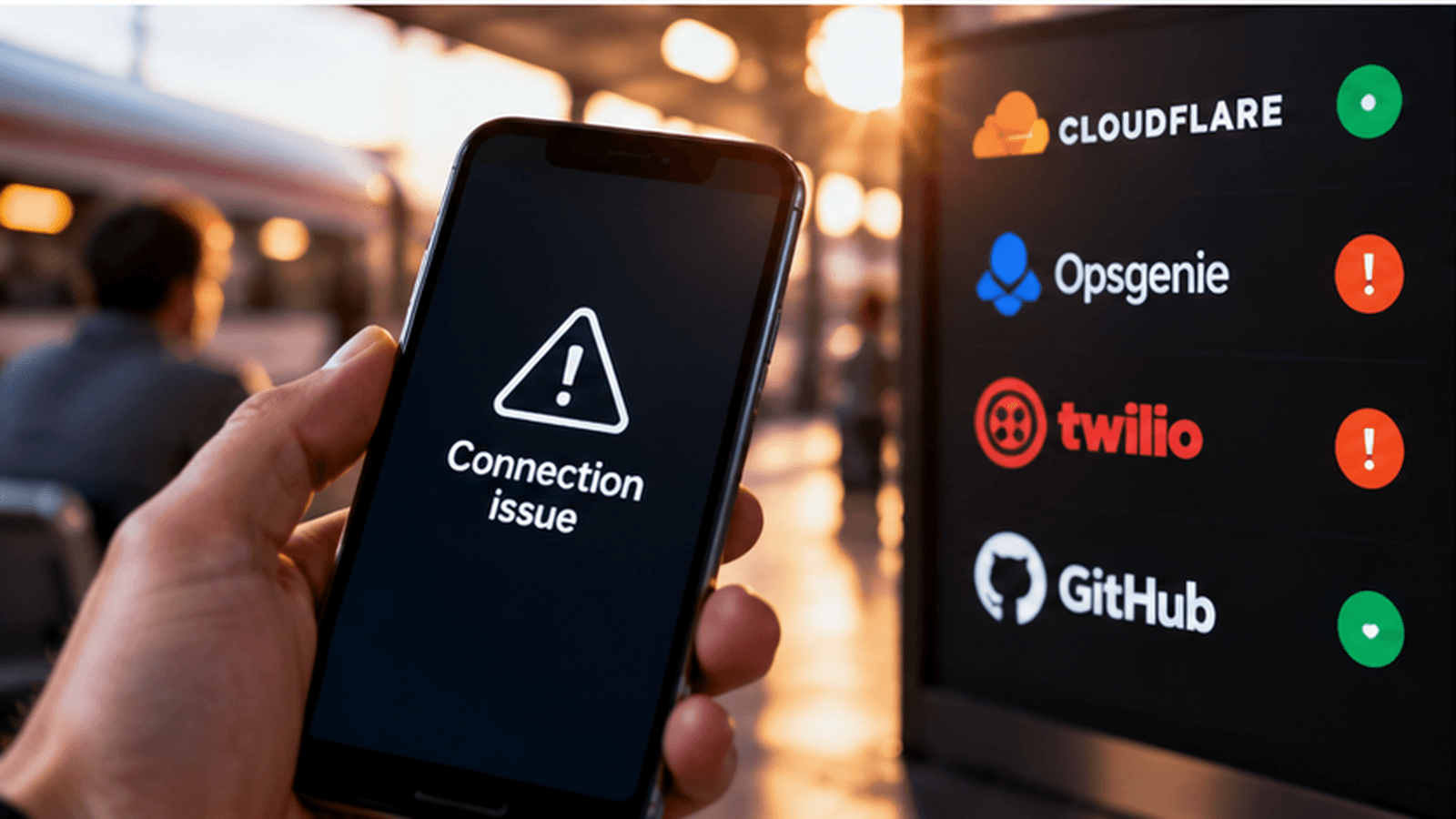

Database scalability is a frequent hidden bottleneck. Real-time customer profile lookups during a spike can overwhelm database connections quickly. Organizations relying on a single database instance without read replicas or caching layers will feel this problem acutely.

Network bandwidth and third-party API rate limits create another class of constraint. During a surge, API call limits get hit fast. When that happens, integrations fail silently or return errors. Those broken workflows are invisible to IT teams but painfully obvious to customers and agents.

Weak infrastructure scaling CX decisions at any of these layers can undermine an otherwise solid platform. The human layer matters too. Even the most resilient technology stack can let customers down if the workforce management model doesn’t account for surge scenarios.

Achieving strong CX peak load performance means identifying and addressing the scalability ceiling at every layer, not just the most visible one.

How Should Organizations Design for Peak CX Performance?

The shift from reactive to proactive is the single most important move service operations leaders can make right now.

A mature customer experience uptime strategy starts with knowing your peaks. Historical data on traffic patterns, seasonal surges, campaign-driven spikes, and incident-driven volume forms the foundation. Without that baseline, intelligent infrastructure sizing is impossible.

Load testing is not optional. Organizations should regularly simulate 2x and 3x normal traffic across the full CX stack. This means testing every integration, API dependency, and data store, not just the front-end platform. The goal is to find the breaking point in a controlled environment before customers find it live.

Chaos engineering, popularized by Netflix and widely adopted by high-availability engineering teams, involves deliberately introducing failures to test resilience. Applied to CX infrastructure, this approach uncovers hidden dependencies and failure modes that only surface under stress.

System scalability CX policies also need CX-specific thresholds, not generic IT defaults. A CPU trigger that suits a static web application may fire too late for a real-time routing engine. Operations teams should define the right triggers in close collaboration with their platform vendors.

Circuit breaker patterns in integration architecture can prevent cascading failures. When a dependent system slows down, circuit breakers fail fast and degrade gracefully instead of letting timeouts pile up. Solid infrastructure scaling CX practice means building these safeguards as standard, not as an afterthought.

Consistent service reliability under load is the outcome of all these disciplines working together. Organizations that treat peak readiness as a continuous practice build CX infrastructure that holds when it matters most.

Final Takeaway

CX failure during peak demand is not bad luck. It is the predictable result of systems designed for normal. A well-executed customer experience uptime strategy turns peak moments from a liability into a proof point. Organizations that retain customer trust during high-pressure events planned for them. They stress-tested their stacks, built for elasticity, and treated service reliability under load as a core product feature rather than an IT afterthought. The question is not whether your peak moment is coming. It is whether your CX peak load performance will hold when it does.

Already thinking about how your service infrastructure stacks up? The Complete Guide to Service Management & CX gives you the full roadmap for building CX infrastructure that performs when the pressure is highest.

FAQs

What Is a Customer Experience Uptime Strategy?

A customer experience uptime strategy is a deliberate plan for keeping CX systems available and performant under all conditions, including peak demand. It covers infrastructure design, capacity planning, monitoring, incident response, and ongoing resilience testing. Organizations with a defined uptime strategy experience fewer service failures and recover faster when disruptions occur.

What Is CX Peak Load Performance?

CX peak load performance describes how well a customer experience platform and its supporting systems function when traffic volumes spike significantly above normal. It measures whether speed, accuracy, routing quality, and integration stability hold up when demand surges. Organizations that optimize for peak load rather than average load build fundamentally more resilient CX operations.

What Does Service Reliability Under Load Mean?

Service reliability under load means a system continues to perform as expected when traffic volumes are high or unusual. In a CX context, this includes maintaining fast response times, accurate routing, and stable integrations during demand spikes. Systems that degrade sharply under load create customer frustration and damage brand reputation at the worst possible time.

How Does System Scalability in CX Affect Operations During a Crisis?

System scalability CX architecture directly determines the performance ceiling of your platform during a crisis. Poorly scalable systems hit their limits quickly under elevated demand, causing slowdowns, errors, and outages that compound in real time. A truly scalable architecture allows the platform to dynamically expand compute, database, and networking capacity to match demand. Organizations that make system scalability a non-negotiable design requirement protect both experience quality and operational continuity when surges arrive.

Why Has Infrastructure Scaling in CX Become a Business-Critical Priority?

Infrastructure scaling CX has become more critical as digital interaction volumes grow and customer tolerance for poor experiences drops. Forrester research consistently shows that customers who experience friction during a service interaction are significantly more likely to churn. CX environments have also grown more complex, with more channels, integrations, and real-time dependencies creating compounding failure risks under load. Organizations that scale proactively turn reliability into a visible competitive advantage rather than a background function.

Field Service ManagementNetwork ReliabilityService Management (ITSM)
Featured

Share This Post