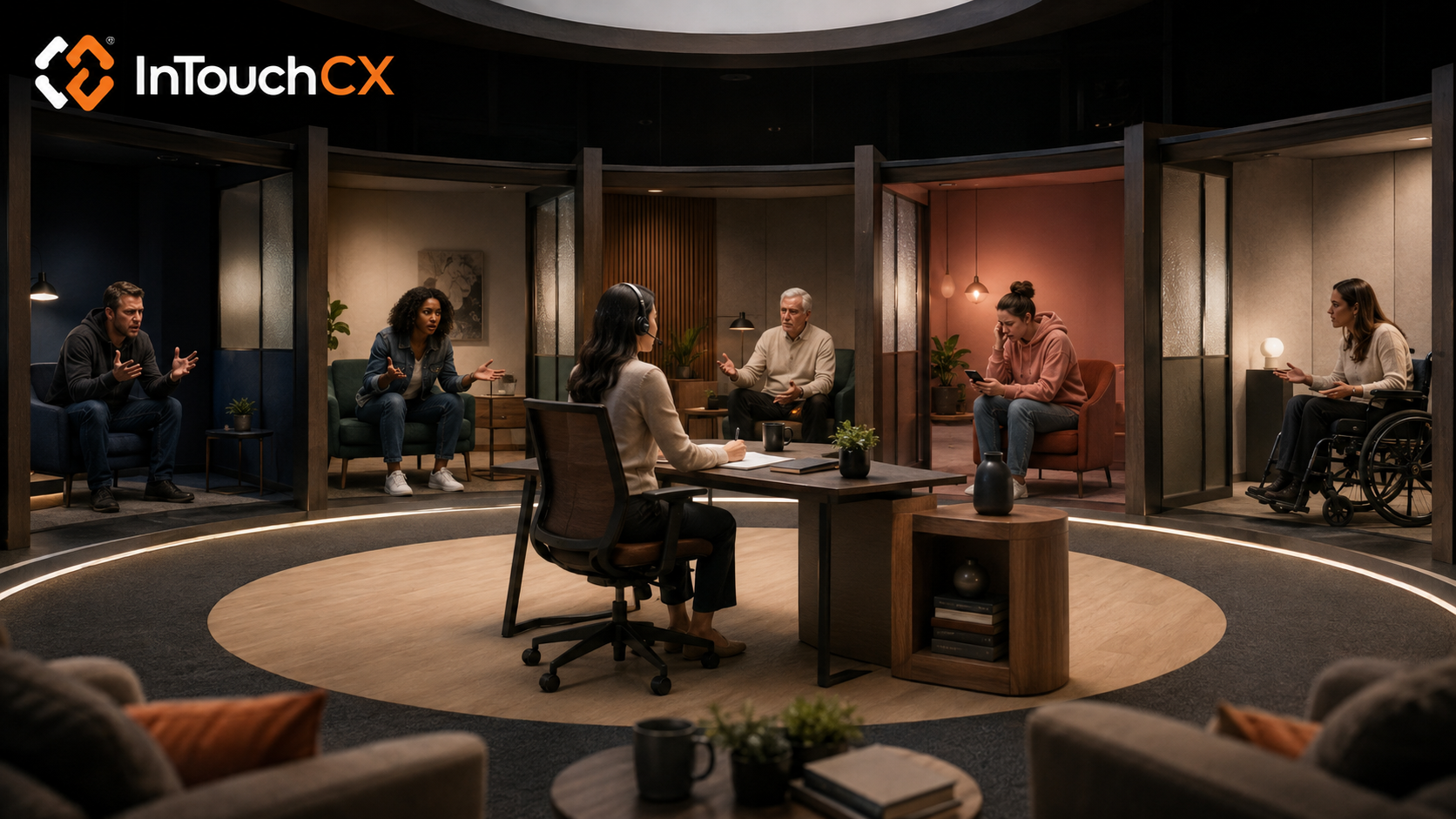

A quiet shift is underway in omnichannel CX. Journey maps are getting replaced by real-time journey operations, and the teams that make the change first are cutting repeats and preserving context when customers switch channels. If your mapping program still lives in workshops and slide decks, you are already behind what top brands are operationalizing now.
The pressure is coming from two directions at once. Customers move faster than static documentation can keep up, and leaders want measurable proof that experience work changes outcomes, not just narratives.
That tension is why “journey mapping broke in omnichannel” is turning into more than a hot take. It is becoming a practical operating problem, and a budget conversation.
Asked what changes now, Thomas Wilson, Director, Organizational Service Design at WIT Strategy emphasized:
“The truth is simple: customer experiences evolve faster than static maps can keep up.”
Why Static Journey Maps Collapse Under Omnichannel Reality
Journey maps still help teams align. But most maps were built as snapshots, and omnichannel behavior is continuous.
Customers do not move in neat, linear sequences. They switch channels mid-task. They restart on different devices. They bounce between self-service and assisted service depending on urgency and confidence.
Static maps struggle in that environment for three reasons.
First, they decay quickly. Even well-crafted maps become out of date when product flows change, policies change, and channel behavior shifts.
Second, they are rarely connected to operational data. That makes them hard to govern and harder to defend when leaders ask what changed, and why it mattered.
Third, they often stop at documentation. The output looks complete, and the organization moves on, even though the underlying journey still leaks effort through repeats, transfers, and dead ends. Thomas Wilson, Director, Organizational Service Design at WIT Strategy framed it as a practical failure mode:
“For decades, journey maps have been pinned to office walls like trophies. Beautifully designed, but static.”
The replacement is not better cartography. It is operating journeys as dynamic systems that respond to signals and drive decisions.
For many teams, that shift shows up in language first. The map stops being the deliverable, and governance becomes the deliverable.
For Mariel Macia, Senior Diretor Strategic Design at WPP, the distinction is the point. “The value isn’t the map. It’s the governance, KPIs, orchestration, and continuous improvement behind it.”
This model treats experience like an operating layer, not a workshop artifact. It also forces clearer ownership across digital, contact center, marketing, and operations because a journey in omnichannel is never owned by one team. Macia also described what this implies for the function itself:
“We’ve moved beyond journey “mapping” to journey management. The work has shifted from documenting experience to operating it.”
What Fuels A Living Journey, Signals That Drive Decisions
If living journeys are real systems, they need inputs that are both experiential and operational.
That usually means pairing customer sentiment, journey analytics, and digital behavior with data that shows operational friction, such as repeat contact, abandonment, and queueing.
Wilson argued, “Living journeys are not artifacts. They’re dynamic systems fed by real-time metrics and insights across the enterprise.” whilst laying out the kinds of inputs teams increasingly pull into journey operations, including:
- Customer sentiment metrics (for example, NPS, CSAT, CES)
- Operational performance data (for example, FCR, AHT, abandonment)
- Digital engagement signals (clickstream, app usage, error rates)
- Employee experience data (engagement, adoption, training)
- Business outcomes (retention, churn, cost-to-serve, revenue)
Those inputs matter because they change how journey success gets defined. The target becomes fewer handoffs, fewer repeats, and faster resolution, not a prettier map.
What The Case Studies Show When Orchestration Gets Real
The clearest signal that the market is moving is that brands are now attaching revenue, conversion, and speed-to-execution metrics to journey work.
Coca-Cola: Personalization At Scale Depends On Real-Time Profiles
Coca-Cola’s personalization work shows what happens when journey execution is built on unified profiles and cross-platform data sharing.
In its Adobe-led case study, Coca-Cola reported a 36% increase in revenue, plus an 89% conversion rate among re-engaged shoppers, alongside improvements like a 36% increase in email open rates and a 19% increase in conversion rate from on-site search.
Coca-Cola also tied that impact to orchestration language directly. Vinay Gopinath, Director, Global Advertising Platforms Technical Product Owner at The Coca-Cola Company highlighted:
“There’s a broad array of capabilities you can unlock when you’re sharing data seamlessly across your platforms. You’re not just sending emails or push notifications, you’re orchestrating a truly omnichannel experience. It’s incredibly powerful.”
He also pointed to the foundation that makes orchestration possible, complete touchpoint capture and a unified profile from the first visit noting “With the Commerce integration, we’re able to capture every consumer touchpoint. It helps us build a true consumer profile from the moment they first land on the site.”
Auckland Airport: Orchestration As Both Growth And Emergency Readiness
Auckland Airport’s story matters for a different reason. It shows orchestration as an operational readiness capability, not just a marketing maturity marker.
After extreme weather events and rising traffic post-lockdowns, the airport prioritized connected communications across business units. It then implemented Adobe Journey Optimizer to deliver more timely and relevant messages across touchpoints.
The reported outcomes included a 72% increase in automation revenue with orchestrated customer journeys, a 10% improvement in open rates, and a 40% reduction in email production-to-delivery time using generative AI and AI Assistant. For Richard Wilkinson, Chief Digital Officer at Auckland International Airport, the return was immediate:
“We created a connected ecosystem between our digital customer touchpoints. That’s helped us achieve a positive return on investment in a short period of time.”
The airport also tied speed-to-response to the shift from disconnected communications to orchestration, which becomes critical when disruption hits and customers need accurate instructions quickly.
Amica: Service Levels Rise When Journey Work Stops Being Channel-Specific
Amica’s Genesys case study adds a contact center and service operations lens. The insurer reported service levels increasing by up to 12%, alongside reduced queue time and handle time, after moving to the Genesys Cloud platform and rolling out workforce engagement management capabilities.
It also positioned orchestration as a journey capability, not a routing tweak. Stacy Darling, Assistant Vice President, Voice Operations at Amica confirmed:
““Now, callers just say an Amica employee’s name or what they’re looking for and they’re connected to the correct representative, first time. They don’t have to remember various extensions numbers or quote case references.”
And she connected operational outcomes to workforce enablement, including real-time visibility and scheduling across teams.
The Analyst-Led Tension, Static Mapping Is Dead, But Mapping Still Matters
Multiple industry voices are separating ‘static mapping’ from ‘the need to understand the journey.’
That distinction is increasingly visible in analyst commentary, including calls that more CX teams will deprioritize traditional mapping work when it stays disconnected from operations. That theme aligns with Forrester’s customer experience predictions for 2026, which highlights how quickly CX operating models are being reshaped by shifting expectations, data realities, and AI.
At the same time, teams are being pulled toward orchestration and AI, but many still lack a reliable foundation for what the journey actually is. Anat Weissman, Founder and Chief Agents Officer at CXmate positioned it as the market’s gap:
“The biggest gap they called out? Journey mapping. Not orchestration. Not analytics. Mapping.”
Weissman also captured the operational reality many CX leaders recognize, maps often sit unused, warning: “Static maps don’t work. They sit in Miro and collect dust.”
Taken together with Wilson’s ‘living journeys’ framing and Macia’s governance argument, the takeaway is not that mapping disappears. It becomes a step inside an operating system, not the end of the work.
How Enterprise CX Teams Can Move From Mapping To Journey Ops Without Chaos
This shift fails when teams try to modernize everything at once. It works when they start with one journey that is both high-impact and measurable.
Choose a journey with frequent channel switching and high repeat contact. Billing, password resets, claims, and delivery exceptions are common starting points.
Then define a minimum viable set of signals and outcomes. The easiest way to keep this grounded is to align measurement to operational outcomes and customer effort indicators, not vanity metrics. Many of the most useful yardsticks show up in the CX benchmarks that actually matter in 2026, including metrics that expose friction like repeats, avoidable contact, and poor containment quality.
Next, pick the inputs and outcomes you can realistically govern:
- Signals: intent, last action, identity resolution, channel context, and key friction indicators (abandonment, repeats)
- Outcomes: repeat contact rate, transfer rate, time-to-resolution, and customer effort measures
Finally, build governance into the work, with a cadence that forces decisions. That cadence should answer three questions every cycle: what broke, what changed, and what we will ship next.
This ‘journey mapping broke’ moment is uncomfortable because it suggests a lot of well-intentioned work did not translate into sustained change.
But it also gives CX leaders a cleaner mandate. Build an experience operating layer that turns signals into actions, and prove it in outcomes customers can feel and finance teams can measure.
The organizations that move first will not just publish better journey artifacts. They will run journeys as living systems, and they will make omnichannel feel coherent even when customers do not behave coherently.
Join the conversation: Join our LinkedIn community (40,000+ members): https://www.linkedin.com/groups/1951190/
Get the weekly rundown: Subscribe to our newsletter: http://cxtoday.com/sign-up