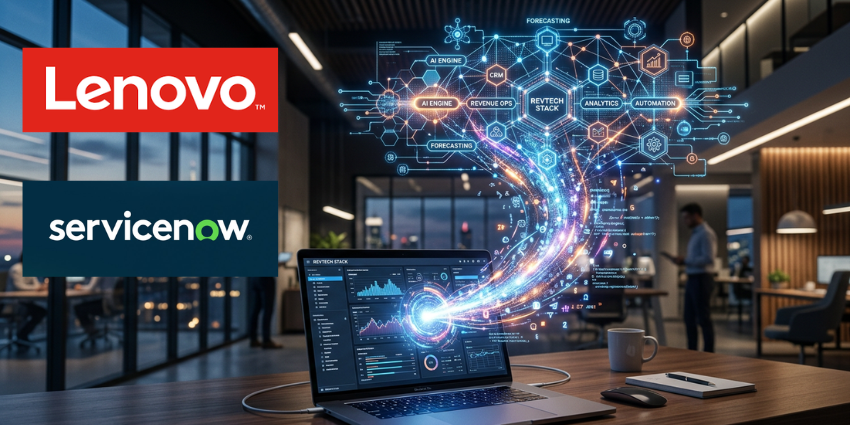

Lenovo is positioning its xIQ platform as a way for enterprises to translate device-level experience signals into governed workflows inside ServiceNow. The company’s pitch is simple: when digital workplace operations run in a fragmented, human-heavy model, CX suffers and revenue teams feel it first.
This matters for any organization trying to align CX with a revtech stack. The revtech stack only delivers when the people running it can move quickly, stay productive, and trust the systems they use every day.
In my conversation with Rakshit Ghura, VP and GM at Lenovo, the core message was not about adding another tool. It was about reducing the operational friction that quietly breaks customer experiences, even when frontline teams are doing their best.
Lenovo sees many enterprises stuck in what Ghura called a traditional support model. The work is manual. The tooling is disjointed. And issues get handled after they escalate.
“When we say traditional model, we are referring to their support is very human intensive. Second, their tools are completely fragmented.”
The Challenge: Human-Intensive Support and Fragmented Tools
That fragmentation has a direct CX cost. It slows down sellers trying to access systems. It drags down contact center performance when agent devices struggle. It disrupts field and service teams when endpoints fail mid-task.
In a revtech stack world, those breakdowns are not just IT problems. They become lost time, missed follow-ups, slower resolution, and inconsistent customer outcomes.
Lenovo’s bet is that device intelligence can serve as an early warning system for experience degradation. The idea is to detect issues before they show up as tickets and before they impact productivity.
Ghura described a market at an inflection point where enterprises want a more proactive and automated model for digital workplace operations.
“If you see most of the customers today, they are consuming digital workplace services in a traditional model.”
The xIQ concept, as Lenovo described it, is built around visibility into the endpoint environment and practical AI-driven insights that can guide actions. For CX leaders, the important part is not the telemetry itself. It is what you can do with it.
Why ServiceNow Matters: Orchestration Inside the Revtech Stack
This is where ServiceNow becomes central to the case study. Lenovo is aligning its insights with ServiceNow workflows so actions can happen consistently, with policy and governance.
According to the ServiceNow and Lenovo press release, the expanded partnership aims to connect device intelligence with workflow automation to improve control, visibility, and time to value. The release also claims measurable outcomes, including up to 30% lower IT support costs and 50% faster employee productivity, alongside improved reliability and user experience.
That orchestration layer is what makes the story a revtech stack play. Revtech stacks already depend on workflow reliability across CRM, service, and operations. If internal execution breaks, the customer journey breaks with it.
Lenovo’s message maps to a practical operating model for CX alignment:
First, treat employee experience breakdowns as leading indicators of CX risk. Then, connect those signals to workflows that actually resolve issues, not just report them.
In this model, Lenovo plays the sensing role. ServiceNow plays the ‘do something about it’ role.
For a CX team, that can mean fewer disruptions that spill into customer interactions. For RevOps, it can mean less downtime, cleaner handoffs, and fewer hidden delays that slow pipeline movement.
Governance: The Difference Between Automation and Chaos
As automation becomes more agentic, governance becomes the deciding factor for trust. The Lenovo and ServiceNow message leans into stronger control and visibility, which is where enterprise buyers will focus.
CX leaders should care about this because inconsistent automation does not just create IT risk. It creates experience inconsistency. And experience inconsistency is where customer trust erodes.
If the revtech stack is the system of record for revenue, then governed workflow automation is increasingly the system of execution for CX.
Lenovo’s case study is really a pattern enterprises can reuse:
You do not align CX with the revtech stack by adding more dashboards. You align it by turning real experience signals into governed actions across workflows.
That is the practical shift Lenovo is pushing with xIQ and ServiceNow. And as AI-native operations mature, the winners will be the teams that can connect insight to orchestration without losing control.
In the next phase of CX, the stack will actively protect the customer experience. The question for CX and RevOps leaders is whether their current revtech stack is designed to do that, or whether it still depends on humans stitching the gaps together.
Join the conversation: Join our LinkedIn community (40,000+ members): https://www.linkedin.com/groups/1951190/
Get the weekly rundown: Subscribe to our newsletter: http://cxtoday.com/sign-up