
Zoom unveiled Agent Architect and Agent Performance Suite for Zoom Virtual Agent ahead of Customer Contact Week, CCW 2026, expanding its CX portfolio with tools designed to build, measure, and optimize AI-powered customer service. The launch signals a broader market shift as enterprises move from deploying AI agents to proving they can improve resolution rates, lower costs, and deliver better customer outcomes.
That shift matters because many organizations no longer need convincing that AI belongs in customer service. They now need clearer ways to test performance, tune automation, and connect customer context across channels without adding more friction.
Agent Architect allows teams to create production-ready voice and digital AI agents from a prompt, according to Zoom’s press release. The company positioned it as a faster way to move from design to deployment for automated customer service use cases.
Agent Performance Suite takes the next step by helping teams evaluate and improve those AI agents after launch. That focus reflects a more mature phase of the CX AI market, where buyers want evidence that automation is working, not just proof that it is live. Looking ahead, Chris Morrissey, General Manager of Zoom CX, argued:
“AI has significantly accelerated the CX landscape, and organizations not focused on outcomes fall behind. It’s no longer just about deploying it to drive efficiency, but about having the context to drive personalization at scale.”
Zoom Adds Tools To Measure AI Outcomes
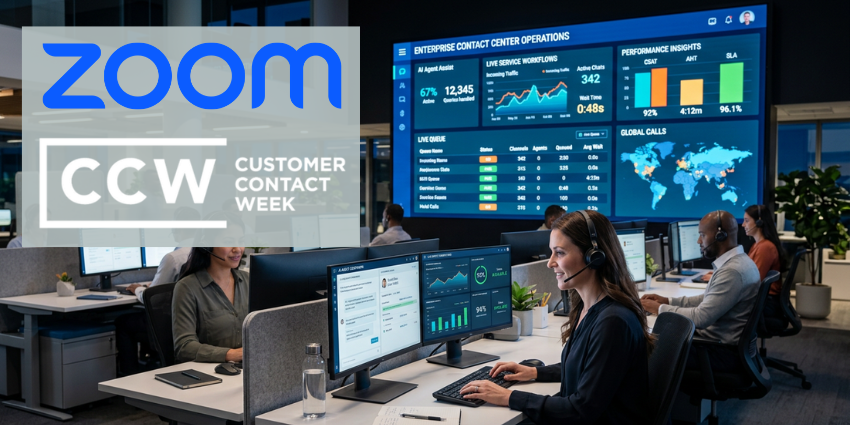
Zoom said Agent Performance Suite includes dashboards that track metrics such as resolution rates, containment, and cost per resolution. Those measures give CX teams a more practical view of whether AI is reducing effort and improving service.
The company also introduced Quality Management for Zoom Virtual Agent. Zoom said the feature applies a common quality framework across AI and human interactions, which could help teams identify where automation works well and where live agents still add the most value. From an execution standpoint, Morrissey outlined the goal:
“The challenge is eliminating the tradeoff between speed and sophistication, and Zoom CX bridges that gap so teams can personalize better, deliver faster, and drive stronger outcomes.”
Zoom also announced an enhanced customer context capability that stores memory across interactions. That context can move with the customer between virtual and live agents, which should reduce repetition and support smoother handoffs.
This matters because broken context remains one of the most common failures in modern customer service. Customers still get forced to restate issues as they move from chat to voice or from self-service to an agent, and that weakens both efficiency and trust.
Zoom’s message is clear. Better AI outcomes depend on linking interactions, context, and action across the journey rather than layering isolated tools onto disconnected workflows.
Outcome-Based Pricing Sharpens The Business Case
Zoom also introduced an optional outcome-based pricing model for AI automation. The company said the model aligns costs to successfully resolved or routed interactions across chat and voice.
That move adds a commercial signal to the product story. Enterprise buyers are under growing pressure to justify AI spend, and vendors now need to show that pricing aligns more closely with measurable business value.
Zoom also announced multi-location deployment, which allows organizations to build an experience once and roll it out across multiple locations while preserving local greetings and phone numbers. That could help larger enterprises balance standardization with local service needs.
Taken together, Zoom’s announcements reflect how quickly the CX AI market is evolving. The first wave centered on deployment, while the next wave will be defined by optimization, accountability, and the ability to improve customer journeys in measurable ways.
For CX leaders, that is the real test ahead. In the next phase of the market, success will depend less on how many AI agents a company launches and more on how well those agents perform in the moments that shape customer loyalty.
Join the conversation: Join our LinkedIn community (40,000+ members): https://www.linkedin.com/groups/1951190/
Get the weekly rundown: Subscribe to our newsletter: http://cxtoday.com/sign-up