
The pressure to automate is outpacing organizational readiness.
As enterprises race to deploy AI-powered bots and virtual agents, automation can quietly erode customer trust when the right foundations aren’t in place.
The difference between automation that scales and fails often comes down to how organizations prepare for a bot to handle its first interaction.
Speaking with CX Today, Scott Kendrick, SVP of Strategy and Alliances at CallMiner, argues that current industry hype and pressure to adopt are pushing organizations to automate faster than they may be ready to.
“There is a lot of hype which creates FOMO, everybody’s looking to see how they can reduce costs, increase margin, and provide a better service to their customers,” he explained.
“If the competition is automating and providing more efficient service, there’s a potential risk of not being competitive in the market based on how fast things are moving.”
The Gap Nobody Is Measuring
Today, the pressure to automate is all too real for organizations, but the conditions under which many deploy often undermine its long-term success.
Pressures from the market, customer expectations, and demands for greater efficiency have encouraged many businesses to launch chatbots and virtual assistants as a milestone instead of an organizational capability.
From here, essential foundations are overlooked, feedback loops are incomplete, and CX goes unmeasured, resulting in many viewing customer successes based on operational metrics over outcomes.
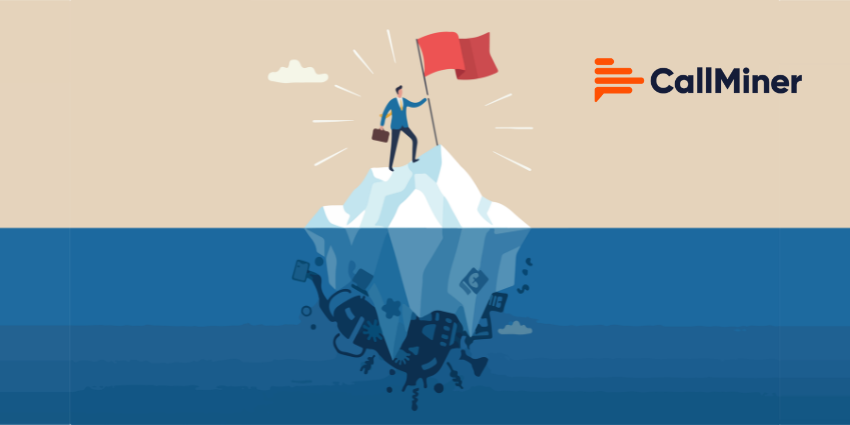
As a result, problems can remain hidden until they become too large and complex to resolve, with the speed of deployment creating the illusion of progress while masking customer dissatisfaction, inaccurate responses, or growing frustration.
“Bots aren’t great at handling complex emotional interactions,” Kendrick explained.
“If you don’t have the right feedback mechanisms in place to track and ensure your automation is functioning, there’s a potential risk of loss of trust in a brand, brand crises, and general misinformation to customers.”
As automation quality cannot be evaluated solely by technical performance, customer trust depends on whether automated systems respond appropriately in empathetic situations.
Furthermore, this is compounded by organizations that rely on the same platforms running the automation to evaluate its success.
“A lot of times they’re relying on automation systems, not necessarily analytics or intelligence systems from the ground up,” he continued.
“They provide limited visibility into how the automation is performing, focused on containment and efficiencies. That can drive the wrong behavior of a bot.”
When success is defined by containment rates or reduced agent handoffs, organizations risk optimizing for efficiency and overlooking customer outcomes.
By measuring the complete journey instead, this enables organizations to identify friction and patterns, and continuously improve automation based on customer outcomes over convenience.
Staying Ahead of Silent Deterioration
Following automation deployment, the next challenge requires organizations to continuously govern it effectively as customer behavior evolves.
New products, higher policy expectations, and unprecedented external events can alter customer conversations, as well as the underlying AI models powering automation changing as providers introduce new versions and adjust system behavior.
If organizations cannot input governance processes that monitor changes, automation performance can gradually deteriorate without triggering obvious warning signs. Scott Kendrick notes,
“Point-in-time situations may require some form of adjustment,” Kendrick noted.
“There’s also the issue of model drift and degradation. AI providers are constantly changing, deprecating models, and if you’re leveraging automation to service your customers, it’s critically important to stay on top of that.”
As a result, governance becomes an ongoing operational discipline for organizations, introducing conversation intelligence as an important layer of oversight.
Organizations need visibility into emerging friction, and thereby analyzing automated interactions similarly to human agent conversations enables teams to identify hidden patterns and shifts in behavior.
“Watch for abandonment during bot interactions, channel switching that might occur,” he warns.
“If you see positive metrics in one particular channel, but metrics are increasing in another, the volume is shifting and the friction is shifting. When you’re forcing a customer to contact you back a second or third time, that’s exponentially degrading the customer’s experience.”
These patterns often expose failures that traditional dashboards fail to detect, resulting in customers moving to another channel instead of completing the journey.
Furthermore, effective governance depends on gradually introducing new capabilities and refining performance before expanding adoption.
“Treat the rollout of an automation system like the training of a new human,” he advised.
“If you get it right, it can act as thousands of agents. But if the bot is getting things wrong, it’s going to have those issues across your entire customer base.
“Slow-roll the deployment, take one percent of traffic, send it to an automated attendant, see how it performs, and increase it from there.”
For CX leaders, the question is now whether their organization has the visibility to know if its automation is actually working.
For those that don’t, the gap between what automation promises and what customers experience may already be wider than the dashboards suggest.