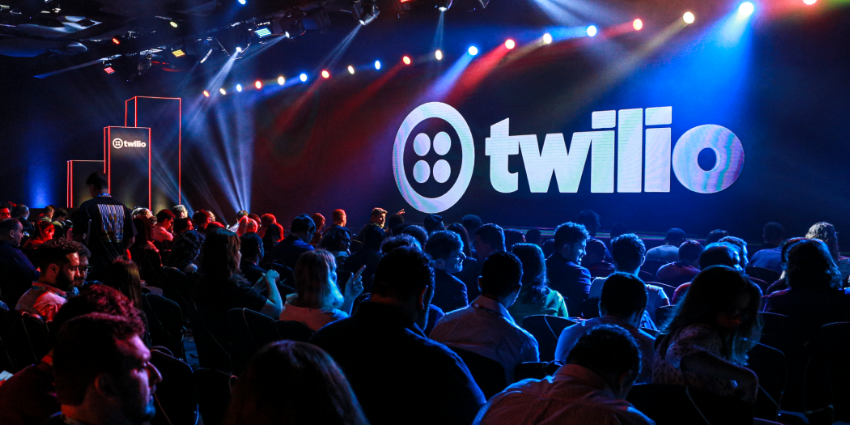

Twilio will host Twilio SIGNAL 2026 in San Francisco on May 6-7, 2026 at the San Francisco Marriott Marquis. Twilio is pitching SIGNAL as two days of networking and hands-on learning focused on building customer relationships with its customer engagement platform.
For CX teams, this isn’t just another developer conference. SIGNAL’s strongest signal is operational: the sessions are built around AI that can act, communications that customers will trust, and data foundations that make personalization real.
In This Guide
- What Is Twilio SIGNAL 2026 and Who Should Attend?
- The Themes That Matter Most for CX Leaders
- The Sessions to Prioritize (and Why)
- The Speaker Watchlist
- Questions to Ask at SIGNAL (So You Leave With Decisions)
- Twilio SIGNAL 2026 Attendance Tips for Real ROI
What Is Twilio SIGNAL 2026 and Who Should Attend?
Twilio describes SIGNAL as its annual flagship event for customers and its broader community. The format is built for learning and implementation. The agenda includes keynotes and breakout content across both days.
CX leaders should care because the session lineup keeps circling the same uncomfortable truth. Many teams have “AI projects.” Fewer have AI that reduces friction, improves outcomes, and stays safe in production. SIGNAL’s sessions lean into that gap with practical patterns for conversational AI, observability, trust, and data governance. In Twilio’s own words:
“Twilio SIGNAL 2026 is shaping up to be a “show me” conference for CX teams. It’s less about AI claims and more about how AI behaves in real conversations.”
The Themes That Matter Most for CX Leaders
SIGNAL’s catalog points to a few themes that map directly to CX leadership priorities.
First is agentic AI that does work, not just chat. The session ‘If your AI can’t act, it’s just a glorified FAQ page’ is blunt for a reason. The description centers on persistent context across channels. It also focuses on real-time action like scheduling and triage.
Second is trust in voice and branded communications. “Built to lead: Twilio Voice for unmatched trust, insight, and scale” frames voice as a strategic layer. It calls out Branded Calling and the need for insight into where automation adds value.
Third is observability and performance management for both human and AI agents. ‘Keeping conversations on track with Twilio’ centers on real-time conversation analysis, sentiment and quality monitoring, and performance tracking. That’s the layer many CX teams need before they can scale automation safely.
Fourth is healthcare engagement beyond the reactive call center. “Beyond the waiting room: Building the next generation of healthcare engagement” positions Flex and Segment as tools to build proactive engagement hubs. It emphasizes a single HIPAA-eligible platform and the end-to-end patient journey.
Fifth is data readiness for personalization at scale. Purina’s “Unleashing hyper-personalization” session is a classic modernization story. It highlights unifying, cleansing, and governing data so teams can activate real-time personalization.
The Sessions to Prioritize and Why
Here’s where SIGNAL becomes useful. The strongest sessions don’t just describe a product. They describe a decision a CX team needs to make.
1) AI for high-friction, high-stakes journeys
‘AI-powered negotiation: Using RCS, WhatsApp, and voice to transform debt collections’ stands out because collections is a trust and compliance minefield. The session description highlights a multi-channel strategy using SMS, RCS, WhatsApp, voice, and Conversation Relay. It also focuses on real business outcomes and lessons learned in a regulated environment.
That makes it relevant even if you do not work in collections. Any CX journey that customers dread has similar dynamics. It includes anxiety, low trust, and high sensitivity to tone.
2) Voice trust, insight, and where automation actually belongs
‘Built to lead: Twilio Voice for unmatched trust, insight, and scale’ is a good foundations session for executives. It is framed around Branded Calling and conversation data. It also emphasizes balancing human touch with smart technology.
Chris Koehler, Chief Marketing Officer at Twilio is on the speaker list, which suggests SIGNAL will also frame how these technical layers translate into customer growth and retention.
3) Virtual agents that behave like support teammates, not gatekeepers
Two workshops are built for teams who want to ship, not just learn.
‘From Bots to Best-in-Class: Launching Next-Gen Virtual Agents’ is an advanced hands-on workshop. It describes building an AI support agent that handles routine requests, analyzes intent, and escalates to a human. It also calls out pilot-ready IVR and ROI transparency using metrics.
‘Small business, big voice: Build an AI agent that sounds like a Fortune 500’ targets a common failure mode. A voice bot without data access becomes friction. The description focuses on a voice-to-logic pipeline that turns calls into real-time resolution.
4) Conversation intelligence as the control layer
‘Keeping conversations on track with Twilio’ is positioned as a demo session. It focuses on monitoring sentiment and quality, tracking agent performance, and catching issues early.
If you’re scaling AI across channels, this type of control layer becomes non-negotiable. You need the ability to answer simple questions. What is the AI doing. Where does it fail. Who does it impact. How do we improve it.
5) Security and governance as an enabler, not a blocker
‘Beyond the checklist: How Twilio scales secure development with AI-powered threat modeling’ is not a security track session in the traditional sense. It is a velocity session. It describes how Twilio built an internal Threat Model Assistant to decentralize expertise and maintain developer speed while adding specialized assessments for agentic AI.
For CX leaders, this is a useful bridge to security teams. You can bring back patterns for enabling faster delivery without skipping risk review.
6) Flex and Segment in healthcare engagement hubs
‘Beyond the waiting room: Building the next generation of healthcare engagement’ is a strong case study session for regulated industries. It frames the digital front door as every touchpoint. It also emphasizes proactive engagement hubs and a single platform approach.
7) Data modernization for personalization at scale
‘Unleashing hyper-personalization: Purina’s data & tech journey to power activation at scale’ is the reminder many teams need. Personalization is not a creative project. It is a data and governance project. The session description highlights unifying, cleansing, and governing data to create an actionable customer view.
8) How Twilio applies its own stack to onboarding and growth
‘How Twilio builds with Twilio: Delivering a personalized sign-up concierge experience’ describes Twilio’s own AI agent work, including a claim of a 200% increase in digital sales productivity from an AI agent experience shared previously at SIGNAL. It also describes ingesting context into Segment CDP to improve sign-up journeys and downstream experiences.
The Speaker Watchlist
If you’re attending with a CX strategy lens, these names are worth tracking.
Twilio leadership:
- Khozema Shipchandler, Chief Executive Officer, Twilio
- Inbal Shani, Chief Product Officer, Head of R&D, Twilio
- Chris Koehler, Chief Marketing Officer, Twilio
- Erin Reilly, Chief Social Impact Officer, Twilio
- Robin Grochol, SVP, Product, Twilio
Customer and partner operators:
- Bret Taylor, Co-Founder and Chief Executive Officer, Sierra
- Teddy Ho, Director of Product, AI, AppFolio
- Kevin Scott, Chief Technology Officer, PGA of America
- Florian Vorwerk, Global Director of Operations, Delivery Hero
- Fellipe Cruz, Global IT Product Manager – Marketing Automation, Nestle
- Keisha Browder, Chief Executive Officer, United Way Bay Area
- Juliano Skrzyszowski, CTO, Nova Gestões
Questions to Ask at SIGNAL (So You Leave With Decisions)
SIGNAL can be inspiring. It can also become a blur. The fastest way to make it valuable is to arrive with questions tied to your roadmap.
For agentic AI and virtual agents
Ask what data and permissions the agent needs to take action safely. Ask what happens when the AI is uncertain. Ask how escalation works and how handoffs preserve context.
For voice trust and branded communications
Ask how branded calling affects answer rates and customer trust. Ask what controls exist to reduce spoofing risk and protect your brand. Ask how conversation data gets captured and governed.
For observability and quality management
Ask how Twilio defines quality for AI and human agents. Ask how teams detect drift over time. Ask what monitoring is real-time versus after the fact.
For data modernization and personalization
Ask how teams unify profiles across systems. Ask what governance model keeps data clean as tools change. Ask what real-time means in practice and what latency is acceptable.
Twilio SIGNAL 2026 Attendance Tips for Real ROI
Build a plan around your constraints. You cannot attend everything. You also should not try.
Choose one core outcome. Reduce call volume. Improve containment without harming CSAT. Increase conversion from messaging. Or fix identity and profile quality.
Then map sessions to that outcome. Use the workshops for build knowledge. Use the roundtables for decision frameworks. Use the keynotes for roadmap signals.
Finally, commit to one pilot within 30 days of returning. Make the pilot measurable. Make it small enough to ship. Then scale it.
Join the conversation: Join our LinkedIn community (40,000+ members): https://www.linkedin.com/groups/1951190/
Get the weekly rundown: Subscribe to our newsletter: http://cxtoday.com/sign-up